Monthly Archives: March 2026
You Can Never Break the (Kinetic) Chain
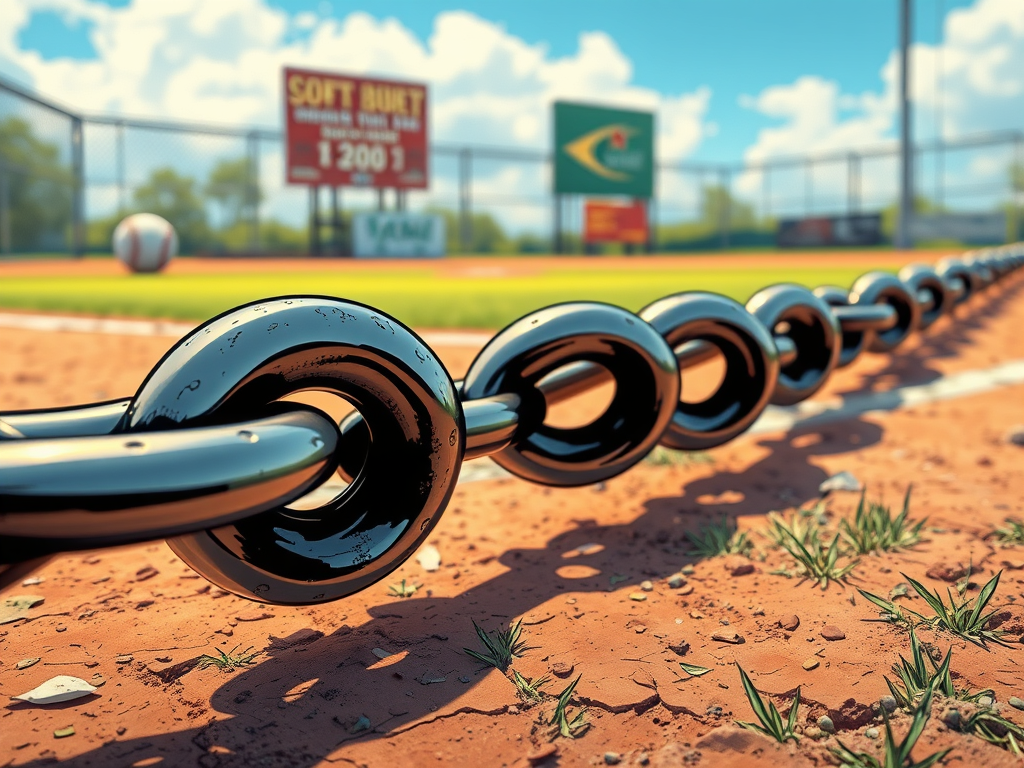
A term that has grown in popularity lately in the fastpitch softball world is the “kinetic chain.” If you’ve seen any of the many “how-to” posts or videos on Facebook groups, Instagram, Tik Tok, or other social media outlets you’ve no doubt come across the term.
You may have even nodded along as the creators talked about the importance of maintaining the kinetic chain even though you weren’t actually sure what it is. If you’re nodding along with this one you’re in luck because we’re going to define it before we get into the meat of today’s topic. You’re welcome.
Basically, the kinetic chain is an instance where the body’s muscles, joints, and nerves all work together as interconnected links to produce a complex movement. Each link works with the others to transfer energy through the body, creating a multiplying effect that improves the result of the final, intended action, such as swinging a bat or throwing a ball.
The key here is that each link in the chain has to work with the others in the context of the overall movement, and it has to do its job at the right time, i.e., in the proper sequence. If any link in the chain acts independently, or at the wrong time, it reduces instead of enhances the overall outcome.

Ok, I know that was a little complex and abstract, but I think it’s important to establish the science first so this isn’t just one of the many millions of random opinions out there masquerading as fact. Now let’s get to the fun stuff – how it applies practically to fastpitch softball.
The kinetic chain and hitting
The basic kinetic chain for quality hitting involves moving the hips first (using the big muscles in the core, the abdominals, etc.), followed by the shoulders, and finishing with the arms to deliver the bat to the ball.
Yet what you see many young and even some older hitters doing is initiating the swing with their arms and then yanking on the bat for all they’re worth to try to hit the ball hard. That works off the tee, and can even work in games at times if the hitter is reasonably strong.
But when you do that, you’re basically putting the cart before the horse. The arms are supplying the bulk (if not all) of the energy that is going into the ball, essentially choking off any energy the big muscles in the legs and torso are trying to produce.
Rather than moving a lot of energy up through the chain, that arms-based swing is limiting how much of that energy can be used – by a lot. It also reduces the body’s ability to adjust to the pitch as it’s coming in because the arms are creating an early path that gathers momentum as the bat moves forward.
It’s like firing an arrow and then trying to aim the bow. It just doesn’t work.

By keeping the kinetic chain intact the hitter has time to see the ball while she’s generating larger energy than she can with her arms alone, gathering information about where the ball is headed, and is then in a better position to direct that energy when the ball gets to her.
The same limiting factor comes into play when hitters spin their back leg in place (the old “squish the bug” cue) rather than engaging the hips. While it may appear to the naked eye that some high-level hitters do that, if you look at high-speed video you’ll see that they actually turn the hips into the ball then fall back into the “turned” position after contact.
Honestly, I’ve been fooled by that before myself, thinking that a hitter didn’t use her hips enough. But a quick video shows she actually did what she was supposed to – it just happened so quickly it was difficult to see in real time.
The kinetic chain in pitching
There are a lot of similarities between hitting and pitching as far as the kinetic chain goes. You are still doing a ground-up movement, with a firing order that moves from the hips to the shoulders to the arms.
The difference here, though, is that you’re focused on one arm, and that arm has two pieces that need to fire in order to maximize the transfer of energy (and thus ball speed). So the full sequence is hips-shoulders-upper arm-forearm.
Notice I didn’t say anything about the wrist. It does contribute to the overall pitch, but not forcefully as some people still believe.
The wrist is more of a “let it happen” than a “make it happen” contributor on most pitches. The exception, in my opinion, is the curve ball, where it does have to do a little bit of work to put the hand under the ball properly to achieve the correct spin.
After that, though, it’s still more of a “let it happen.”
What trips up many pitchers trying to achieve speed is muscling up at the shoulder, or forearm, or trying to do a hard snap upward with the wrist. Those actions may feel powerful, but not only do they not add anything to the energy transfer to the ball, they actually take away from it.
When you muscle up on any of the downstream segments it chokes off at least a part of the flow of energy. Less energy into the ball = reduced speed.
What you want instead is to allow the joints to move freely in a quick acceleration/deceleration sequence that moves the energy from one segment to another until it reaches the ball. Muscling up slows the individual piece that’s being used down, which means it has less energy to pass along to the next one.
This relaxed flow of energy is especially true for what happens with the arm. Once the hips and shoulders have stabilized (stopped turning forward), the upper arm uses the energy from the body to begin accelerating toward release.
This movement will happen much faster if it’s allowed to happen rather than the pitcher trying to force it to happen by consciously muscling the arm downward. Just accept the energy and direct it downward until the upper arm comes into contact with the ribcage.
If that happens, the sudden stop of the upper arm transfers the energy down into the lower arm, causing the forearm to accelerate suddenly until it reaches brush contact/brush trigger – the light contact of the forearm (not the elbow!) against the hip. This action causes the forearm to decelerate suddenly, delivering all that energy that was created throughout every phase of the pitch and transferring it into the ball through the fingers.
Again, any attempt to force these movements by muscling up will have the opposite effect to what is desired – it will break the kinetic chain and reduce the speed.
You see this reduction a lot with pitchers who are trying to force strikes. They slow their arms down to get the ball over the plate and then can’t figure out why they’re not throwing faster.
Then, of course, they try to muscle up the finish and not only are they throwing slower, they’re now less accurate as well. It’s a vicious circle.
By the way, all of these principles apply to overhead throwing as well, although in a slightly different manner. The concept is the same though – if you want to throw hard, you have to let the chain happen instead of trying to force movements.
Better by design
The human body is an entire system designed for one primary purpose: to keep us safe. Each movement has a particular purpose that was developed to work in concert with other movements to create the optimal whole.
So you can see why breaking the kinetic chain by imposing unnatural movements on it isn’t a great idea. Let the body work the way it’s designed to work and you’ll achieve much better results – with less wasted effort to boot!
Losing Doesn’t Build Character – It Reveals It

Today’s post was actually suggested to me by my partner in podcasting Jay Bolden of BeBold Fastpitch. Not sure why he didn’t keep it for himself since he writes some great posts on his own Facebook page, but I will definitely take it. Thanks, buddy!
I think we’d all agree that it’s easy to look like a good coach, and a good person, when your team is winning., because it’s true that winning covers up a lot of other problems. You may be the most clueless coach in the world, but if your team is winning a lot more than it’s losing no one is likely to have any complaints.
That’s understandable. As Nuke LaLoosh says, winning is a lot more fun than losing.

Where you truly see the measure of a coach, however, is when things aren’t going so well. When the team is having a rough season, or maybe just going through a rough patch, how the coach reacts reveals a lot about who he or she really is.
First, let’s talk about how a good coach will or should handle losing, just to do a little level-setting.
No one likes losing. I know I sure don’t, and especially didn’t when I was coaching teams. I was one of those “I hate losing more than I like winning” types.
So with that in mind, you have to look at WHY you’re losing. The first place a good coach will look is in the mirror, asking questions such as:
- Have I been training my team well enough?
- Have I been making good decisions about who is on the field?
- Have I been putting together the most potent batting order, based on facts, not feelings?
- Have my in-game decisions been good ones?
- Are we playing the right level of competition?
- Are our strategies appropriate for the personnel we have?
- Have I built an atmosphere where players are playing with confidence or with fear?
That’s a great starting point. But the truth is you could be doing all the right things and the team is still losing. The softball gods are funny that way, and when you make them angry for some reason you may have to sacrifice a chicken to get back on track.

If you noticed, all of the above had the coach looking inward, at him or herself first, to ensure that the problem isn’t staring him or her in the mirror.
Now let’s talk about what bad coaches do: they blame. They will:
- First and foremost blame their players for not playing well enough or trying hard enough.
- Blame their facilities or their budgets for not giving them enough money to be better.
- Blame the administration for not supporting them.
- Blame the parents (yes, even in college) for expecting too much, or questioning the coach, or I suppose for not having better DNA.
- Blame the umpires for not calling a fair game.
- Blame whoever happens to be out of earshot at the time.
- Blame whoever happens to be in front of him or her.
I’ve heard stories where a coach’s idea of coaching is to essentially yell at her players to “play better.” That’s the sum and total of her advice.
No advice on HOW to play better after a problem, such as stay down on a ground ball, or go for the lead runner first, or you have to look up to see where the ball is before trying for another base, or anything else helpful like that, So it’s no surprise when the same problems keep coming up. Thanks, coach.
We’ve also all seen the coaches who scream at their players, telling them how bad they are after they make a mistake. No attempt to build a positive atmosphere, or encourage them instead of letting them get down on themselves. Just constant berating.

And do things get better? Maybe by luck sometimes. But for the most part, that type of approach is counter-productive for one simple reason: it’s addressing the wrong problem.
Look, no one likes to lose. Some take it harder than others (like me) but no one actually likes it.
So screaming about it or blaming others doesn’t address the core issue. It’s an attempt to cover it up with bluster instead.
So what types of things does losing reveal about a coach’s character? One is their maturity level.
Good coaches will attempt to work the problem and maybe change the atmosphere or the mindset if needed to try to change the outcomes. They will look to support their players, and look for solutions to the problems the team is facing.
Bad coaches will deflect the problems and substitute anger and noise for a thoughtful approach. They don’t know what to do to change things so they throw tantrums in the moment in an attempt, I suppose, to hide their lack of a viable solution.
Losing also reveals their ability to see the larger picture. Good coaches know they will get through the current series of loses, and develop a plan to help expedite that process.
Bad coaches let their emotions take over and focus on the immediate.
Then there’s the worry about what others think of them. Both good and bad coaches will often have that concern. I mean, after all, we all want to be thought of as being good at what we do.
But good coaches understand they have to set those temporary perceptions aside; after all, if all else was the same except for the won-loss record, those people calling for their heads would instead be scheduling a parade.
Good coaches realize they have to separate themselves from the current unfortunate circumstances and think about times when their teams were winning so they can clear their heads and address whatever the causes are. If they truly believe in what they’re doing, and stay true to it, they know the wins will come again.
Bad coaches, on the other hand, will try to cover up their insecurities by directing their anger and blame at others, never stopping to think about the fact that they may need to change what they’re doing or how they’re approaching the team in order to flip the script and back on track. And the more they let those negative thoughts creep in, the worse things are going to get for them.
As we often say, softball is a game filled with failure and adversity. There’s absolutely no reason to think those things will affect you as a coach at some point, or more likely many points, in your coaching career.
How you handle losing when it comes, though, will say a lot about who you are and what you truly believe in. It is entirely a test of character, graded on a pass-fail scale.
Be sure you’re ready to pass that test. Not just for the sake of your players, or your program, but for yourself.
Walk the Path That’s Set Before You

We’ve all been there at some point in our lives (even the youngest among us). We have a plan, a preferred path we’ve chosen to walk, only to find that for some reason that path is not open to us at this particular point.
At that point we have two options: turn around and go home, or walk an alternative path until we can (maybe) get to the one we want to follow. This is true in life in general, and it’s true in fastpitch softball specifically.
Since this isn’t a life coaching blog, we’re going to look at the softball example. You can apply the advice, however, as you choose.
Let’s take the example of a tryout since high school softball is just getting going in much of the U.S. Perhaps the path you’ve chosen (or desire) is to play on the varsity team, or to play a particular “glamour” position such as pitcher or catcher or shortstop.
But when the tryout results came out you were placed on JV instead. Or maybe you’re on varsity but the coach has already told you that the position you love is already taken by someone he/she thinks is better than you.
(Yes it may also be taken by someone who isn’t better than you but that the coach likes more for some reason, but we’ll set that discussion aside for another day.)

Essentially your path forward is blocked for now. You can get angry about it and walk away. Or you can say to yourself “if that path isn’t open what other options do I have?”
Let’s start with making JV instead of varsity. This may be a blessing in disguise.
Sure your ego takes a hit, especially if some of your travel or rec teammates made varsity. But ask yourself if you would rather sit the bench on varsity, maybe getting 10 innings of playing time total for the season, or you would rather be an every day starter on JV?
(Incidentally, Jay Bolden and I discuss this topic in more detail on next week’s From the Coach’s Mouth podcast. Be sure to check it out.)
While there are some things you can learn by watching games and participating in the varsity practices, you need to be playing regularly in games to keep your skills sharp.. You will probably be better off playing than sitting, even if the team you’re playing on isn’t that great.
And being on that team may also give you a better opportunity to develop other skills such as leadership which will serve you well not only in softball but throughout your life. So take the path that’s been set before you and walk the heck out of it; your time will come, and you’ll be even more ready to seize it.
What about the path to your favorite position being closed right now? In that case, I’d say go where the team needs you to be now, prove yourself, and you’ll be that much more ready for when your preferred path opens again.

Here’s an example. I worked with a terrific catcher a few years ago. She helped take her team to second in State among large schools, and was recruited to a strong D2 school to be their catcher.
When she got there, though, a senior transfer had come in and was given that spot without even the chance to compete for it. So what did she do?
She took advantage of whatever other opportunities were made available to her to get on the field.
It started with being the DH. She did well there, so the coach, recognizing this girl’s athletic ability, decided to try her out in left field to see if she could shore up the defense as well as the offense.
My catcher hadn’t played a lot of outfield, but she had played some, and in this situation she played the heck out of it, diving for balls and using her catcher arm to throw out runners at home. She used the opportunity to prove what type of player she was, and once the senior graduated she was back behind the plate where she wanted to be.
You can do the same. Whether your coach puts you in the outfield, or at second base, or at first base, or simply asks you to DH, give it all you have and do your best to learn that position as quickly as you can.
You never know what might come out of it, and if nothing else at least you’re on the field showing what you can do. Because it’s tough to show what you can do from a seat in the dugout.
Life is full of twists and turns, and you’re not always going to like them. They might even seem scary at times.
But rather than fighting them, if you keep putting one foot in front of the other and make the best of the current situation, good things will happen for you.
Path photo by Pixabay on Pexels.com
Coaches: Stop Throwing Pitchers Into Games Cold
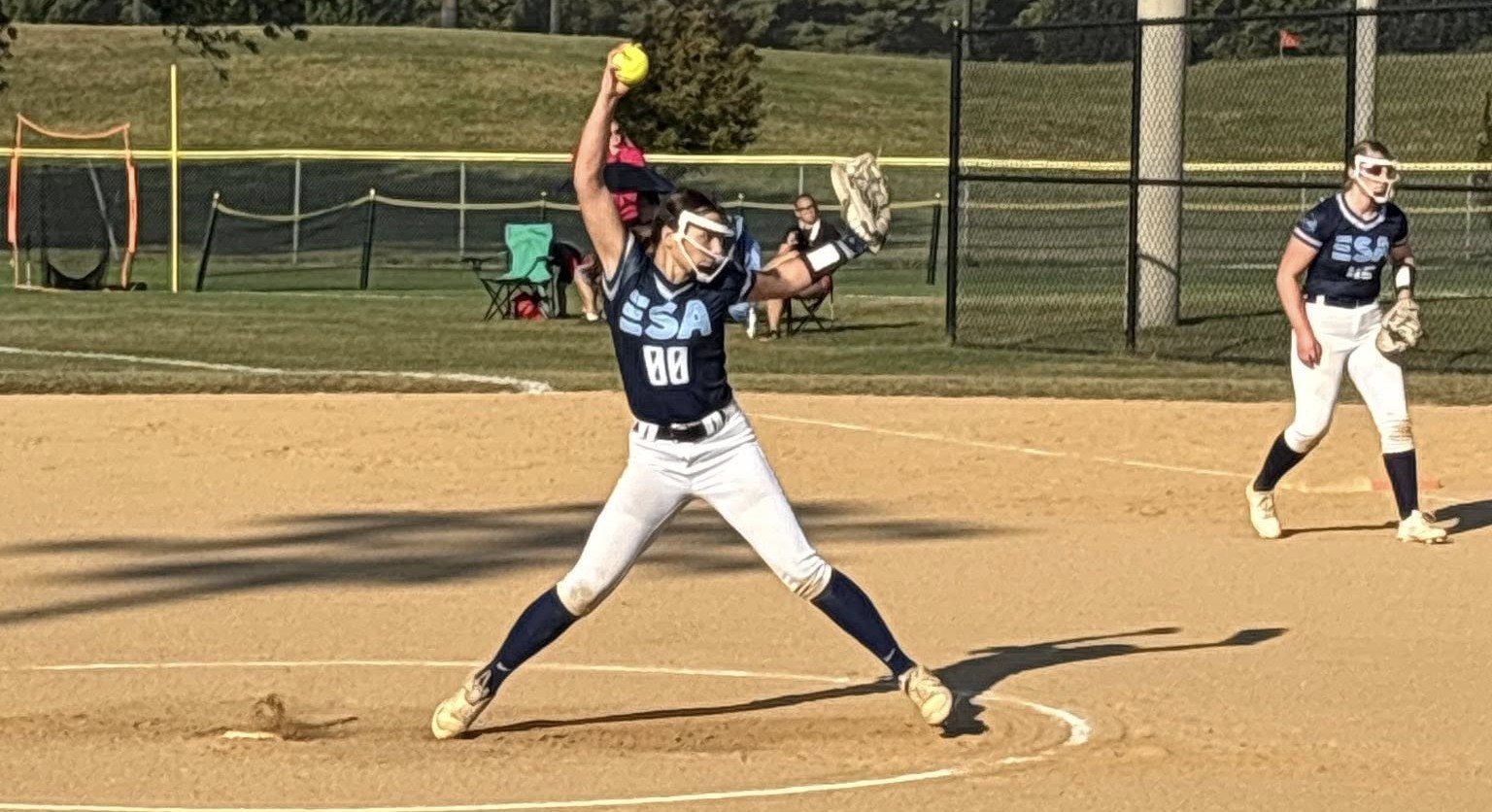
This is another one of those posts that you would think should generate a collective “duh” from the fastpitch softball world, but based on what I keep hearing it’s not quite as obvious as it would seem. So let me say this loudly for the people in the back:
Coaches, you need to stop putting pitchers into games without adequate time to warm up before they take the circle.
That’s true even of pitchers who warmed up before the game started. If you’re now in the second, third, fourth, or later innings, those pitchers still need some time before they go in to get themselves ready.
And the longer it’s been since they initially warmed up, the more important it is to give them time to go through the process again. Because it takes a certain amount of preparation to get ready physically and mentally, to get the feel of various pitches, the complex timing required, and to switch their heads from field player (or sitting on the bench) to being game-ready.
Look, I know sometimes your pitchers make it look easy when they step into the circle at the beginning of the game. They’re bringing good velo, they have command of their pitches, they’re ripping through batting orders like tissue paper.

As a result, you may think that it’s a switch they can throw and instantly turn into SuperStud. Trust me, it’s not.
It takes time to get ready. And there’s a “use it or lose it” factor built into it.
A pitcher who warms up before the game starts to cool with each passing minute if she’s not pitching in the game. To all of a sudden pull her in from left field or first base or wherever she’s playing currently and expect her to perform at her peak is not only unrealistic. It’s self-sabotaging.
Think about the situation. You wouldn’t be suddenly pulling her in from another position (or the bench) if things were going well for the team.
You’re pulling her in because they’re not, and you’re hoping she can put out the fire. Only she’s really not ready to perform at her peak, so there’s a pretty good chance that instead of making things better she’ll either keep them the same or make them worse.
Sure, you might get lucky and get the out you need to end the inning. But that’s probably going to be the exception.
The more likely scenario is you’ll get a walk, or a hit by pitch, or she’ll give up a meatball that goes sailing to or over the fence as she’s trying to find her groove.

The consequences of that decision may not just affect that game either. You may shake that pitcher’s confidence, especially if you get angry that she didn’t save you from your own bad decision, causing her to be overly cautious the next time out so as not to let you and the team down again.
More importantly, putting a pitcher into a game without adequate warm-up and then expecting her to perform at her highest level is a recipe for an injury – possibly one that is season-ending. No one wants that.
You would never see a Major League Baseball manager or a P4 head softball coach put a pitcher into a game without warming him/her up thoroughly first. Why would you think a younger or even high school-aged player could do it?
Ok, now that we’ve established that concept, the natural follow-up question is “how much time does that additional warm-up require?” After, all, the pitcher did spend some time before the game getting ready, so it shouldn’t be too much, right? Right?
The reality is it depends entirely on the pitcher. Some can warm up quickly, and maybe just need a little tune up before going into the game. They can probably get by with 10 minutes or less.
Others have a lengthy process they must follow in order to feel ready. It could take them 20 minutes or more to go through all their pitches to make sure they’re working properly.
As the person making the decision of when to put them in, you need to be aware of what each pitcher requires and then try to plan ahead so they’re ready to go when you need them. Just don’t wait until you’re already in trouble before you get them up and throwing.
If you think there’s any chance you’ll need a pitcher out of the bullpen/off the bench, get them warming up after 2-3 innings, just to be safe. If you’ll need to pull in a pitcher who’s already playing in the field, send in a sub, even if it’s mid-inning.
Better to have her ready and not need her than need her and not have her ready.
Coming in to pitch mid-game is often tougher on pitchers than starting one. Especially if the wheels are already coming off the wagon.
Giving your relievers enough time to warm up according to their individual needs will save you all a lot of heartaches, as well as give you a better chance of winning more games. It will also help prevent the type of injuries that can ruin a season.






 Life in the Fastpitch Lane