Monthly Archives: September 2023
Proper Form? The Shadow Knows!

You’ve no doubt heard that different people learn best in different ways. The four basic learning styles are visual (watching the skill performed), audible (listening to instruction about the skill), kinesthetic (learning by doing), and reading/writing (using written words to understand).
Fastpitch softball instruction typically uses audible (coach explains) or visual (coach demonstrates, or at least tries to) learning, then expects that to translate into kinesthetic as the player tries to emulate the instruction. The idea is to get the “feel” of the movements so they can be carried forward later.
While this is important, some players have difficulty moving from visual/audio to kinesthetic learning. They are trying, but they can’t quite get the feel of it and thus go right back to old habits.

A great example is a pitcher trying to learn to keep an elbow bend down the back side of the circle to allow her arm to whip at the end. She may be trying to bend it, but as she goes into the back side her elbow straightens out and the arm becomes stiff, which means no whip.
One solution is to video the player so she can see what she is doing. Sometimes it helps, but often she has trouble translating what she sees into what she does.
A better approach is to use a mirror so she can see what she’s doing AS she tries to feel it. The combination of the two is very powerful, and often helps shortcut the learning curve.

But what if you are outside and don’t have access to a mirror? Not to worry – there is another solution: her shadow!
If you place the pitcher with her back to the sun, her body will cast a shadow. She can then watch that shadow as she moves to see if she is maintaining elbow bend or coming out of it over the top.
This quick, crude video demonstrates how that works:
Note how rather than reaching back with the hand I pulled the upper arm or elbow down, maintaining bend that leads into release. By watching the shadow while moving her arm, your pitcher can begin to feel where her arm needs to be as she practices.
She can continue to observe as she builds up speed, first without a ball and then throwing a ball into a net or screen. Over time she will feel it more and more until she no longer needs the visual cue – at which point you can really turn her loose.
This is just one example of how you can use a player’s shadow to enhance learning. For example, if she tends to drop her hands or flatten out her back too early while hitting, her shadow will show it, enabling her to make that adjustment.
If she is pulling her hand straight back while throwing instead of retracting her elbow with her scap and then letting her hand rotate behind her, that will be easy to spot in a shadow too.
Next time you’re outdoors on a sunny day and a player struggles to get the feel of a skill, give this idea a try. It’s quick, easy, and free – and the shadow always knows!
Fear of the Ball? They’re Not Wrong!

Every coach knows that being afraid of the ball, whether said ball is being hit, pitched, or thrown at a player, is one of the greatest performance-killers. It’s kind of like Maslow’s Hierarchy of Needs: players need to feel safe before they put all their energy into whatever activity it is they’re trying to do.
Those who have coached the littles know exactly what I’m talking about. You can see it when they step sideways to catch a thrown or fly ball, or automatically back out of the batter’s box when they’re hitting, or do the “matador” as they try to field a ground ball.
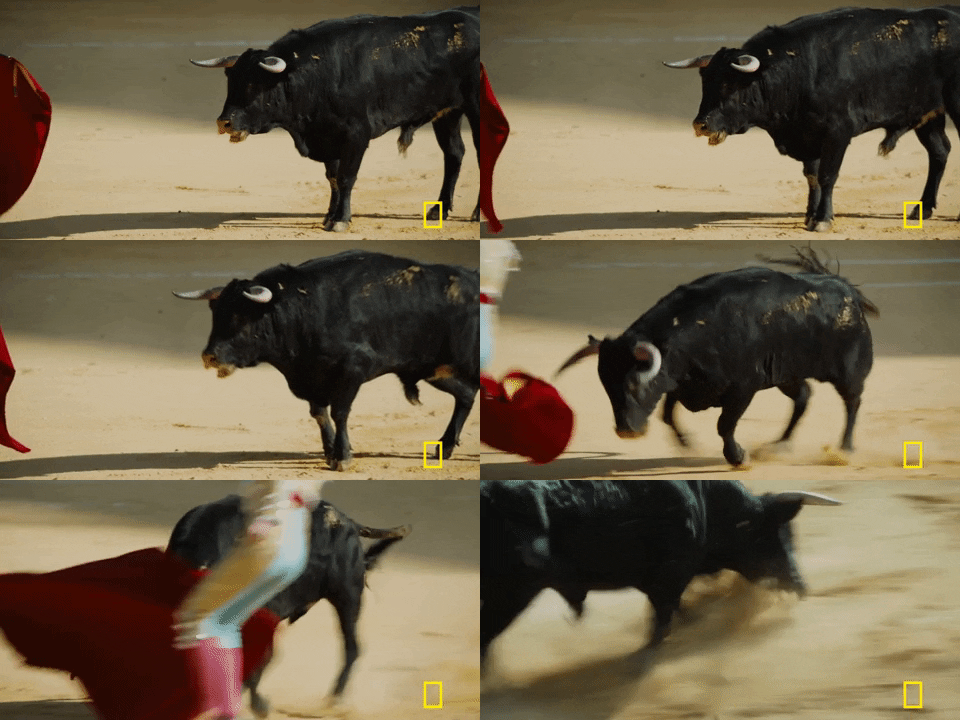
This isn’t just a problem with the littles, however. Many older players also harbor some level of fear of the ball; they’re just better at hiding it.
The typical coach reaction when these things happen is to yell at the player to “stay in there” or “stay in front of it.” But given a choice between being yelled at and actually feeling physical pain, it’s pretty obvious what their subconscious is going to opt for.
I think the thing coaches with players who are afraid of the ball have to acknowledge is that in many or even most cases those kids aren’t wrong. If the ball hits them instead of their bat or glove, it’s going to hurt. That’s just science.
So if you want to get your daughter or your players past moving away from the ball preemptively it’s going to take more than telling them “don’t do that.” Here are some tidbits that may help you with that task.
The Fear Is Often Worse Than the Reality
A lot of the kids who are afraid of the ball haven’t necessarily experienced the pain before. Their brains are simply making assumptions based on other past experiences.
Take a hitter who backs out of the box when the ball is pitched. She’s never been hit by a pitch before. But…
She has been hit by other flying objects before. Maybe a sibling threw a toy at her with sufficient force that it caused bruising or bleeding.

She also knows from picking it up that the ball is hard. So even though she has never actually been hit with a ball while hitting she is afraid of similar pain.
Once she has been hit by the ball, however, she’ll then have a frame of reference for it and it won’t seem so bad after that.
Does that mean you should throw balls with the intention of hitting your players? Of course not. But you can toss them lightly into their arms to help them start overcoming their fear.
You can also give them some incentives. When I pitch to girls who like to automatically step back I tell them if they do it again I will start throwing behind them, and may even toss one back there (lightly) to give them more reason to stay in.
If you’re going to do that, however, be careful. I have hit one or two unintentionally because I didn’t get it far enough behind them. It worked to solve the problem, but it’s not exactly the way to build the player-coach relationship.
Take the Reason for Fear Out
Most of the time a fear of the ball is driven by a lack of confidence that the player can avoid being hit. She feels like she doesn’t have the skills to catch the ball, for example, so she sidesteps to avoid any mishaps that may result from that lack of skill.
The solution here is to give them something less threatening to work with. For example, have players who are afraid play catch with foam balls like a Jugs Lite Flite ball.
The light weight and softer texture will make the entire process less threatening to them. And unless they’re hit right on the nose by a hard-thrown ball at close distance – something you should control in practice – being hit by the ball won’t produce any pain.
When they realize that they will be less inclined to bail out right away, enabling them to build proper skills so they are more confident when a real ball is introduced again.
SIDE BENEFIT: The lighter weight will also encourage them to adopt better throwing mechanics because you don’t need as much strength to throw them.
Be Smart With Practice Reps
One of the temptations coaches have when hitting ground balls is to hit them as hard as they can so the girls “are ready” for hard-hit balls in games.
The problem is, an adult coach (male or female) can hit a ground ball a lot harder than a 99% of 10 year olds will at that age. So rather than teaching their players to get in front of the ball and move into it, they’re teaching their players to sit back and try to avoid getting nailed with the ball.
This approach not only instills fear, it also teaches them to wait on the ball rather than charging it if it’s not hit hard. I don’t know how it is where you live, but the majority of ground balls in a 10U game in my area require being charged.
A better approach in my opinion is to start easy and let them build the confidence in their glove skills – especially if you’re playing on a dirt field that hasn’t been laser-leveled and groomed. Then gradually build the speed until it’s realistic for what they’re going to face.
You might even want to start by rolling balls to them rather than hitting them so they can put their entire focus on learning how to field and make the throw properly. THEN get into hitting them.
This isn’t just for the littles by the way. College and even national team-level teams do this all the time to refine their skills.
Obviously they’re not dealing with fear of the ball at that level (at least hopefully not). But this approach works for both.
Acknowledge the Fear
As an adult it’s really easy to think players should just ignore their fear of the ball. You have 2X, 3X, maybe even 4X as much experience dealing with the issue.
But try to think of it from your players’ experience. As mentioned above, maybe they’re never been hit and so have built the outcome up in their minds more than the reality will be.
Maybe they have been hit and it’s the worst pain they’ve experienced so far in their young lives. You know may know that getting by the ball is nothing compared to a kidney stone or an automobile accident injury, but they don’t. It’s all a matter of scale.
Whatever the reason, it’s not a monster under the bed you can tell them to ignore. It’s very real.
Be understanding and help them work through it little by little. If they feel safe with you they’ll overcome the fear quickly – and could turn out to be your best players in the long run.
Pros and Cons of New Pitching Rule on Leaping
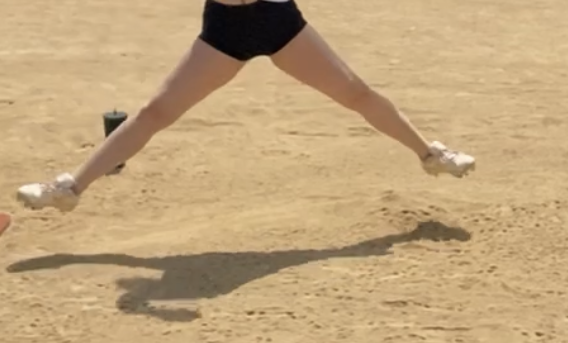
By now you’ve no doubt heard about a very significant change to the fastpitch softball pitching rules in the NCAA, NFHS, and various travel ball level organizations. The rule involves leaping, i.e., having both feet in the air during the stride-out portion of the pitch.
Up until this rule change leaping was illegal, which meant if a pitcher was called for it the batter would automatically be credited with a ball, even if the pitch came in fat and happy down the middle. That collective sigh of relief you heard a few weeks ago came from pitchers, their parents, their grandparents and other relatives, their team coaches, their pitching coaches, and other interested parties when it was announced that leaping will now be allowed.

Of course, no change occurs in the fastpitch softball world without some level of angst being generated, and this rule change is no exception. Some are in favor, some are against, but whatever their point of view most are passionate about whatever they think.
That’s why I thought it might be a good idea to go through the pros and cons of leaping while pitching in a more dispassionate way to help everyone understand this change a little more.
But First – Leaping v Crow Hopping
Before we get into the pros and cons I think it’s important to distinguish between leaping, which is now legal, and crow hopping, which remains illegal, because many use the terms interchangeably. Especially coaches who are complaining about an opposing pitcher.
Leaping is what happens when a pitcher strides off the pitching rubber, her back foot loses connection with the ground, and both feet are in the air at the same time until the front foot lands. Often this is the result of a late push or drive off the pitching rubber by the drive leg.
Most people consider there to be no particular advantage to leaping, and in fact it might actually reduce a pitcher’s speed a little. Leaping is now allowed since the rule change.
Crow hopping starts out the same way as a leap, with both feet off the ground. The difference, though, is that the drive leg lands first AND THEN there is a second push-off. This gives the pitcher an advantage because she is essentially starting her pitch from a much closer distance – generally six to eight feet.
This shorter closing distance gives the batter less time to react, essentially making the pitcher appear to be faster than she actually is. Crow hopping is still not allowed by the rules.
Pros of the Leaping Rule Change
The biggest pro of the change to allow leaping IMHO is it theoretically eliminates opposing coaches trying to get a successful pitcher pulled out of a game, or get into a pitcher’s head to the point where she is no longer effective, by complaining that she is leaping (or crow hopping as most say). Because what can be better than a grown man or woman playing head games with a 12 year old?
Think of all the time and animosity that will be saved by not arguing about whether a pitcher is legal or illegal because her back foot came an inch or two off the ground. In today’s world of timed games that alone will be a plus.
Another pro is it gives pitchers the opportunity to learn their craft without having to worry about whether their back foot is coming off the ground. Pitching is hard enough; removing a meaningless obstacle to learning it enables budding pitchers to focus on the mechanics that will help them develop and grow.
Finally, it saves the umpires (especially the ones working solo) from having to watch for and call pitchers for leaping. With that off their plates they can focus on things that are far more important to the outcome of the game – such as calling balls and strikes or runners leaving early on a steal or a fly ball.
Again, in my opinion and the opinions of many other pitching coaches there is no real advantage gained by a leap, so it’s essentially no harm, no foul.
Cons of the Leaping Rule Change
The biggest con to the rule change is that leaping is kind of a gateway to crow hopping. If you stop calling leaping, umpires may eventually quit calling crow hopping, which will then give pitchers an unfair advantage.
We’ve seen this in the men’s game. Many of the top men’s pitchers crow hop and don’t get called for it because umpires seem to have given up worrying about it.
Will that happen in women’s fastpitch as well? Time will tell.
Another con to leaping is that mechanics are not as efficient, which means pitchers may actually be giving up a little speed, accuracy, or movement. Many will not be able to transfer as much energy into the ball because their posture or timing (or both) is off, and they may not be able to get their arms and/or hands into the optimal position for delivery.
If no one is worried about proper leg drive because pitchers won’t be called for leaping it could lead to pitchers not achieving their full potential. Pitching coaches will quit looking for it and pitchers will never make the effort to correct it.
I fully believe that a pitcher who can keep herself stacked properly over the back side will pitch better than if she strides in a way that pulls her back foot off the ground prematurely. That’s just biomechanics and physics.
Finally, there is the health and safety issue. Pitchers who leap, especially if they go after with with enthusiasm because it’s no longer illegal, will put themselves at greater risk of ankle, knee, hip, and back injuries, particularly in the lower lumbar region.
The weight-forward, body-forward posture most leapers have will cause more strain as they collide with the ground. Over time, those repetitive out-of-balance landings can lead to injuries that could put a pitcher out of action for a month, several months, a year, or even longer.
And then she’ll have to relearn proper technique anyway to avoid future injuries. Why not just start from a safer technique and go from there?
Choose Wisely
The bottom line for me is that the rule change is a good thing from a practical, in-game point of view, but it shouldn’t be considered carte blanche to use poor technique.
I will still strive to teach my students how to drive more efficiently, with their drive foot on the ground. But if they do come up a little, I’m glad to know it’s not going to cost them the game anymore.
Don’t Just Put In the Time – Put In the Effort

One of the most common questions coaches get at the end of a lesson or practice session is, “How long and how often should my daughter practice?”
While it’s a legitimate concern – parents want to their daughters get the full benefit and they get a better return on their investment – I tend to think they’re asking the wrong question. Here’s the reason: practicing is not actual time-based; it’s quality-based.
Take two players who are at the same skill level and have been assigned the same drill(s) as “homework:”
- One diligently does the homework, being mindful of her movements and attempting to execute the skill the way she has been taught. She does this for 20 minutes three times before she has her next lesson.
- The other goes out to practice for a half hour three days a week between lessons. But she doesn’t like doing drills because it’s “boring,” so she instead just decides to pitch from full distance or take full swings or field ground balls hit by a partner etc. the whole time.
Which one do you think will show improvement in the aspect that needs the most help as well as in the overall skill?
Player two put in more time – an extra half hour to be exact. If time were the only factor that counted she should do better at the next lesson.
But I will tell you from experience, and bet you dollars to donuts, that player two will be the one who is most likely ready to advance further at the next lesson. She may not have put in as much time, but she put in more effort to solve her biggest issues – the one that is most limiting her.

So if she’s a pitcher who was straightening out her arm on the back side of the circle, she is now far more likely to have a nice elbow bend or “hook” as her arm gets ready to throw the ball. If she is a hitter who was dropping her hands straight to her waist before swinging, she’s far more likely to be keeping them up and turning the bat over to get the ball.
That’s because she mindfully worked at changing what she was doing. She is serious about improving so she put in the effort to make those changes.
Player two, on the other hand, actually put herself further away from her goals by practicing as she did, because all she did was reinforce the poor mechanics she should be trying to move away from.
Yes, she put in the time and could mark it down on a practice sheet, but she didn’t put in the effort. Without the effort to improve, the time is pretty much meaningless.
She would have ended up in exactly the same place at best if she hadn’t practiced at all. And she may have ended up further behind because now those extra reps with the wrong techniques will make it that much more difficult to get her to the right path.
If your daughter is going to spend her valuable time on practicing her softball skills, or anything else for that matter, make sure it’s on something that will help her advance her abilities forward.
Have her make the effort to concentrate specifically on the areas that need improvement rather than spending all her time making full pitches, full swings, etc. and you’ll see faster progress that leads to greater softball success.
P.S. For any parents of my students who may think I’m talking about their daughter, don’t worry. I’m not. It’s a big club. But do keep it in mind as you work with your daughter anyway!






 Life in the Fastpitch Lane