Blog Archives
Some Players Make You Look Like a Better Coach; Others Make You Become One
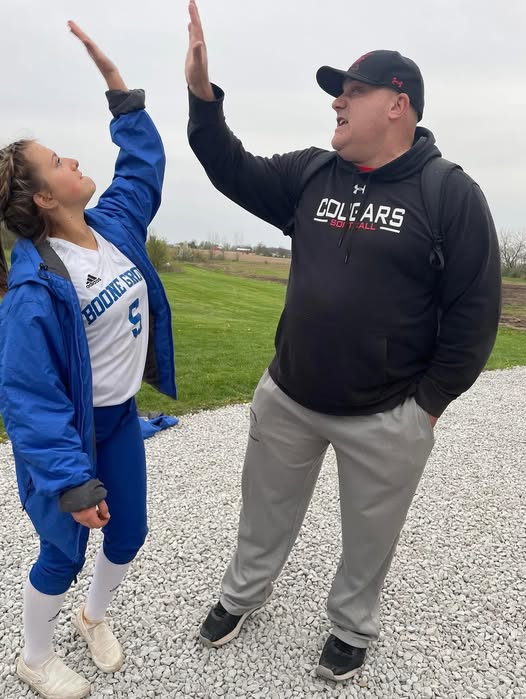
Anyone who has coached for any period of time knows there are basically two types of players.
The first type makes you look like a better coach. You know the type.
You can pretty much tell them anything – even if it’s the stupidest possible thing you could say – and they will be successful. They have the raw athleticism to find the right way to do things because their bodies just intrinsically understand how to move.
You can put them into a position they’ve never played before and they will look like they’ve been doing it all their lives. In fact, people on the sidelines will probably wonder why you HAVEN’T had her there the whole time.
Then there are those who make you become a good coach.
They have not been blessed with tremendous natural athleticism. While some are reasonably competent on their own, many have no real idea how to move their bodies in anything even resembling an athletic way.
You how them how to swing a bat and then they stand flat-footed and pull the bat around as if it’s a sledgehammer. You try to show them how to catch a ball and it looks like they’re afraid it’s going to bite them.
You try to show them how to throw the ball back and it looks like someone trying to unfold a one-person tent (or put away one of the old Jugs pop-up nets).

And pitching? Fuhgeddaboudit. If there’s a way to do it right, she will immediately find its polar opposite.
The ones who make you look like a good coach are really fun to work with, no doubt about it. And they’re good for the ego too.
A lot of coaches love to point to their very best players and show them off as though it was their great teaching that made them the way they are. Surely the coach helped them with that process.
But as I always say, if it was the coach who made them so good then all of that coach’s players would be equally as good. They’re not.
Often, though, it’s the ones who make you a good coach who have the most impact on your life. First of all, you can’t just tell them any old thing and have it work.
You have to figure out how to explain things to them, or demonstrate things to them, in a way they can understand and then execute. Often that means being creative in your approach and coming up with ways of teaching you would have never done otherwise.

The good news is each of those is unique, which allows you to build your coaching toolbox and expand your coaching reference library tremendously. All of which helps you build your own confidence as well.
There is also a lot of satisfaction in teaching a player to do something she just wasn’t capable of doing before. Seeing her get her first hit in a game, or pitch her first strikeout, or make a great catch, or make a perfect throw across the infield to get the out for the first time, gives you a feeling of pride that simply can’t be matched.
There’s no doubt that the players who make you look good will help you win a lot of games. Appreciate them when they come along, but be sure to keep your contributions to their success in perspective.
While they can be more challenging, especially in the beginning, the players who make you a good coach will likely hold a special place in your heart because you’ll know you gave them an opportunity they would not have had otherwise. It’s still up to them to put in the work, but when they do it’s magic.
Giving Players the Chance to Work Through Adversity

One of the most common phrases you will hear in all of sports is “player development.” Whether it’s a 10U girls fastpitch softball team coached by volunteers or a multi-billion dollar NFL franchise, everyone likes to talk about how important player development is for the short- and long-term success of the team and the organization.
That is, of course, until somebody makes a mistake or a problem arises. Then all that talk about letting players develop goes out the window as the coach unceremoniously removes said player from the game so the team doesn’t face the unthinkable prospect of possibly losing a game because of that one play.
Yeah, I’m getting a little hyperbolic but it’s to make a larger point: how in the world will players develop when the minute something bad happens they are removed from the situation?
We’ve all heard the phrases “iron sharpens iron,” “steel is forged in heat,” and “diamonds are lumps of coal that stood up to pressure.” But none of those great outcomes happen if you remove the object from the situation the second any stress occurs.

That’s why, if you are actually committed to seeing your players develop, you have to leave them in to face their greatest difficulties or fears, even if it means you might lose a few more games here or there rather than pulling them something starts to go wrong. By giving them a chance to work their way out of a difficult situation, even if they ultimately fail today, you will help them become better-prepared for the next time they face similar pressure.
Take a pitcher, for example. Maybe she is fairly new to pitching, or has been sidelined for a while with an injury.
She starts the game and does ok in the first inning, but then she walks a couple of hitters on 8 or 9 total pitches. Time to pull her, right?
Not necessarily. If you’re in an elimination Sunday game maybe.
But if you’re playing a meaningless weekday friendly, or a showcase where no college coaches are there to see someone specifically, or a pool play game (especially where seeding will be decided by a blind draw) a better strategy for the player and the team might be to go out and talk to her, try to reinforce her confidence, then leave her in there to try to work her way out of the situation.
She just might surprise you. And even if she doesn’t, who cares?

Losing that game doesn’t really affect anything but your ego around your team’s record. But giving that pitcher a chance to work her way through difficulty might be just the boost she needs to help her contribute more to the team down the road.
After all, pitchers need innings if they’re going to be effective. Taking them out of the game because you panic at the first sign of trouble (or are more worried about wins than giving your players a chance to develop) will just set them back further on their own journeys – and could even cost you players who become great when someone else shows a little more faith.
The same is true for fielders and hitters. If you pull a fielder after one or even two errors rather than giving her a chance to recover she’s not going to learn very much – except that you have no faith in her.
If you constantly DH for a hitter because you don’t want to give up an out, or put in a pinch hitter any time the situation is remotely tense, it’s unlikely she’s going to develop the confidence it takes to swing the bat effectively.
Then, one day when she comes to the plate in a meaningful game where you have no other options, you’ll have no one to blame for her failure but yourself.
Ok, so does this mean I think you should never pull a pitcher or make another substitution? Of course not.
There are times when it has to be done. If you’re in a “win or go home” situation and your pitcher is starting to struggle, you’re probably going to want to look to the bullpen sooner rather than later.
Although even then, if you truly believe in that pitcher, you might consider leaving her in a little longer with the understanding you may not win this lesser tournament in order to make sure she’s ready for a more important one down the road.
Same with the fielder or hitter. If the fielder looks like she’s not mentally focused, or is herself panicking over the error(s), and there is a risk of elimination (or even dropping needlessly into the loser’s bracket), you may have to take her out.
But if you do, don’t just send her to Purgatory. Talk to her, try to reinforce her confidence, and assure her she’ll get more opportunities. Today is just a tough day.
If you have to DH or pinch hit for a hitter, let her know it’s not the end of the world. This particular situation needed a change, but she will have more opportunities to work herself back into the batting lineup, because the change is situational, not permanent.
Then live up to it.
Bottom line is there are times when hard decisions have to be made and players need to come out. But all too many times, coaches are making those decisions for the wrong reasons.
Instead of making a knee jerk decision at the first sign of trouble, give those players an opportunity to face the tough challenges and work their way out of an issue for a little longer than you might be comfortable. You never know when it will be just the thing to spur the creation of your team’s next superstar.
And help you build a reputation as a genius at handling players.
My good friend Jay Bolden and I have started a new podcast called “From the Coach’s Mouth” where we interview coaches from all areas and levels of fastpitch softball as well as others who may not be fastpitch people but have lots of interesting ideas to contribute.
You can find it here on Spotify, as well as on Apple Podcasts, Pandora, Stitcher, iHeart Radio, or wherever you get your podcasts. If you’re searching, be sure to put the name in quotes, i.e., “From the Coach’s Mouth” so it goes directly to it.
Give it a listen and let us know what you think. And be sure to hit the Like button and subscribe to Life in the Fastpitch Lane for more content like this.
Top photo by Kindel Media on Pexels.com
A Quick Guide to Working With the Littles

Congratulations! You missed your rec league’s organizational meeting and somehow got volunteered to coach an 8-10 year old team.
Or maybe you were once a player and thought it was important to give back to the game you loved so much growing up so you volunteered yourself. Or you’ve started doing private lessons and were looking to fill up your schedule.
Whatever the situation, you’re now faced with the challenge of trying to help one or more kids who just learned how to tie their shoes a couple of years ago now use a windmill motion to throw a ball 35 feet into a strike zone that feels like it’s the size of a baby’s shoe box, hit said pitch with a bat, throw a ball more than 20 feet and get it in the general vicinity of the target (who is hopefully paying attention), catch a ball thrown at them without running away screaming, and learn all the rules, strategies, and general requirements they need to know to play this complex game. Whew!
As someone who has done this for more years than some of the parents of those kids have probably been alive, I can tell you it can be quite challenging. But it can also be quite rewarding, especially when you see those kids’ eyes light up as they do something they’ve never done before, and hear them asking their parents when the next practice is because they can’t wait to come back.
So with that in mind, here are a few suggestions that can make your path to working with the littles a little easier and more comfortable – for you and for them.
Get used to stooping down or kneeling
There is a scene in the movie Hook where Peter Pan first wakes up to the fact that he is Peter Pan. He looks at Captain Hook and says, “I remember you being a lot bigger.”
To which Hook replies, “To a 10 year old I’m enormous.” Or something like that.
That’s how you look to the littles. Even if you’re considered to be short or even very short in the adult world, you’re still likely to loom tall over most of your players, which can make you seem scary. Double that if you’re male.

Squatting, stooping, or kneeling down can put you at their eye level, making you seem less intimidating and more friendly. It can quickly put your players at ease.
On the other hand, when you squat down don’t be surprised if at least some of your players do it too, thus taking away the purpose of squatting down in the first place. Just enjoy the cuteness overload of it and know that if they are reacting that way they’re already starting to see you as one of them.
Try to understand how they see the world
This goes double if you were a college player in my opinion, because like any human being your perspective of something is most likely to be colored by your most recent experience with it.
The most important takeaway you can have here, and probably from this entire blog post, is that kids are not just short adults. That is true of any kids, but especially the littles.
Some probably still believe in Santa or the Tooth Fairy. They’re barely out of their Paw Patrol phase and may still play with dolls or unicorns or trucks or simple video games, or have rich fantasy lives full of imaginary adventures.

In other words their life experiences are very limited, as are the reasoning skills for most of them. You really need to get out of your own head, with all you have learned over a lifetime, and see things from their perspective.
Assume they know nothing about fastpitch softball or its skills and strategies, not to mention life for the most part, and proceed from there.
Speak in words they understand
You may have a great vocabulary and lots of technical knowledge about softball, human anatomy, movement patterns, etc. Good for you, great job on improving your education!
But if you’re going to work with the littles you need to set all of that aside and speak to them in a way they understand. Use small words and keep explanations short and simple.
Instead of saying “Move on the frontal plane” tell them to go sideways. If you’re instructing them on throwing, call the upper arm the upper arm instead of the humerus. Say “see it in your head” instead of “visualize it.”
The more you talk to them with words or concepts they already understand the faster they’ll learn – and the less frustrated you will get.
Fit the drills to their skills – and size
You may be all excited about teaching your players your favorite hitting drill from high school or college, or a new throwing drill you learned from a college coach at a coach’s clinic. But before you trot it out, take a good look at your players and see if it’s a fit, figuratively and literally.
Here’s an example of NOT doing that. At a facility where I give lessons, the last two weeks I’ve watched the cutest little 8U (I presume) team doing hitting drills where they get down on one or both knees and hit off a tee.
Nothing wrong with that in theory. But in practice the problem is when they are on one or both knees the ball is about nose-high even with the tee all the way down. So all they’re really being taught is to swing at pitches out of the zone.
Making things worse, at times they are doing one-handed drills. Most of those girls can barely hold their bats up with two hands, much less one. And yes, they are choking up on the bat when they’re doing it.
They’d be much better off standing up and learning the basic sequence of how to move first. Then, when they get a little bigger, stronger, and more accomplished, they can work on isolating different parts of the swing.
The same goes for many other parts of the game. Think of it as a pyramid.
Start with the very general as the foundation, then work your way up to more narrow and advanced components as they master the basics. They’ll learn better, and your team will perform better while having more fun.
Exercise – or learn – patience
This is probably the most important skill you can develop as a coach. Not just for the littles; for everyone, but especially for the littles.
Remember their brains are still in the process of forming, and it will be a long time before they’re fully formed. Like their mid-20s.
Also remember that everyone is an individual, so the pace of their development in various areas will be different. Some will be able to do things right away, others will struggle, no matter how hard they try.
Be patient with all of them and meet them where they are. Praise progress, not just success.
When you get frustrated, take a deep breath and maybe try to explain things in a different way. Find something they can relate to and use that to help explain what you want to them. A great coach will have 100 different ways to say the same thing.
You’ll also need patience when it comes to their attention spans. Some littles are really good at paying attention. Others have a circus going on in their heads at all times so it can be a little tougher to keep them on-task.

I’ve had some of those. One in particular I can think of is a girl named Katie, who was a pitching and hitting student.
She was a good athlete, even at that age, but at any given time her brain could turn on a dime and she’d be far away from what we were trying to do, and I’d have to try to corral her back again. Her mom was a teacher, too, so she’d get aggravated when Katie wouldn’t pay attention.
I, on the other hand, chose to find it amusing and would laugh at her flights of fancy, which I think helped build the relationship.
As she got older, her focus got better and she turned out to be a terrific pitcher, the kind that typically didn’t need to throw more than 10-12 pitches to get through an inning. Although she eventually gave up pitching she went on to play high-level travel ball and become a high school varsity starter as a freshman in both softball and basketball. (I had nothing to do with basketball, just pointing it out for accuracy’s sake.)
Again, everyone develops at their own pace, and the weakest or least attentive player today may go on to become the best player on her team down the road. With a little patience you can help get her there.
CAVEAT: The one area where that doesn’t work is the kid who is purposely being disrespectful or disruptive or uncooperative. I have no patience for that. If they clearly don’t want to be there nothing wrong in my opinion with telling them to get on board or get out. It’ll save everyone a lot of heartache.
Be kind
I shouldn’t have to say this but again, based on my extensive experience watching how the littles are treated in games and practices, it needs to be said anyway.
None of your players are purposely trying to walk every hitter, strike out, drop easy pop-ups, boot grounders, forget to tag up, throw the ball into the parking lot, or commit any of the other basic softball sins. That stuff just happens.
When it does, you don’t have to scream at them or berate them or call them names. Instead, help them learn from their mistakes in a kind and respectful way.
Be encouraging. Tell them you believe in them, and that they should believe in themselves.
Give them corrections when and where needed without belittling them (no pun intended). You may have to do that a few times before it really sinks in, but keep doing it.
Years down the road they will remember you fondly, and may even invite you to their wedding! Help them feel good about themselves, even when you’re secretly mad as heck at them, and you’ll not only help them become winners as ballplayers; they’ll become winners as human beings.
Have realistic, age-appropriate expectations
Even though I’ve been doing this a long time I’m still shocked at some of the stories I hear about the expectations coaches can have of their littles.
Pitching is a good example. There are coaches of 8U and 10U teams that insist their pitchers have to “hit their spots” or throw a certain velocity if they want to pitch for the team.
First of all, at those ages “hit your spots” should mean throwing strikes enough of the time to keep the game moving. To expect kids who are just learning how to pitch to throw to an exact spot with precision is simply ludicrous.
Expecting certain velocities is silly too given how much of a size difference there can be as kids develop. To think a pitcher who stands less than 5 feet tall and weighs 70 lbs. will throw as hard as a pitcher who is 5’4″ and weighs 120 lbs. is unrealistic, to say it kindly.
These ages (and I will include 12U in this one as well) are about development and gaining experience, not meeting certain “minimum standards.” That extra small little will grow someday, in her own time, and my actually pass by all the girls who started with greater physical advantages because she wanted it more.
You just never know. Your job as the coach is to encourage and create opportunities for every kid on the team so they develop a love for the sport and go on to become the best they can be. The rest will sort itself out down the road.
The rewards are there
I won’t kid you. Working with the littles isn’t easy; it definitely has its challenges with coordination and attention spans being at the top of the list.
(On the other hand, when they get to be teens with attitudes and petty squabbles you may long for the days when your biggest coaching challenge was getting them to keep their elbows up when they throw.)
Just keep in mind you have the unique opportunity to shape the next generation of fastpitch softball players, and perhaps coaches after that. What you do matters than you may realize.
Thank you for taking on this important challenge. Now go get ’em, coach!
How to Increase Your Coaching ROI
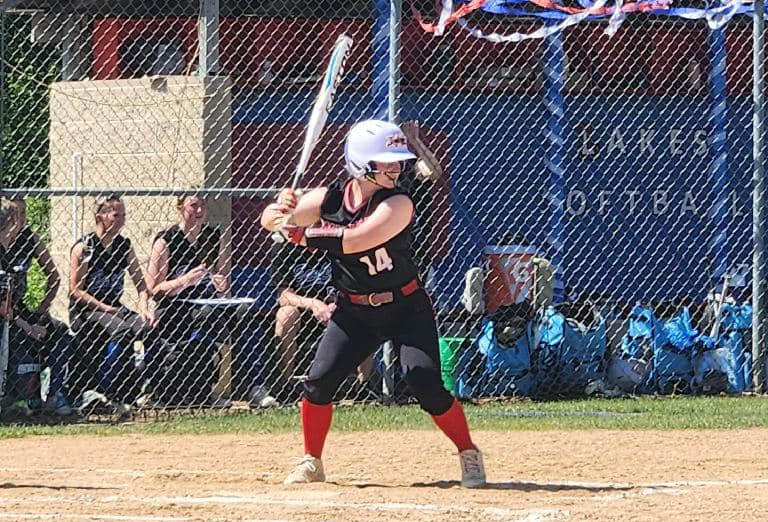
If there’s one thing just about every coach complains about when talking about coaching challenges it’s that they simply don’t have enough time.
It seems like there’s always a hundred things to go over in every practice and about 20 minutes to go over them. Hopefully things aren’t really that bad, but it can certainly feel that way.
So with that type of work/time pressure it’s important for coaches to invest their limited time where it will do the most good. Unfortunately, human nature being what it is, many seem to do the opposite of what they ought to be doing.
What mistake is it that so many make? Spending too much time trying to “fix” their best players, i.e., the ones who are performing best on the field, while ignoring or giving scant time to every one else.

I see it and hear about it all the time. Let’s say you have your top three hitters, all of whom are hitting the ball for average and power.
Their batting averages are above .333, which is pretty darned good unless the teams you’re playing are pretty darned bad, and their on base percentages (OBP) and on base plus slugging (OPS) are equally on the high end.
Then you have the bottom part of the order that can’t hit water if they fell out of a boat. (Thank you Bull Durham – one more funny line to add to last week’s blog post.)
Every time one of them comes to the plate in a tight game you suddenly rediscover religion, hoping and praying that somehow they manage to put the bat on the ball, even if it results in a duck snort or a swinging bunt, so for once you can move those runners along and score a little more than you usually do.
So where do you think you will get the best return on investment for your time and effort in practice?
To me, logic says that if you can improve those bottom few players and get them to go from poor to even below average, you’re going to score more runs and win more games. That would be a huge gain that would continue to pay dividends throughout the season.
Ok, now, answer this: where do most coaches tend to spend the bulk of their time? Unfortunately, it’s trying to make incremental improvements with their top three hitters.
Why do they do that? Because A) it’s more fun to work with a good or great player than with one who seems to barely know which end of the bat to hold and B) they often want to get a share in the glory that comes with seeing a player they’ve coached go on to do well. In other words, they want to stake their claim that they helped that player become the star she is today – even if their suggestions were actually getting in the way of that great player playing great.

The reality is it isn’t that hard for a bad coach to screw up a high-performing player. All he/she has to do is give bad advice and then insist that it be followed.
For example, the coach can tell a top-performing hitter that she should widen her stance and not stride, even though her narrower stance and normal stride have been resulting in her hitting bombs. Then the coach stands there during batting practice and forces the hitter to follow the advice he/she gave until that hitter is dragged down to the level of everyone else.
Or there’s the case of the coach who thinks he/she knows everything about pitching and decides to have all his/her pitchers do a certain set of drills he/she saw at a coaching clinic instead of realizing that the top pitcher(s) got that way by doing whatever it is they’ve been doing.
Throwing in an arbitrary set of drills just because he/she can could end up hurting the top pitcher’s performance on the field, creating unnecessary losses. If the coach feels he/she has to contribute to the pitchers, do it with the ones who are already struggling. They have far less to lose – and so does the team.
As the high school and college seasons end and the rec and travel ball seasons begin in most of the country, please keep this idea in mind: You will gain far more benefit by investing the bulk of your time bringing your least-performing players up to an average level than you will by trying to wring a little more performance out of players who are already playing at a high level.
This is a team sport, after all, and no single player, no matter how good they are, can make up for eight others who are below average. But bring the rest, or even a few of the rest, up to a higher level than they were and you’ll stand a much better chance of putting more Ws on the board.
One last thought: don’t assume you know who your best players are just by gut feel. Look at their stats too.
You may just be pleasantly surprised – and it will help you narrow down where you spend your limited time.






 Life in the Fastpitch Lane