Blog Archives
There’s No Good Reason to Squeeze the Strike Zone
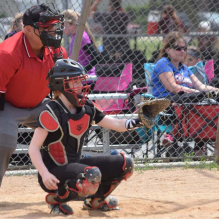
Before I start I want to say that this is not your typical rant about how umpires are terrible and shouldn’t be allowed to walk free with the rest of us. To the contrary, I have tremendous respect for umpires because I know it’s a tough and often thankless job, and that nearly all umpires do the best they can to keep each game fair for all involved.
That said, one thing I’ve never understood is why some umpires seem to have a strike zone that is roughly the size and shape of a child’s shoebox. Who do they think it’s benefiting?
According to the USA Softball Rulebook (which is the book all other sanctions are based on) the strike zone runs “from the batter’s arm pits to the top of the knees.” Further, it is “that space over any part of home plate, when a batter assumes a natural batting stance adjacent to home plate.” (Rule 1, Definitions. I looked it up so you don’t have to.)
That’s a pretty big area, really. Note that it doesn’t say the entire ball must be over the plate when it crosses, just that the ball must cross some part of the plate.
So that’s about 18-19 inches wide if you just catch the corners. The vertical area will vary by the height of the batter and her natural stance, but it’s still a lot larger than the 4 inches to either side of the beltline that some seem to demand.
If that’s the case, what reason could there be for shrinking it any smaller than that? Who does it benefit?
Let’s look at all the possibilities.
The Pitcher
That’s a big negatory. You could try to make an argument that the pitcher must learn to spot her pitches better when the strike zone is small.
But the effect that happens in 99.999% of the cases is it forces the pitchers to throw meatballs all game long because that tight little zone sits over the heart of the plate. Pitchers should be learning to pitch the corners – preferably no more than half a ball on – and nip at the very top and bottom of the strike zone.
When she’s forced to throw it down the pipe or have it be called a ball all you’re doing is discouraging a pitcher from growing her craft and creating unnecessary frustration that might discourage her from continuing in the position.

There is already a shortage of pitchers at the older ages. Squeezing the strike zone, especially on younger pitchers who are just beginning to find their way at the position, encourages their abandoning the position.
The Hitter
Sure, you would think forcing pitchers to throw meatballs would be a great thing for hitters. Who wouldn’t love a steady diet of easy-to-hit pitches?
But in many cases it has the opposite effect. Coaches who are more interested in winning a game today than in developing their players will often tell their hitters to keep the bat on their shoulders and wait for the walk instead of swinging.
At least until they get two strikes. Yes, they get lots of extra baserunners that way and might even get some extra runs on walks or wild pitches. But the HITTERS DON’T LEARN TO HIT.
They learn to stand there. At some point they’re going to have to swing the bat, but if they’re not getting reps because umpires are squeezing the zone they’ won’t develop the skills or the mechanics under pressure to execute a successful swing.
Once they’re playing in a game where a more realistic strike zone is being called they’ll be toast.

The Fans/Parents
Nope. Of course, the pitcher’s parents will be apoplectic watching a game with a shoebox-sized strike zone.
A little less if it’s being called the same way on both sides, but still angry that little Maizey is getting screwed over by the person in blue.
But even the hitters’ parents aren’t going to care for it much because it’s BORING. No one wants to watch a walkfest. No one.
The Coaches
Truthfully some coaches will be happy about it. Those are the ones for whom winning is the only important thing.
They’re the ones who are sending their kids to the plate looking for walks.
But any coach who is truly in it for the kids will want their kids to have the opportunity to learn all aspects of the game. That means pitchers learning to give their all instead of trying to hit one tiny spot, hitters swinging at pitches when they’re hittable, balls being put in play so fielders can make plays and learn how to react to different situations, and baserunners can learn how to run the bases.
The Umpires
Finally we get to the folks causing all the commotion. Why any umpire would squeeze the strike zone when it is counter to their own self-interest is beyond me.
Umpires should want to keep the game moving. If it is an untimed game, the more strikes they call the faster the game will go and the sooner they can get off the field and onto whatever they want to do after the game.
But even in a timed gameall they’re going to do is make coaches and parents angry. The last thing they need to do is encourage any more of that.
Not to mention that not calling the strike zone by the rules hurts the players as well as the game. Normally, well-meaning people volunteer to become umpires because they want to serve the game and those who play it.
Whether it’s due to a power trip or just not caring about calling a good and fair game, squeezing the strike zone goes against everything they are supposed to be doing.
At the end of the day there is simply no reason to shrink the strike zone into a belt-high, middle of the plate box. Call it properly and everyone will benefit.

It Pays to Know the Rules
When I was coaching teams, one of my yearly rituals was to read the ASA (now USA Softball) rulebook from beginning to end before the season started. Including the applications scenarios in the back.
I would also scan the rules for other sanctions my team was playing in just to make sure I knew about any variations so I didn’t embarrass myself or my team on the field.
Why would I do that? It wasn’t for fun, I can assure you. The rulebook is pretty dry.

No, I read it to make sure I was ready for those little odd things that can happen that, if you don’t know what you’re doing, could cost you a game. Or even a championship.
With the college softball season getting under way, the high school season about to start in many parts of the U.S., and travel and rec ball not far off, it seems like reading the rulebook and understanding it thoroughly would be a good use of coaches’ time.
What made me think of this is what happened in Super Bowl LVIII (58 for those of you who don’t read Roman numerals).
ICYMI, the game was tied at the end of the fourth quarter so it went into overtime. Which means the Chiefs and 49ers had to do a new coin toss, with the winner deciding whether to take the ball first or let the other team have it.
The 49ers won the coin toss and elected to receive the ball. Under ordinary circumstances that might seem like a good decision because usually overtime is “sudden victory,” the politically correct term for what we used to call “sudden death.” In other words, first team that scores wins.
But what the 49ers allegedly didn’t realize is that the overtime rules changed this year, which meant both teams would get a guaranteed possession, i.e., a chance to score. That rule change gives the advantage to the second team to get the ball because by then they will know what they have to do when it’s their turn.
So after the 49ers notched a field goal (worth 3 points for those who don’t follow football), the Chiefs knew they could tie the game with a field goal if they had to or go for the win with a touchdown, which is ultimately what they did. They succeeded, which meant a lot of third world children are looking forward to receiving free San Francisco 49ers Super Bowl LVIII Champions t-shirts.

After the game, it was brought up that where the 49ers weren’t aware of the new rules, the Chiefs had been going over them twice a week or something like that since the preseason. While it might have seemed boring at the time, it paid off.
There are always new additions (and subtractions) to the rulebook, so taking the time to understand them is critical if you want to serve your team best. Of course, one of the biggest examples here in 2024 is the change to the pitching rules which now allows leaping – although not crow hopping supposedly.
We’ll see about that, but that’s a topic for another post.
It would be pretty embarrassing for a coach to complain that a pitcher’s foot is coming off the ground on her drive forward when that’s now allowed. It would also be pretty risky for a coach to allow or encourage a pitcher to crow hop (replant the drive foot before the stride foot lands) thinking that that is the same as leaping, only to have it get called correctly in a critical game.
Knowing the rules can also help you prevent an umpire who doesn’t know the rules from costing you a game. I can speak to that from personal experience.
A team I was coaching was on defense in a “national” tournament. The other team had runners on second and third with one out so we elected to intentionally walk the current hitter to create a force at home.
My catcher moved behind the left hand batter’s box to receive the ball as I had taught her, and our pitcher threw a pitch. The umpire immediately called an illegal pitch saying the catcher was out of the catcher’s box, which meant the runner on third would score and the runner on second would advance to third. Not exactly the outcome we were looking for.
I went out to argue the call. I explained that unlike baseball, where the catcher’s box is narrow, in fastpitch softball it extends from the far edge of one batter’s box to the far edge of the other.
The umpire disagreed so I asked him to ask his partner. His partner also disagreed so I asked them to get the umpire in chief, which to their credit they did.
After about 10 minutes of consultation between them (and a rule book), they conceded the point, sent the runners back to their original bases and wiped the run off the board.
I’d love to say we got the out at home and went on to win the game. That would be a nice topper, wouldn’t it?
Unfortunately, the next hitter got a ground ball through the pulled-in infield and we went on to lose. But hey, at least it wasn’t because of a rule problem.
The fastpitch softball rulebook is filled with plenty of rules, some common, some obscure, but all worth knowing. Because you never know when a situation will come up where knowing the rules can change the situation immensely.
I know it’s boring, coaches, but do yourselves a favor. Either read the rulebook cover-to-cover yourself or assign someone on your staff to do it.
You never know when a season might turn on it.






 Life in the Fastpitch Lane