Blog Archives
What It Takes to Really Learn Something (or Unlearn Something)
When I was but a lad heading into high school, my heart’s greatest desire was to learn how to play the guitar. Partially because I loved music, but also because I thought doing so would help me meet girls.
(Don’t judge, Eddie van Halen started on guitar for the same reason, although he did a little better than me on learning it.)

Anyway, for my 14th birthday (just as the summer started) my parents bought me the cheapest piece of junk available that will still work, a $20 Decca guitar from Kmart. But I didn’t care – I had a guitar, along with a little songbook with songs like Born Free and Red River Valley that had the little finger placement charts above every chord.
I pretty much spent the entire summer locked in my room for 4-6 hours a day every day, playing the same old songs over and over until they began to sound like actual songs. In a month I felt comfortable enough to play that guitar in front of my parents and a couple of their friends.
Within a couple of months of starting I bought my first “real” guitar for $100 out of my 8th grade graduation money – a Suzuki 12 string that I still own to this day. It’s not very playable anymore but I still keep it around for sentimental reasons.
I tell you this story to point out a valuable lesson: if you really want to get good at something, you can’t just dabble at it or put in time against a clock. You have to work at it deliberately, with a goal and a sense of purpose.
In other words, you have to know your “why” or you’re just going to spin your wheels.
So if you’re a pitcher who is trying to increase her speed or learn a new pitch, you can’t just go through the motions doing what you always did. You can’t just set a timer and stop when the timer goes off.
You have to dig in there and keep working at it until you make the changes you need to make to reach your goal.
If you’re trying to convert from hello elbow to internal rotation, you can’t just throw pitches from full distance and hope it’s going to happen. You have to get in close, maybe slow yourself down for a bit, and work on things like upper arm compression and especially forearm pronation until you can do them without being aware of them.
It might take a few hours or it might take a month of focused, deliberate practice. But you have to be willing to do whatever it takes to get there.
The same goes for hitters. If you’re dropping your hands as you swing or using your arms instead of your body to initiate the swing you’re not going to change that overnight by wishing for it.
You have to get in there and work at it, and keep working at it until you can execute that part of hitting correctly. No excuses, no compromises; if you want to hit like a champion you have to work like a champion.
There will sometimes be barriers that seem insurmountable, and no doubt you’ll get frustrated. But there is some little thing holding you back and you attack it with ferocity, with a mindset you won’t let it defeat you, sooner or later you will get it and be able to move on to the next piece.

When I first learned how to play an “F” chord it was really difficult. It requires you to use your fingers in ways other chords don’t, especially when you’re a beginner.
But I needed to master that “F” chord cleanly so I could play certain songs, so as physically painful as it was (especially on that cheap little Decca guitar) I kept at it for hours on end until it was just another chord among many in the song.
The same will happen for you if you work at it. The thing you can’t do today will become easy and natural, and that will put you in a better position to achieve your larger goals.
Yes, it takes a lot to make a change, especially if it’s from something you’ve been doing for a long time. Old habits die hard as they say.
But if you approach it with passion and purpose you’ll get there – and you’ll be better-positioned for your next challenge. .
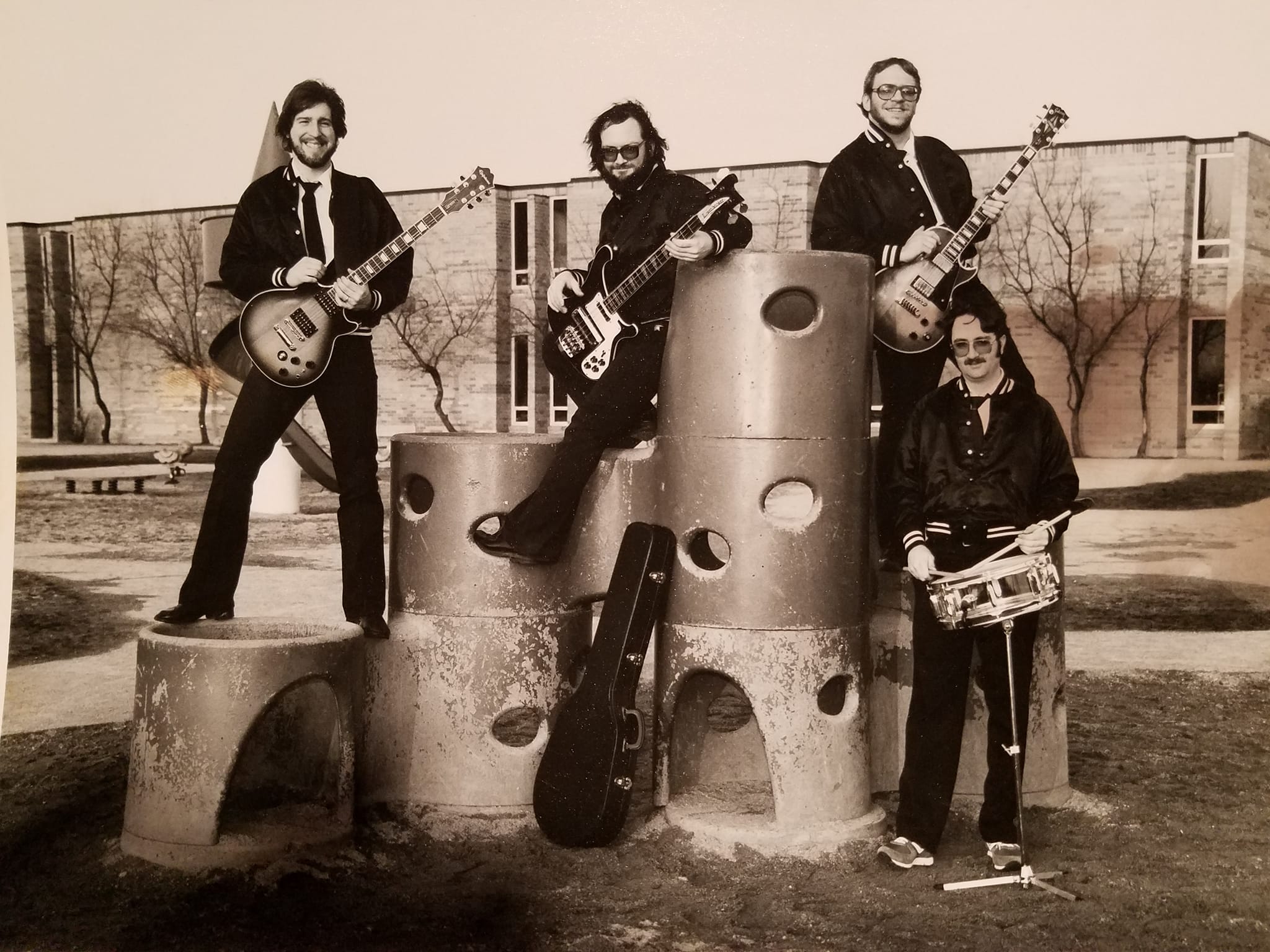
BONUS CHALLENGE: Yes, one of those young fellows up there in the top photo is me. See if you can guess which one and put your choice in the comments below. (HINT: It may not be the one you think.)
Empty repetitions are like empty calories
One of the most common questions I get from the parents of fastpitch softball pitchers is “How many pitches should my daughter throw per day?” Sometimes they’re worried that throw too much, but most of the time it’s that they don’t throw enough.
I know they’re looking for a hard and fast number, like 100, but it’s actually a tough question to give a blanket answer to. Here’s why.
If I tell them 100, or 200, or 50, then someone is probably going to start counting the pitches. The goal then becomes getting to the target number when the goal should be to improve with every pitch. That’s just human nature.
The problem is empty repetitions, where you’re just throwing to hit the number, are like eating empty calories. It might feel good at the time, but you’re really not helping yourself.
In fact, in the long run you may be hurting yourself. Just as you are what you eat, you also are what you practice. If you practice the wrong mechanics simply because you’re trying to hit that count of 100 pitches, you’re locking down a way of throwing that will make you worse, or at least keep you in the same place, rather than making you better.
I know this from personal experience. When I was a young lad, I took piano lessons. The requirement was I had to practice for a half hour a day. Well, a lot of times I wanted to be outside with my friends instead of sitting at our crappy old piano that had some broken keys, playing exercises and songs I didn’t care about. So I put in the required half hour (and not a minute more) without really accomplishing much of anything.
If you’re hungry and have a candy bar, you’ve staved off the hunger for a bit. But you haven’t nourished your body. You’re not making it healthier; you’re just making yourself fatter and more prone to whatever illness is going around. If your goal is to be strong and healthy, you need to eat foods that will help you accomplish that goal. Which means thinking before you eat.
The same is true of practicing. At each practice session you should have a goal. Maybe you need to fix your arm circle, or improve your leg drive, or gain control of your change-up. There’s always something to work on.
Knowing what your goal is, you should work toward that. It may come in 20 pitches. It may come in 1,000 pitches spread across a period of days. Whatever it takes, you should focus on what you need to do to reach your goal rather than how many pitches you’ve thrown that day.
It’s a much more efficient way to practice. In fact, I’d rather see a player throw 20 mindful pitches, or spend 10 mindful minutes working on something, than just “putting in the time” like a prisoner in the Big House.
This idea doesn’t just apply to pitching, by the way. It is the same for hitting, throwing, base running, position play, and so forth. Empty repetitions gain you nothing. In fact, the mindset that makes them empty will also tend to make them less than great, helping you get worse instead of better.
Instead, go for the substance. Nurture your game with focused practice and you’ll reach your goals more quickly – and with greater ease.






 Life in the Fastpitch Lane