Blog Archives
Changing Bodies: a Big X Factor to Performance

I have written many times about how as much as we would like it to be, performance improvement does not always follow the neat, linear “hockey stick” pattern. In fact, it is often messy, filled with gains and losses, ups and downs, little wins and little defeats.
Or as Dire Straits so wisely put it, sometimes you’re the windshield, sometimes you’re the bug.
There can be a lot of reasons for this phenomenon. A player may be physically tired from a lack of sleep or a poor diet, may have a nagging injury you don’t know about, may be under mental stress that isn’t being shared, may feel overwhelmed by the moment, may be trying too hard to compete and tying herself up in knots, may feel un- or under-appreciated, may just be having an overall bad day, etc.
One I think a lot of people fail to take into account, however, is something that youth athletes and even young adults into their early 20s all are facing: their bodies are changing. Sometimes in obvious ways, sometimes subtly.
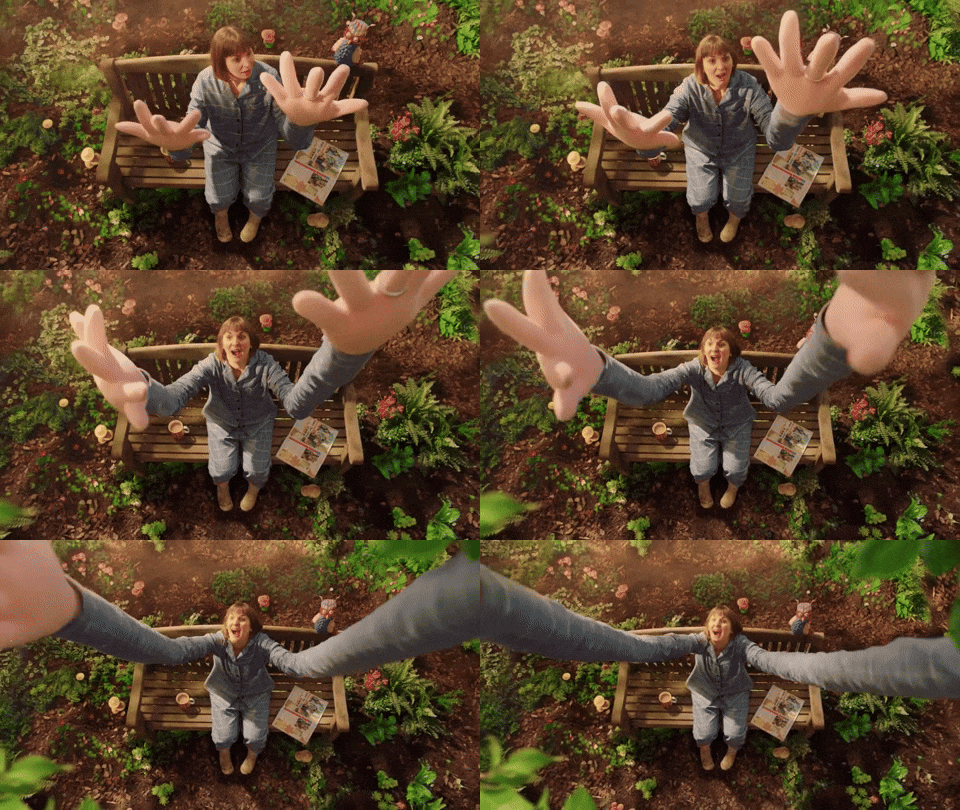
And every time their bodies change in some way they have to re-learn how to move them in a way that is conducive to good performance.
Think about the last time you were surprised when you saw that a young person who had been a cute little butterball a couple of months ago has suddenly sprouted up to become lanky and lean. Or how the scrawny little kid you remember has filled out and now looks like she could kick your butt in a wrestling match.
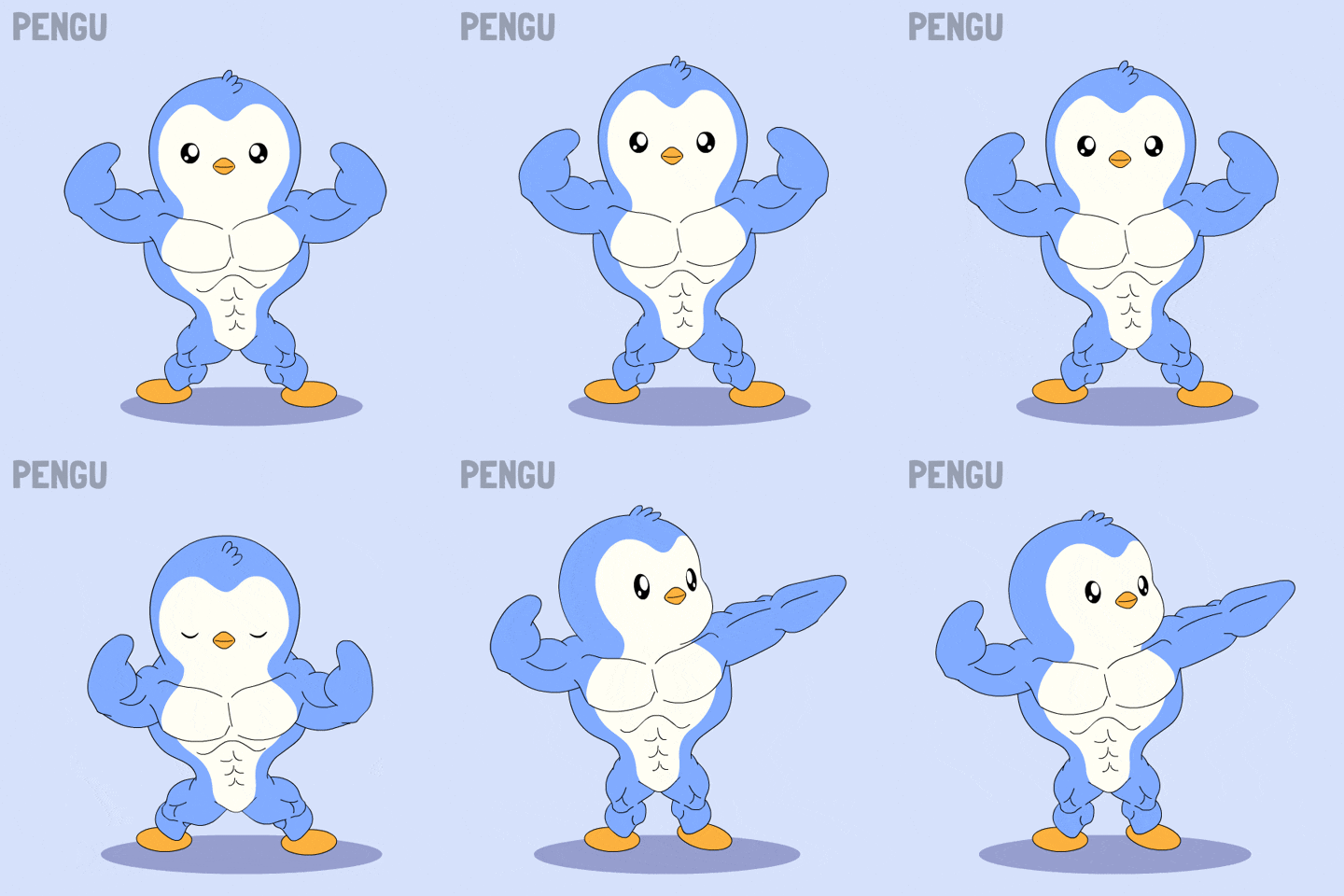
The passage of time, even as little as a month, allows you to see these differences because you remember who they were and now see who they are. You are far less likely to notice these same types of changes in someone you see every day because your frame of reference for the differences is hours instead of weeks or months. But they’re still there.
When those types of major body changes occur, they can throw off the entire the movement mechanism. Especially if the entire body hasn’t grown at the same rate.
Picture a young lady whose arms and legs have grown at a faster rate than her torso. Eventually her torso will catch up, but right now there’s an imbalance she isn’t used to.
Her body is still trying to move relative to her old proportions but that method doesn’t work anymore. Longer levers they’re not used to may make it more difficult to throw or pitch a ball or swing a bat because the way they used to feel those movements is not the way they feel it NOW.
We’ve all heard the expression “growing pains.” For those who experience a rapid, sudden growth spurt, those pains are very real.
Osgood-Schlatter disease is a great example. Rapid growth of the bones, muscles, tendons, and ligaments around the knee can create tremendous stress, causing anywhere from some to extensive knee pain, especially during athletic movements. It is difficult for young athletes to deal with it, and the old adage of “Rub a little dirt on it” doesn’t help much when your body is in revolt.
Changing bodies can also affect athletes’ balance and coordination. Their center of gravity can change, or the way they perceive their bodies in space can change, affecting athletic performance until they internalize those changes.
And this doesn’t happen just once. It can happen over and over until they make it out of that phase of their lives.
That means there will be a lot of ups and downs in performance and progress until they reach the point of who they’re meant to be.
So when you’re wondering why your favorite player is putting in the work and paying attention to the details but not seeing the results she desires, keep the X factor of body changes in mind. It might help you weather the ups and downs more easily.
Main photo by Willians_photography on Pexels.com
Fear of the Ball? They’re Not Wrong!

Every coach knows that being afraid of the ball, whether said ball is being hit, pitched, or thrown at a player, is one of the greatest performance-killers. It’s kind of like Maslow’s Hierarchy of Needs: players need to feel safe before they put all their energy into whatever activity it is they’re trying to do.
Those who have coached the littles know exactly what I’m talking about. You can see it when they step sideways to catch a thrown or fly ball, or automatically back out of the batter’s box when they’re hitting, or do the “matador” as they try to field a ground ball.
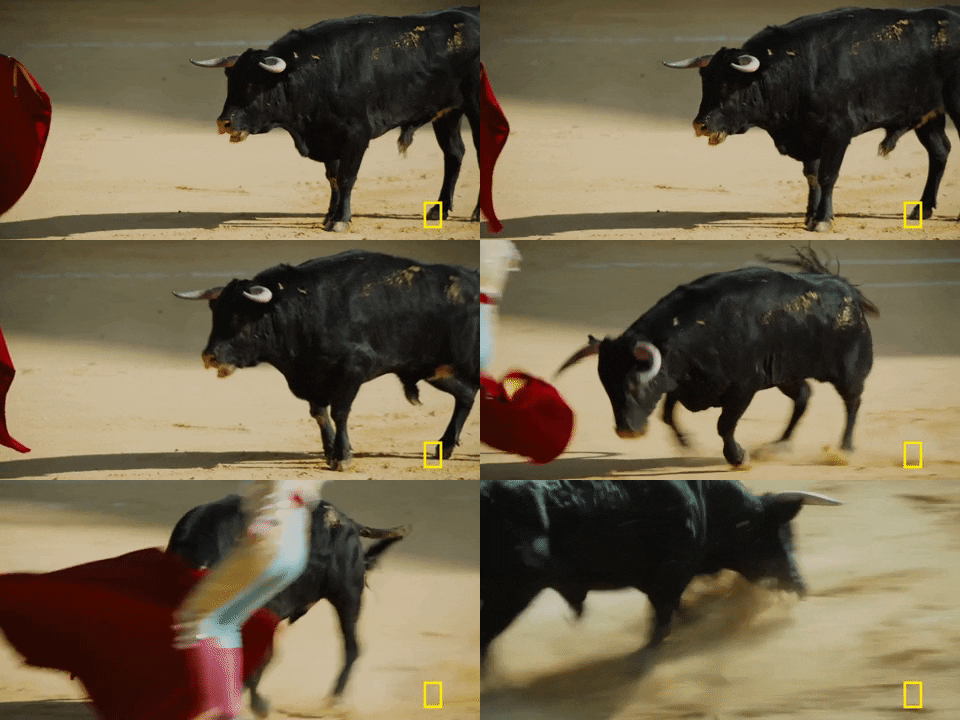
This isn’t just a problem with the littles, however. Many older players also harbor some level of fear of the ball; they’re just better at hiding it.
The typical coach reaction when these things happen is to yell at the player to “stay in there” or “stay in front of it.” But given a choice between being yelled at and actually feeling physical pain, it’s pretty obvious what their subconscious is going to opt for.
I think the thing coaches with players who are afraid of the ball have to acknowledge is that in many or even most cases those kids aren’t wrong. If the ball hits them instead of their bat or glove, it’s going to hurt. That’s just science.
So if you want to get your daughter or your players past moving away from the ball preemptively it’s going to take more than telling them “don’t do that.” Here are some tidbits that may help you with that task.
The Fear Is Often Worse Than the Reality
A lot of the kids who are afraid of the ball haven’t necessarily experienced the pain before. Their brains are simply making assumptions based on other past experiences.
Take a hitter who backs out of the box when the ball is pitched. She’s never been hit by a pitch before. But…
She has been hit by other flying objects before. Maybe a sibling threw a toy at her with sufficient force that it caused bruising or bleeding.

She also knows from picking it up that the ball is hard. So even though she has never actually been hit with a ball while hitting she is afraid of similar pain.
Once she has been hit by the ball, however, she’ll then have a frame of reference for it and it won’t seem so bad after that.
Does that mean you should throw balls with the intention of hitting your players? Of course not. But you can toss them lightly into their arms to help them start overcoming their fear.
You can also give them some incentives. When I pitch to girls who like to automatically step back I tell them if they do it again I will start throwing behind them, and may even toss one back there (lightly) to give them more reason to stay in.
If you’re going to do that, however, be careful. I have hit one or two unintentionally because I didn’t get it far enough behind them. It worked to solve the problem, but it’s not exactly the way to build the player-coach relationship.
Take the Reason for Fear Out
Most of the time a fear of the ball is driven by a lack of confidence that the player can avoid being hit. She feels like she doesn’t have the skills to catch the ball, for example, so she sidesteps to avoid any mishaps that may result from that lack of skill.
The solution here is to give them something less threatening to work with. For example, have players who are afraid play catch with foam balls like a Jugs Lite Flite ball.
The light weight and softer texture will make the entire process less threatening to them. And unless they’re hit right on the nose by a hard-thrown ball at close distance – something you should control in practice – being hit by the ball won’t produce any pain.
When they realize that they will be less inclined to bail out right away, enabling them to build proper skills so they are more confident when a real ball is introduced again.
SIDE BENEFIT: The lighter weight will also encourage them to adopt better throwing mechanics because you don’t need as much strength to throw them.
Be Smart With Practice Reps
One of the temptations coaches have when hitting ground balls is to hit them as hard as they can so the girls “are ready” for hard-hit balls in games.
The problem is, an adult coach (male or female) can hit a ground ball a lot harder than a 99% of 10 year olds will at that age. So rather than teaching their players to get in front of the ball and move into it, they’re teaching their players to sit back and try to avoid getting nailed with the ball.
This approach not only instills fear, it also teaches them to wait on the ball rather than charging it if it’s not hit hard. I don’t know how it is where you live, but the majority of ground balls in a 10U game in my area require being charged.
A better approach in my opinion is to start easy and let them build the confidence in their glove skills – especially if you’re playing on a dirt field that hasn’t been laser-leveled and groomed. Then gradually build the speed until it’s realistic for what they’re going to face.
You might even want to start by rolling balls to them rather than hitting them so they can put their entire focus on learning how to field and make the throw properly. THEN get into hitting them.
This isn’t just for the littles by the way. College and even national team-level teams do this all the time to refine their skills.
Obviously they’re not dealing with fear of the ball at that level (at least hopefully not). But this approach works for both.
Acknowledge the Fear
As an adult it’s really easy to think players should just ignore their fear of the ball. You have 2X, 3X, maybe even 4X as much experience dealing with the issue.
But try to think of it from your players’ experience. As mentioned above, maybe they’re never been hit and so have built the outcome up in their minds more than the reality will be.
Maybe they have been hit and it’s the worst pain they’ve experienced so far in their young lives. You know may know that getting by the ball is nothing compared to a kidney stone or an automobile accident injury, but they don’t. It’s all a matter of scale.
Whatever the reason, it’s not a monster under the bed you can tell them to ignore. It’s very real.
Be understanding and help them work through it little by little. If they feel safe with you they’ll overcome the fear quickly – and could turn out to be your best players in the long run.






 Life in the Fastpitch Lane