Blog Archives
Be Brave Enough to Try New Things…And Abandon Them
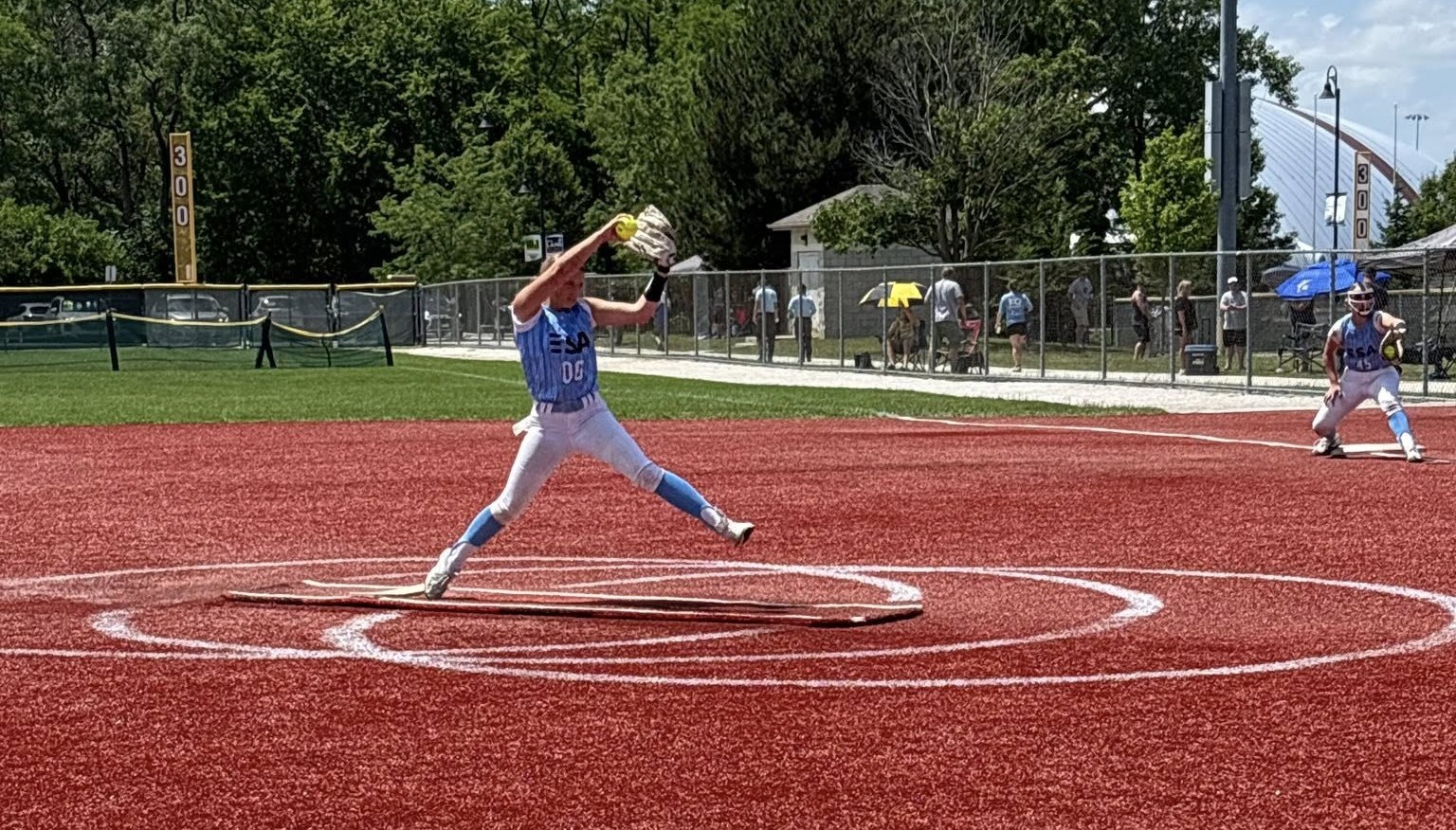
One of my favorite coaching-related sayings, which I first saw in the signature of a member of the Discuss Fastpitch Forum and which is often attributed to Henry Ford, is, “If you do what you always did, you get what you always got.” In other words, you’ll never get beyond where you are now if you’re not willing to make changes.
Really, making changes is the essence of what we do in coaching. We see something that doesn’t quite look right, or we want to help a player perform beyond the level they’re currently at (such as a pitcher gaining speed) and we have them do something different.
Some coaches, though, might be afraid to suggest those kind of changes – and some players might be afraid to try them – because they’re worried they might have a negative effect. And they’re right – they might.
Here’s the thing, though. Look at the words I just used: “suggest;” “try.”
You’re not committing to permanent changes, just doing something temporary to see what effect it has. As you would in any good science experiment.

If you’re a coach and you see an idea from a credible source and think it might help your player or student, you can make the suggestion that she tries it. Just be sure you know why you’re doing it.
There is a lot of garbage out on Instagram and other social media masquerading as good ideas. Usually it’s from people who are less coaches and more content creators.
They depend on crazy stuff that looks good in a video but doesn’t necessarily have any value in developing fastpitch softball players to help them gain more clicks and likes and shares. I get it, that’s how they make money, but the drills themselves are often just giant wastes of time that could be better-spent developing real fundamentals.
But let’s say you’ve seen or heard a new idea that makes sense to you, and you think you know who in your orbit might benefit from it. Still, you’re also afraid it might not work, or even screw them up.
Go ahead and suggest it anyway. Have your student(s) or player(s) try it and see what happens. Maybe it works, maybe it doesn’t.
Maybe it’s a godsend, or maybe it’s a disaster. Or maybe it’s both, depending on the student or player.
The thing is, if it helps you can keep it. If it doesn’t, it’s ok to say, “Never mind, go back to what you were doing before.”
Again, remember in this case you’re not trying to solve a known problem, such as a hitter swinging all arms. Whether she likes it or not that’s something that needs to be corrected in order to perform well.
Instead, you’re trying to help a player build on a strong foundation to enhance her level of success – such as helping a hitter who has decent fundamentals but is making weak contact hit the ball harder.
Again, like any good science experiment you want to introduce a single change and see what happens. If it works, great; if it doesn’t, you can get rid of it.
Either way, you have now learned something valuable that will help that player in the future.

I think coaches, especially newer coaches, are often afraid to admit they were wrong about something because they think it makes them look weak or stupid. Actually, the reverse is true.
The best coaches I know are constantly trying things to see if they help. They understand that what works for one person may not work for another, so they test different ideas to find which ones do work.
They’re also not afraid to change their long-held beliefs if they find an idea or a technique that works better. They know that closed minds are like closed bowels – not good for anyone.
As David Genest at Motor Preference Experts often says, there are 8 billion people in the world, which means there are 8 billion movement profiles. The key to success if figuring out which major changes or even minor tweaks fit the profile in front of you rather than a pre-conceived notion of what a pitcher or hitter or catcher or fielder should look like.
When I make a suggestion like this, I will usually say, “Let’s try this and see what happens.” After a few repetitions if performance goes up I’ll say, “Good, let’s keep working on that.”
If it goes down, I will say, “Well, that didn’t help” or words to that effect and we’ll usually go back to what we were doing before. No sense beating a dead horse.
When you’re doing these little science experiments, always be sure to include the student or player in the process. Ask her how that felt and encourage her to be honest.
You’re not looking for ego reinforcement; you’re looking for feedback to help determine if that change is worth keeping. Do keep in mind that sometimes a change will cause a performance loss just because it’s different and the student or player isn’t able to do it with full effort.
But if you’re observing carefully, you should be able to tell the difference between something that’s a little odd and something that just flat-out doesn’t work for that student or player.
Trying something new can be a little uncomfortable or even a little intimidating. As a coach you want to subscribe to the concept of “First do no harm.”
A little trial and error, however, is healthy as long as you remember you can always walk it back if the experiment shows that’s NOT the way to do it. And you’ll be that much smarter for the effort.
Explaining Explosive

Explosive. Dynamic. Ballistic. These are all words that are used to describe the way the body should move in fastpitch softball.
Pitchers are told to explode off the rubber and to make the arm whip a ballistic move. Hitters are told to explode their hips and then let the bat explode through the ball. Fielders are told to make a dynamic move laterally to get to the ball.
That’s all well and good, and those are great words to describe the types of movement that are involved. If you’re an adult.
If you’re a kid, especially a younger player, those big words may not mean as much. They know they’re supposed to explode, but they don’t exactly know what that looks like.
That’s where it’s important to relate what you want to something that’s already within their experience. Particularly if it’s something visual.
When you’re talking about explosion, a balloon makes a handy prop.
Blow up the balloon, and first let the air back out slowly. You can relate it to how they’re moving now.
Then pull out a pin and pop the balloon. Tell them that is what explosion looks like.
(This is particularly fun if you have kids on your team who look like they’re aliens searching the skies for the mother ship when you’re talking to them. It will definitely get their attention, and encourage them to watch you more closely from now.)
The key here is showing how quickly and suddenly the balloon goes from being inflated to being gone. One quick poke with the pin and it’s no longer there.
If you don’t have a balloon and a pin handy, another way to explain it is to talk about how you would try to scare a sibling by jumping out at him or her.
If you just walk out in front of them, they’re unlikely to be scared. Annoyed, perhaps, but not scared.
But if you pop up from behind a door, or a couch, or something else that keeps you hidden from sight until the sibling enters the room (like a jump scare in a cheesy ’80s horror movie), you can get them to jump and maybe even drop that bowl of cornflakes they just got finished preparing. Just be ready to run afterwards.
It’s easy for fastpitch softball players to get so caught up in trying to do things the right way mechanically that they become, well, mechanical. They move slowly and deliberately, which might look good on a slow motion video but doesn’t do much for helping them generate power.
Giving them the balloon or jump scare demonstration will help them understand better what you’re looking for, and more importantly what will help them produce better results.
Photo by Padli Pradana on Pexels.com






 Life in the Fastpitch Lane