Blog Archives
A Quick Primer on Fastpitch Pitching Rules

When you go to a game it often seems there are two kinds of people when it comes to the rules of fastpitch softball in general. One group feels like they know absolutely nothing and are often confused about why umpires made the call they made.
The other group is absolutely certain that they know everything there is to know about the rules and that, like the royalty, their word is sacred and indisputable. This post is for both of them.

It was actually spurred by a note from an old coaching friend who told me that after 10 years out of the game he is coming back to coach an 8U team and wanted to be sure he’s up-to-date on the latest pitching rules. Kudos, Ted, on looking before you leap.
We’re not going to get into the entire Rule 6 from the USA Softball rulebook, which covers everything. Instead, we’re going to focus on some of the recent changes as well as misconceptions that even some umpires may have.
Here we go.
Starting position (aka Start Back Rule)
Back in the old days of fastpitch, female pitchers were required to start with both feet in contact with the pitching rubber. That is no longer the case.
Pitchers must start with the foot on the throwing hand side (often referred to as the “pivot foot” or “drive foot”) in contact with the pitching rubber. That doesn’t mean it has to be sitting squarely on it; a heel barely in contact with the rubber is still considered to be in contact both by the rules of softball and the rules of physics.
But the other foot, popularly referred to as the “stride foot,” can be anywhere the pitcher wants as long as it is behind the rubber and within the 24 inch width of the rubber. That said, pitchers need to be careful about how far they set it.
Some will take this ability to the extreme, placing it far back even though it’s not right for them (although that placement can be correct for others). The easy way to figure out a good starting point is to step on the rubber and place your feet like you’re going to steal a base or run a race. Then make any minor adjustments from there.
Step Back Rule
Here’s a quick quiz: once pitchers place their feet and go into their motion are they allowed to take a step further back with the stride foot? The answer is it depends which rules body they are playing under.
A step back IS allowed under National Federation of High School (NFHS), USSSA Softball, Little League, National Softball Association (NSA, but Great Lakes Region only) and often many local rec leagues that are not affiliated with any national organization. If you are playing under a sanctioning body not listed here you may want to check their rulebook to see what is permissible.
A step back IS NOT allowed under USA Softball, PGF, Alliance Fastpitch, and some other organizations (check your local listings). If the pitcher steps back to begin the pitching motion an illegal pitch will be called.
So what does this mean for your pitchers? I teach my students to use a “start back” rather than “step back” technique. “Start back” is legal everywhere, so there are no issues with it.
On the other hand, if your pitcher is used to stepping back and then gets called for it when you play somewhere it’s not allowed, it’s totally going to mess her up for the rest of the game. She will be thinking about not stepping back instead of throwing the pitch, and even if she can block that out it will mess up her rhythm and her timing, resulting in a lot more balls and meatballs than you’re used to seeing.
Have her learn the “start back” and you’ll both be a lot better off.
Leaping (two feet in the air)
This is a fairly recent change. If you’ve been away for a while you remember when fastpitch pitchers were required to drag their pivot away from the rubber; if it came off the ground it was technically an illegal pitch, although this rule violation was rarely called for the most part. At least until you got into an important game and your pitcher was doing it.
This rule was changed a few year ago. Now it’s ok if the pivot leaves the ground and both feet are in the air. I don’t know this for sure but I have little doubt the change was made to eliminate coaches and parents from complaining constantly about an opposing pitcher their players couldn’t hit off of.
It was designed to get rid of all the ticky-tacky chirping when a pitcher’s foot was off the ground by a few inches so the kids can play the game. A good thing by my estimation, as I talked about here.
Of course, you know the story of “give a mouse a cookie.” Rather than simply being grateful that a minor irritation has been removed, some folks have decided to try to take advantage of the new rule by teaching their pitchers to leap like Johnny Lawrence in Cobra Kai.

The problem here is that when you leap that way you’re most likely to land on the foot you pushed from originally, particularly if you plan to maintain front side resistance when you land. If you push again, that’s a crow hop – which is still illegal.
Those who are teaching it claim there is no second push, they’re just landing on it. Either way, now an umpire once again has to watch closely to determine if a rule is being violated – the very thing the original rule was designed to eliminate.
That leaves us with a dilemma. Either the various governing bodies need to crack down on anything they even suspect is a crow hop or they need to eliminate the rule entirely so umpires can focus on the actual game action again. We’ll see what happens going forward.
The hands when taking your position on the rubber
Sometimes in their enthusiasm to throw a pitch young pitchers will develop a habit of stepping on the rubber with their hands together. This is illegal everywhere.
When a pitcher steps on the rubber she needs to have her hands separated. The ball can only be in one hand.
What some umpires don’t seem to understand is that it doesn’t have to be in the throwing hand. It can be in either hand when she steps on the rubber.
Unfortunately if you come across one of those rare folks in blue who don’t know the proper rule there isn’t a whole lot you can do about it. Bringing out the rulebook to prove you’re right is a big no-no.
Basically have your pitcher put the ball in her throwing hand to step on and get through the game. And secretly roll your eyes until next game.
Presenting the ball
I’m not quite sure what “presenting the ball” actually means, but whatever it’s supposed to be let me assure you there is no such rule. Case closed.
Moving the pivot foot prior to the pitch
While some people interpret the rule about keeping the “pivot foot” on the pitching rubber prior to the pitch as meaning it can’t move once it’s in place, that’s not true.
USA Softball rules (which all other rule sets are based on) specifically state the pitcher can slide her foot along the pitching rubber as long as said foot remains in contact with it. That also goes for other little wiggles or motions, including rocking back onto the heel – again, as long as contact is maintained.
What you do have to watch out for is the pitcher lifting her foot off the rubber (even slightly), or stepping forward off it (aka a “gym step”). In the case of the former it’s best to learn not to lift off, but there’s no need to go crazy if it’s coming up a little.
That’s really hard to spot from behind the plate or even from behind first base unless it’s egregious, and even then the umpire has to be inclined to watch for it and call it if he/she sees it. Most of them have more important things to do on the field than watch for that.
Read it, know it, live it
There are plenty of other rules in the rulebook, but these are probably the key ones every coach, parent, and player should know. That said, if you’re a coach playing in leagues or tournaments it behooves you to know ALL the rules, including any specialty rules that are specific to a particular tournament, so you can make sure your pitchers are prepared to succeed.
My good friend Jay Bolden and I have started a new podcast called “From the Coach’s Mouth” where we interview coaches from all areas and levels of fastpitch softball as well as others who may not be fastpitch people but have lots of interesting ideas to contribute.
You can find it here on Spotify, as well as on Apple Podcasts, Pandora, Stitcher, iHeart Radio, or wherever you get your podcasts. If you’re searching, be sure to put the name in quotes, i.e., “From the Coach’s Mouth” so it goes directly to it.
Give it a listen and let us know what you think. And be sure to hit the Like button and subscribe to Life in the Fastpitch Lane for more content like this.

It Pays to Know the Rules
When I was coaching teams, one of my yearly rituals was to read the ASA (now USA Softball) rulebook from beginning to end before the season started. Including the applications scenarios in the back.
I would also scan the rules for other sanctions my team was playing in just to make sure I knew about any variations so I didn’t embarrass myself or my team on the field.
Why would I do that? It wasn’t for fun, I can assure you. The rulebook is pretty dry.

No, I read it to make sure I was ready for those little odd things that can happen that, if you don’t know what you’re doing, could cost you a game. Or even a championship.
With the college softball season getting under way, the high school season about to start in many parts of the U.S., and travel and rec ball not far off, it seems like reading the rulebook and understanding it thoroughly would be a good use of coaches’ time.
What made me think of this is what happened in Super Bowl LVIII (58 for those of you who don’t read Roman numerals).
ICYMI, the game was tied at the end of the fourth quarter so it went into overtime. Which means the Chiefs and 49ers had to do a new coin toss, with the winner deciding whether to take the ball first or let the other team have it.
The 49ers won the coin toss and elected to receive the ball. Under ordinary circumstances that might seem like a good decision because usually overtime is “sudden victory,” the politically correct term for what we used to call “sudden death.” In other words, first team that scores wins.
But what the 49ers allegedly didn’t realize is that the overtime rules changed this year, which meant both teams would get a guaranteed possession, i.e., a chance to score. That rule change gives the advantage to the second team to get the ball because by then they will know what they have to do when it’s their turn.
So after the 49ers notched a field goal (worth 3 points for those who don’t follow football), the Chiefs knew they could tie the game with a field goal if they had to or go for the win with a touchdown, which is ultimately what they did. They succeeded, which meant a lot of third world children are looking forward to receiving free San Francisco 49ers Super Bowl LVIII Champions t-shirts.

After the game, it was brought up that where the 49ers weren’t aware of the new rules, the Chiefs had been going over them twice a week or something like that since the preseason. While it might have seemed boring at the time, it paid off.
There are always new additions (and subtractions) to the rulebook, so taking the time to understand them is critical if you want to serve your team best. Of course, one of the biggest examples here in 2024 is the change to the pitching rules which now allows leaping – although not crow hopping supposedly.
We’ll see about that, but that’s a topic for another post.
It would be pretty embarrassing for a coach to complain that a pitcher’s foot is coming off the ground on her drive forward when that’s now allowed. It would also be pretty risky for a coach to allow or encourage a pitcher to crow hop (replant the drive foot before the stride foot lands) thinking that that is the same as leaping, only to have it get called correctly in a critical game.
Knowing the rules can also help you prevent an umpire who doesn’t know the rules from costing you a game. I can speak to that from personal experience.
A team I was coaching was on defense in a “national” tournament. The other team had runners on second and third with one out so we elected to intentionally walk the current hitter to create a force at home.
My catcher moved behind the left hand batter’s box to receive the ball as I had taught her, and our pitcher threw a pitch. The umpire immediately called an illegal pitch saying the catcher was out of the catcher’s box, which meant the runner on third would score and the runner on second would advance to third. Not exactly the outcome we were looking for.
I went out to argue the call. I explained that unlike baseball, where the catcher’s box is narrow, in fastpitch softball it extends from the far edge of one batter’s box to the far edge of the other.
The umpire disagreed so I asked him to ask his partner. His partner also disagreed so I asked them to get the umpire in chief, which to their credit they did.
After about 10 minutes of consultation between them (and a rule book), they conceded the point, sent the runners back to their original bases and wiped the run off the board.
I’d love to say we got the out at home and went on to win the game. That would be a nice topper, wouldn’t it?
Unfortunately, the next hitter got a ground ball through the pulled-in infield and we went on to lose. But hey, at least it wasn’t because of a rule problem.
The fastpitch softball rulebook is filled with plenty of rules, some common, some obscure, but all worth knowing. Because you never know when a situation will come up where knowing the rules can change the situation immensely.
I know it’s boring, coaches, but do yourselves a favor. Either read the rulebook cover-to-cover yourself or assign someone on your staff to do it.
You never know when a season might turn on it.
Pros and Cons of New Pitching Rule on Leaping
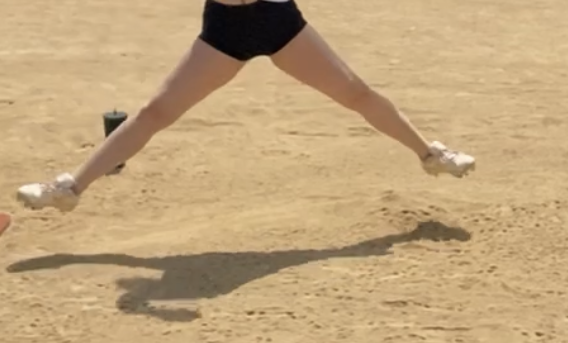
By now you’ve no doubt heard about a very significant change to the fastpitch softball pitching rules in the NCAA, NFHS, and various travel ball level organizations. The rule involves leaping, i.e., having both feet in the air during the stride-out portion of the pitch.
Up until this rule change leaping was illegal, which meant if a pitcher was called for it the batter would automatically be credited with a ball, even if the pitch came in fat and happy down the middle. That collective sigh of relief you heard a few weeks ago came from pitchers, their parents, their grandparents and other relatives, their team coaches, their pitching coaches, and other interested parties when it was announced that leaping will now be allowed.

Of course, no change occurs in the fastpitch softball world without some level of angst being generated, and this rule change is no exception. Some are in favor, some are against, but whatever their point of view most are passionate about whatever they think.
That’s why I thought it might be a good idea to go through the pros and cons of leaping while pitching in a more dispassionate way to help everyone understand this change a little more.
But First – Leaping v Crow Hopping
Before we get into the pros and cons I think it’s important to distinguish between leaping, which is now legal, and crow hopping, which remains illegal, because many use the terms interchangeably. Especially coaches who are complaining about an opposing pitcher.
Leaping is what happens when a pitcher strides off the pitching rubber, her back foot loses connection with the ground, and both feet are in the air at the same time until the front foot lands. Often this is the result of a late push or drive off the pitching rubber by the drive leg.
Most people consider there to be no particular advantage to leaping, and in fact it might actually reduce a pitcher’s speed a little. Leaping is now allowed since the rule change.
Crow hopping starts out the same way as a leap, with both feet off the ground. The difference, though, is that the drive leg lands first AND THEN there is a second push-off. This gives the pitcher an advantage because she is essentially starting her pitch from a much closer distance – generally six to eight feet.
This shorter closing distance gives the batter less time to react, essentially making the pitcher appear to be faster than she actually is. Crow hopping is still not allowed by the rules.
Pros of the Leaping Rule Change
The biggest pro of the change to allow leaping IMHO is it theoretically eliminates opposing coaches trying to get a successful pitcher pulled out of a game, or get into a pitcher’s head to the point where she is no longer effective, by complaining that she is leaping (or crow hopping as most say). Because what can be better than a grown man or woman playing head games with a 12 year old?
Think of all the time and animosity that will be saved by not arguing about whether a pitcher is legal or illegal because her back foot came an inch or two off the ground. In today’s world of timed games that alone will be a plus.
Another pro is it gives pitchers the opportunity to learn their craft without having to worry about whether their back foot is coming off the ground. Pitching is hard enough; removing a meaningless obstacle to learning it enables budding pitchers to focus on the mechanics that will help them develop and grow.
Finally, it saves the umpires (especially the ones working solo) from having to watch for and call pitchers for leaping. With that off their plates they can focus on things that are far more important to the outcome of the game – such as calling balls and strikes or runners leaving early on a steal or a fly ball.
Again, in my opinion and the opinions of many other pitching coaches there is no real advantage gained by a leap, so it’s essentially no harm, no foul.
Cons of the Leaping Rule Change
The biggest con to the rule change is that leaping is kind of a gateway to crow hopping. If you stop calling leaping, umpires may eventually quit calling crow hopping, which will then give pitchers an unfair advantage.
We’ve seen this in the men’s game. Many of the top men’s pitchers crow hop and don’t get called for it because umpires seem to have given up worrying about it.
Will that happen in women’s fastpitch as well? Time will tell.
Another con to leaping is that mechanics are not as efficient, which means pitchers may actually be giving up a little speed, accuracy, or movement. Many will not be able to transfer as much energy into the ball because their posture or timing (or both) is off, and they may not be able to get their arms and/or hands into the optimal position for delivery.
If no one is worried about proper leg drive because pitchers won’t be called for leaping it could lead to pitchers not achieving their full potential. Pitching coaches will quit looking for it and pitchers will never make the effort to correct it.
I fully believe that a pitcher who can keep herself stacked properly over the back side will pitch better than if she strides in a way that pulls her back foot off the ground prematurely. That’s just biomechanics and physics.
Finally, there is the health and safety issue. Pitchers who leap, especially if they go after with with enthusiasm because it’s no longer illegal, will put themselves at greater risk of ankle, knee, hip, and back injuries, particularly in the lower lumbar region.
The weight-forward, body-forward posture most leapers have will cause more strain as they collide with the ground. Over time, those repetitive out-of-balance landings can lead to injuries that could put a pitcher out of action for a month, several months, a year, or even longer.
And then she’ll have to relearn proper technique anyway to avoid future injuries. Why not just start from a safer technique and go from there?
Choose Wisely
The bottom line for me is that the rule change is a good thing from a practical, in-game point of view, but it shouldn’t be considered carte blanche to use poor technique.
I will still strive to teach my students how to drive more efficiently, with their drive foot on the ground. But if they do come up a little, I’m glad to know it’s not going to cost them the game anymore.






 Life in the Fastpitch Lane