Blog Archives
Coaches, Stop Putting Pitchers in Games without Warming Them Up

Today’s post was a suggestion from several of my pitching coach colleagues who all shared similar horror stories. As you can probably tell from the title, it comes from their pitching students being put into game situations (usually very difficult ones) without the opportunity for a proper warm-up.
If you’ve been seeing this rest assured you’re not alone. Apparently it’s happening all over the softball world based on the stories I’ve been hearing, and expect to hear in the comments afterward.
Now, let me state up-front that I don’t think too many coaches are doing it intentionally. It’s more a matter of circumstances.
Here’s a typical example. Pitcher A starts the game and is doing fine for three inning. Then, in the fourth, the other team figures her out and starts hitting her, or she starts walking batters like she’s being paid to do it, or a combination of both.
Suddenly the coach realizes he/she needs to bring in a reliever and calls in Pitcher B from first base, or right field, or the bench, or wherever Pitcher B has been spending her time this game. No warning, no warm-ups, just her name called and a frantic gesture to come to the circle.
Of course, Pitcher B isn’t at all ready to come in and pitch effectively, either physically or mentally, so she throws her five allotted warm-up pitches and then proceeds to struggle. In the meantime, the coach gets mad because Pitcher B is not performing up to her usual standards; doubly mad if Pitcher B is normally his/her reliable Ace.
It happens. I’ve seen it happen. I’ve counseled distraught pitchers after it happened, because they feel like they let their teams down, their coaches yelled at them for not pitching their usual games, and in some cases they’ve now lost confidence in their ability to pitch at all.
But the problem isn’t with the pitcher. It’s with the coach who didn’t plan ahead and perhaps doesn’t understand that going in to pitch is a little different than subbing in at second base or shortstop or center field.

There is a reason pitchers typically warm up for anywhere from 10 to 40 minutes or more. Pitching a softball well requires a complex set of movements that are unique to that position and that must be precisely timed.
A little stiffness here, a little imbalance there, and the whole mechanism is off enough to cause pitchers to struggle. It doesn’t take much. It also requires a certain rhythm that must be found before the pitcher is ready to go full-out. And that’s just for a basic fastball.
Each pitch also needs its own warm-up time to help the pitcher home in on the precise mechanics that will make it do what it’s supposed to do, whether it’s to move in a certain direction, give the impression it will come in at a different speed, or do something else that will cause the batter to either swing and miss or hit the ball weakly.
On top of all that, pitchers need that warm-up time to prepare themselves mentally for the battles ahead. They need to find their inner calm or inner fire or whatever it is they use to help them compete, and they need to feel ready to face the trial by fire that is inherent in the position.
None of that will happen if the pitcher is suddenly yanked into the game and given five warm-ups. It also won’t happen if a pitcher is pulled from the game or the bench and told to go warm up quickly and then two minutes later the coach is asking “Are you ready yet?”
Oh, but you say, the pitcher warmed up before the game. I guess that’s better than nothing, but just barely. Keep in mind that that warm-up likely happened more than an hour ago.
In the ensuing time most if not all of the benefits of warming up have been lost. The pitcher’s motion is cold (even if the arm isn’t), her rhythm has been lost, and her mind has been focused elsewhere.
It’s almost the same as saying she warmed up before the game yesterday so should be ready today. In pitching terms, that hour is so long ago it’s as if it never happened.
I understand that there are times when it’s unavoidable. Sometimes the pitcher gets injured, whether it’s taking a line drive off the bat, having a runner slide into her on a play at the plate, getting hit by a wild pitch when she’s batting, or twisting her ankle landing halfway into a hole that resulted from no one dragging or raking the field after the first of the day was thrown.

At that point someone has to take over. In these types of emergency scenarios it’s important for coaches to keep their expectations (and their game plans) realistic.
Keep pitching calling simple (fastballs and changeups most likely) and don’t be surprised or express disappointment or anger if the pitcher isn’t as effective as she usually is. She’s trying, coach.
In any other situation, remember these wise words: Your lack of planning does not constitute my emergency.
Even when things are going well, coaches should have a backup plan in place. Keep a pitcher warmed up and ready to go in at a moment’s notice, just in case whoever is in right now needs to come out. Unless there is a huge disparity, a warmed up #3 will probably do better than a cold #2, or even a cold #1.
Also keep in mind the health and safety factor. A pitcher who has not gone through a proper warm-up is at higher risk of injury, especially in and around joins like the shoulders, elbows, knees, and ankles. Giving your pitchers adequate time to warm up before heading into that stressful, high-impact position will make it far more likely she’s ready to go not just this time but the next time you need her too.
Pitching is hard enough on the body, the mind, the emotions, and the spirit. Don’t make it harder by pulling a pitcher in without a warm-up.
With a little planning and forethought you can keep your pitchers healthier and produce better results for the team.
Pros and Cons of New Pitching Rule on Leaping
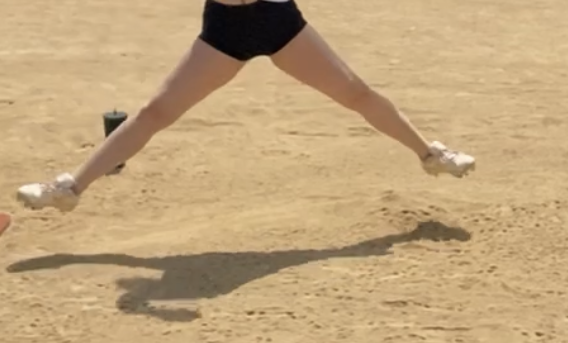
By now you’ve no doubt heard about a very significant change to the fastpitch softball pitching rules in the NCAA, NFHS, and various travel ball level organizations. The rule involves leaping, i.e., having both feet in the air during the stride-out portion of the pitch.
Up until this rule change leaping was illegal, which meant if a pitcher was called for it the batter would automatically be credited with a ball, even if the pitch came in fat and happy down the middle. That collective sigh of relief you heard a few weeks ago came from pitchers, their parents, their grandparents and other relatives, their team coaches, their pitching coaches, and other interested parties when it was announced that leaping will now be allowed.

Of course, no change occurs in the fastpitch softball world without some level of angst being generated, and this rule change is no exception. Some are in favor, some are against, but whatever their point of view most are passionate about whatever they think.
That’s why I thought it might be a good idea to go through the pros and cons of leaping while pitching in a more dispassionate way to help everyone understand this change a little more.
But First – Leaping v Crow Hopping
Before we get into the pros and cons I think it’s important to distinguish between leaping, which is now legal, and crow hopping, which remains illegal, because many use the terms interchangeably. Especially coaches who are complaining about an opposing pitcher.
Leaping is what happens when a pitcher strides off the pitching rubber, her back foot loses connection with the ground, and both feet are in the air at the same time until the front foot lands. Often this is the result of a late push or drive off the pitching rubber by the drive leg.
Most people consider there to be no particular advantage to leaping, and in fact it might actually reduce a pitcher’s speed a little. Leaping is now allowed since the rule change.
Crow hopping starts out the same way as a leap, with both feet off the ground. The difference, though, is that the drive leg lands first AND THEN there is a second push-off. This gives the pitcher an advantage because she is essentially starting her pitch from a much closer distance – generally six to eight feet.
This shorter closing distance gives the batter less time to react, essentially making the pitcher appear to be faster than she actually is. Crow hopping is still not allowed by the rules.
Pros of the Leaping Rule Change
The biggest pro of the change to allow leaping IMHO is it theoretically eliminates opposing coaches trying to get a successful pitcher pulled out of a game, or get into a pitcher’s head to the point where she is no longer effective, by complaining that she is leaping (or crow hopping as most say). Because what can be better than a grown man or woman playing head games with a 12 year old?
Think of all the time and animosity that will be saved by not arguing about whether a pitcher is legal or illegal because her back foot came an inch or two off the ground. In today’s world of timed games that alone will be a plus.
Another pro is it gives pitchers the opportunity to learn their craft without having to worry about whether their back foot is coming off the ground. Pitching is hard enough; removing a meaningless obstacle to learning it enables budding pitchers to focus on the mechanics that will help them develop and grow.
Finally, it saves the umpires (especially the ones working solo) from having to watch for and call pitchers for leaping. With that off their plates they can focus on things that are far more important to the outcome of the game – such as calling balls and strikes or runners leaving early on a steal or a fly ball.
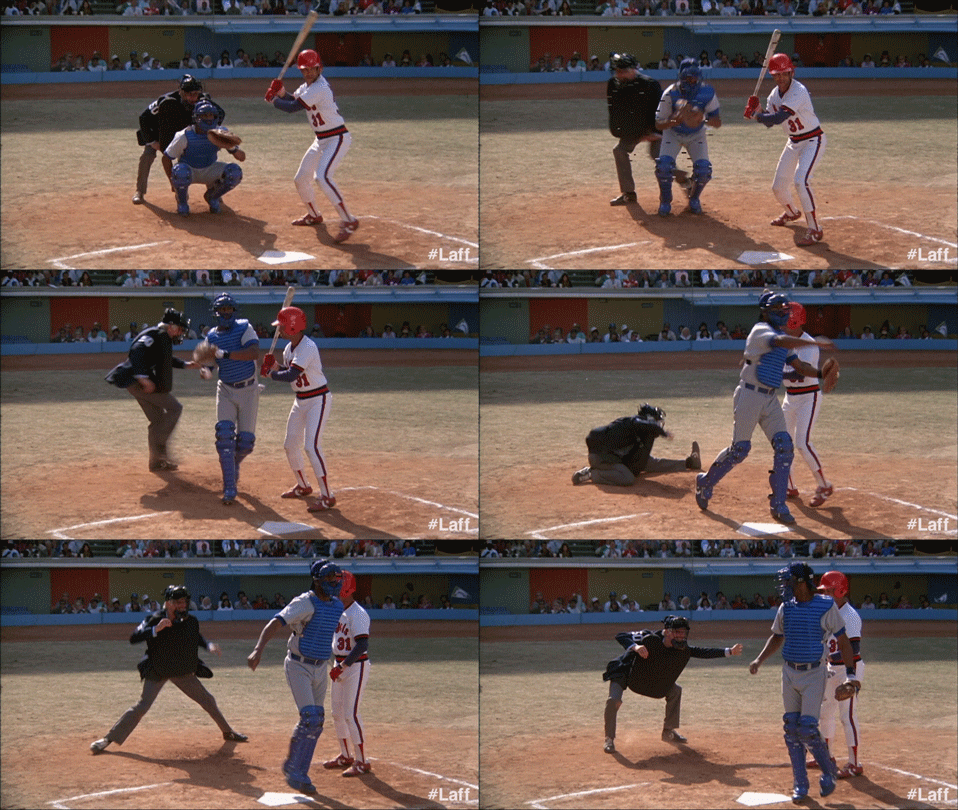
Again, in my opinion and the opinions of many other pitching coaches there is no real advantage gained by a leap, so it’s essentially no harm, no foul.
Cons of the Leaping Rule Change
The biggest con to the rule change is that leaping is kind of a gateway to crow hopping. If you stop calling leaping, umpires may eventually quit calling crow hopping, which will then give pitchers an unfair advantage.
We’ve seen this in the men’s game. Many of the top men’s pitchers crow hop and don’t get called for it because umpires seem to have given up worrying about it.
Will that happen in women’s fastpitch as well? Time will tell.
Another con to leaping is that mechanics are not as efficient, which means pitchers may actually be giving up a little speed, accuracy, or movement. Many will not be able to transfer as much energy into the ball because their posture or timing (or both) is off, and they may not be able to get their arms and/or hands into the optimal position for delivery.
If no one is worried about proper leg drive because pitchers won’t be called for leaping it could lead to pitchers not achieving their full potential. Pitching coaches will quit looking for it and pitchers will never make the effort to correct it.
I fully believe that a pitcher who can keep herself stacked properly over the back side will pitch better than if she strides in a way that pulls her back foot off the ground prematurely. That’s just biomechanics and physics.
Finally, there is the health and safety issue. Pitchers who leap, especially if they go after with with enthusiasm because it’s no longer illegal, will put themselves at greater risk of ankle, knee, hip, and back injuries, particularly in the lower lumbar region.
The weight-forward, body-forward posture most leapers have will cause more strain as they collide with the ground. Over time, those repetitive out-of-balance landings can lead to injuries that could put a pitcher out of action for a month, several months, a year, or even longer.
And then she’ll have to relearn proper technique anyway to avoid future injuries. Why not just start from a safer technique and go from there?
Choose Wisely
The bottom line for me is that the rule change is a good thing from a practical, in-game point of view, but it shouldn’t be considered carte blanche to use poor technique.
I will still strive to teach my students how to drive more efficiently, with their drive foot on the ground. But if they do come up a little, I’m glad to know it’s not going to cost them the game anymore.
For the Love of Gaia, Please Stop Teaching Screwballs to 10 Year Olds

There is a phenomenon I’ve noticed lately in my area and seemingly is happening across the country as I speak with other pitching instructors.
When I start lessons with a new pitcher I will ask her what pitches she throws. For pitchers under the age of 14 my expectation is fastball, change, and maybe a drop ball.
These days, however, I have been shocked at how many, even the 10 year olds, will include a “screwball” in their list of pitches. Especially when I then watch them pitch and they struggle to throw their basic fastball with any velocity or semblance of accuracy.
Who in the world thinks teaching a screwball to a 10 year old (or a 12 or 13 year old for that matter) is a good idea? Particularly the screwball that requires the pitcher to contort her arm and wrist outward in a twisting motion that includes the “hitchhiker” finish?

There is simply no good reason to be doing that. For one thing, most kids at that age have rather weak proprioception (body awareness of self movement), which means they often struggle to lock in a single movement pattern.
So, since the way you throw a screwball is in direct opposition to the way you throw a fastball (especially with internal rotation mechanics but it’s even true of hello elbow pitchers) why would you introduce a way of throwing that will interfere with development of core mechanics? Pitchers who are trying to learn both will be splitting their time between two opposing movements, pretty much ensuring they will master neither.
Then coaches and parents wonder why the poor kid can’t throw two strikes in a row in a game.
Just as important is the health and safety aspect of twisting your forearm and elbow against the way they’re designed to work. As my friend and fellow pitching coach Keeley Byrnes of Key Fundamentals points out, “Boys at that age are cautioned against throwing curve balls with a twisting action because of the stress it places on their elbow joints. Why would you encourage a softball pitcher to do the same thing?”
Keeley also points out that most 10 year olds don’t hit very well anyway, so developing a screwball at that age is unnecessary. You can get many hitters out by throwing a fastball over the plate with decent velocity (which means it’s not arcing in).
Tony Riello, a pitching coach, trainer, and licensed doctor of chiropractic, is also concerned about the effect throwing the twisty screwball can have on other body parts. He says, “To be that spread out left to then force the arm and shoulder right seems not healthy for either the back or the shoulder,” he says.
Then there’s the fact that in 99% of the cases a screwball isn’t really a screwball. It’s just a fastball that runs in on a hitter.
Why do I say that? Because if you look at the spin on 99% of so-called screwballs, especially among 10 year olds but even at the collegiate level, they don’t have the type of spin that would make them break. They have “bullet” spin, i.e., their axis of spin is facing the same direction as the direction of travel.
For a screwball to actually be a screwball the axis of spin would need to be on top of the ball, with spin direction going toward the throwing hand side. Just as a curve spins away from the throwing hand side.
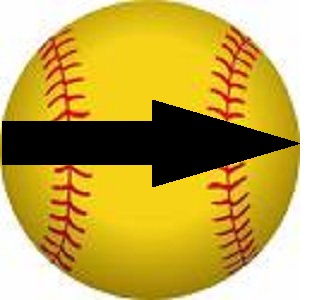
So if you’re throwing a pitch that isn’t going to break anyway, why not just learn to throw an inside fastball instead? If you want it to run in a little more, stride out more to the glove side then let it run itself back in.
But again, you’re now giving that young pitcher who’s just trying to learn to throw the ball over the plate two different mechanics (stride straight, stride out) to use, which means she’s probably going to be half as effective on either one.
Oh, and that hitchhiker move that’s supposedly the “key” to the screwball and places all the stress on the elbow? It happens well after the ball is out of the pitcher’s hand, so it has no impact on the spin of the pitch whatsoever. Zero. None. Nada.

Finally, and perhaps most important, once a young pitcher can throw with decent velocity and locate her pitches (or at least throw 70% strikes) there are simply better pitches for her to learn first.
After the basic fastball, in my opinion (and in the opinion of most quality pitching coaches), the second pitch that should be learned is a changeup that can be thrown with the same arm and body speed as the fastball but resulting in a 10-15 mph speed differential. Throwing both the fastball and change at the right speeds for 70% strikes should be enough to keep the typical 10- or 12-year old pitcher busy for a while.
Next you would want to add a drop ball. The mechanics of a properly taught drop ball are very similar to the fastball. In fact, I like to say they are fraternal twins.
Making a ball drop at the right spot, especially given so many young hitters’ desire to stand up as they swing, will get you a lot more outs, either as strikeouts or groundouts. A good drop ball will still translate into more groundouts as you get older too – just ask Cat Osterman.
From there it’s a little less certain. You can go either rise ball or curve ball. I usually make the decision based on the pitcher’s tendencies.
A well-thrown rise ball is still an extremely effective pitch, even though it doesn’t actually break up. And a well-thrown curve will actually break either off the plate (traditional curve) or back onto it (backdoor curve). Either way it moves – unlike the screwball which mostly travels on the same line.
I would save the screwball for last – unless you happen to play in an area where slappers are predominant in the lineup. Which in the era of $500 bats and quality, year-round hitting instruction is about as scarce as screwballs that actually change direction.
There are simply better pitches to learn. And if you do work on a screwball, there are better ways to learn it than trying to twist your wrist and forearm off in a contorted move that should be outlawed by the Geneva Convention.
The bottom line is that, for the love of Gaia, there is no good reason to be teaching a screwball to a 10 year old – or any pitcher who hasn’t mastered her fastball and changeup first. Let’s make sure we’re giving our young pitchers the actual tools they need to succeed – and avoid those that can lead to injury and perhaps a career cut short.






 Life in the Fastpitch Lane