Blog Archives
Giving a Little Love to the First Basemen

Have you ever stopped to think about which defensive position in fastpitch softball is the least valued? I think you can make a pretty argument for first base.
I mean, sure, there are plenty of parents who think that playing the outfield (doesn’t matter which specific position) is an insult to their highly talented daughters. Especially in the 10U-14U age groups.
But eventually they come to see that playing the outfield has some pretty unique challenges, as well as that having great outfielders can make or break a team’s success. Game-saving catch or throw, anyone?
There is, however, one position that doesn’t seem to get much love from coaches, parents, or fans in general: first base.
I’ve heard plenty of long-time coaches say that first base is where you put a good hitter who can’t field or throw. Or it’s where you put a left-handed thrower whose parents are complaining about her being in the outfield.
Those who think that way, however, are missing an important point, which is that a great first baseman can make up for some serious deficiencies at other positions.
The most obvious, of course, is when you have a team that struggles to throw the ball accurately. A quality first baseman will snag all those errant throws while still finding a way to either keep her foot on the bag somehow or sweep a quick tag as the runner is approaching first.
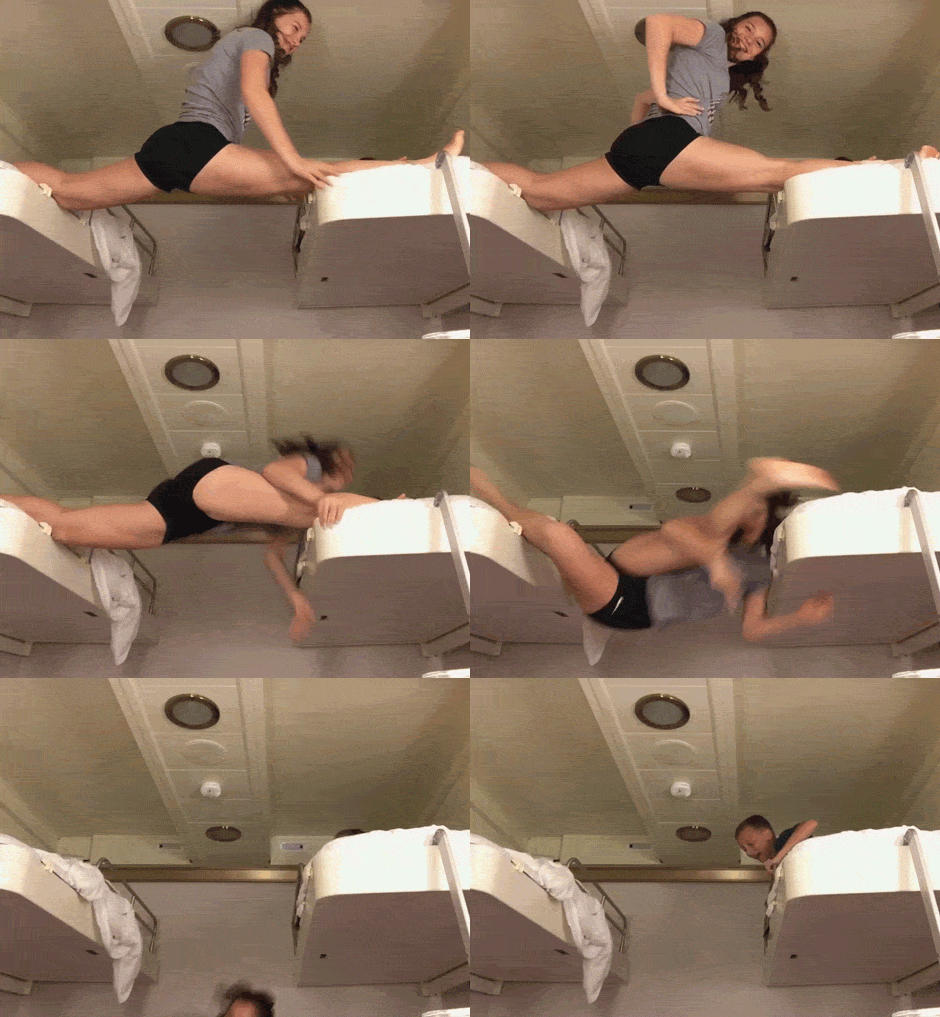
I’ve even seen first basemen do the splits trying to pick up a throw going in the dirt. Not consciously, necessarily, but they’re so focused on getting the ball and getting the out they just end up there. It’s quite a sight to see.
A heads-up first baseman can also save you some runs when another infielder forgets there is a runner on third with less than two outs. A quick snag and throw to home can catch a baserunner who thought she could take advantage of a fielder who either didn’t know or should have known better.
On a dropped third strike first basemen have to know where to position themselves based on where the ball ended up, then have to stand there while that batter/runner charges full steam ahead toward them. That may not seem like too complicated of a play but how many times have you seen it played incorrectly – and had a hitter who struck out reach base instead?
First basemen have to know when to charge a bunt and when to go back to the base. They’re often involved in rundowns between first and second as well as home and third.
They have to know when to go for that ground ball to their right and when to let off of it to cover the base. And they’re often the cut on throws to the outfield, which means they have to understand how to get in position depending on where the ball is hit and then pick out the catcher’s voice from the cacophony of voices on the field, in the dugout, and in the stands telling them what to do.

In other words, it’s more than just standing there playing a simple game of catch on an easy ground ball to short.
Basically, first base is what you might call a “lunch bucket” position because most of the time, if you’re playing it well, no one notices or they take it for granted. Even on some of the crazy stretches or the jump and tags.
But don’t come up with a ball in the dirt and you’re going to hear about how you have to “scoop it.” Come off the bag a little late on a wild throw and you’re going to hear about how you have to come off sooner. Even if the real solution would be a better throw to begin with.
It can be a frustrating for sure. Which is why I thought it might be nice for those first basemen out there to get a little love and recognition for everything they do to basically fix the mistakes everyone else makes.
So here’s to all of you who play first base – a position so under-valued it doesn’t even have a cool nickname. I see you.
Keep doing what you’re doing and saving your teammates’ bacon time after time. You may not get a lot of recognition, but they’ll surely miss you when you’re not out there.
Two Hands or One? It Depends

I’m pretty sure every fastpitch softball player ever has been instructed to catch with two hands. This mantra is drilled into them from the first time they put on a glove – and often until the last time.
Yet if you watch high-level players play you will often see players catching with just their glove hand. So which way is correct?
The answer is: it depends.
Sorry to equivocate but there is no “right,” one-size-fits-all answer. Because either way can be right depending on the situation.
Using two hands
When receiving a throw, the two-handed approach is generally preferred if the ball is thrown within the area of the torso. Using two hands helps secure the ball and protects against an error in case it accidentally doesn’t make its way into the pocket of the glove.
Two hands are also generally preferred when a throw must be made immediately following the catch, such as on a potential double play. Catching with two hands means the throwing hand is right there with the glove, enabling a faster transfer than if the throwing hand is somewhere else.
Another time two hands is the way to go is when fielding a ground ball between the feet. Especially if it is bouncing instead of rolling. Using two hands makes it easier to react to the unexpected and still make the play.

In the outfield, players should be using two hands to field a fly ball they are already camped under. I know, I know, lots of MLB players use one hand but keep in mind their gloves are large and the ball is much smaller. Not to mention they are bigger and stronger.
Fastpitch softball outfielders are better served using two hands so they can clamp down on the ball after the catch. Just be sure the throwing hand is to the side rather than helping to close the back of the glove like so many seem to like to do.
Finally, when outfielders are fielding a rolling or bouncing ball with no need to make an immediate play, two hands is the way to go.

Using one hand
It would be safe to assume that any situation that isn’t mentioned above would be better-served by using one hand. And you’d be right. But let’s go through a few anyway.
The first is when the player has to reach for a ball, i.e., ball that falls outside their center mass. Reaching with one hand allows you to reach further than doing it with one hand.
That’s just science. The extra inches gained may make the difference between an out and an error.
This reaching applies not just left, right, and up but also down. For example, an outfielder making a do-or-die play will be better off reaching down with her glove hand only so she can keep moving fast and pick up the ball on the run in order to gain more momentum into the throw. Trying to use two hands will only slow her down.
On ground balls, anything to the right or left will work better with one hand – again because it increases the player’s range. Can’t tell you how many times I’ve seen players try to go laterally with two hands only to see them miss by an inch or two. Maddening!
There are also a couple of positions that are (or at least should be) primarily one-handed. Take first base for example.
While it would be nice if all throws came right to them with time to spare, the reality is that’s rarely the case. First basemen are always stretching in some direction, even if it’s forward.
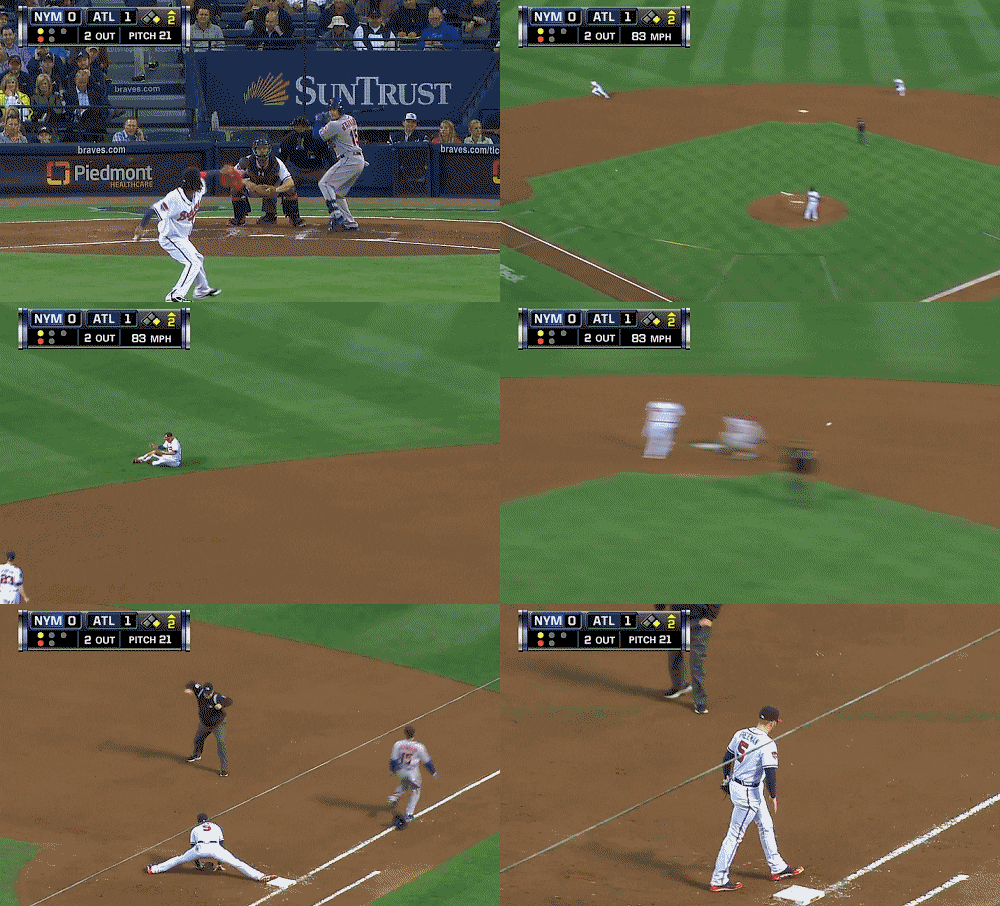
Having a first baseman try to make these catches one-handed is a rookie mistake. Letting them reach with the glove, and throw the other hand back, will help your team secure more outs, especially as the pace of play gets faster. You can read more about that here.
Catcher is another one-handed position, although for different reasons.
Most times catchers are going to try to receive their ball in the center, even if they have to move that center from side-to-side. The issue here is protecting their throwing hand.
Balls deflecting off bats, bouncing off the dirt, or even breaking suddenly all put the throwing hand at first. Sprain a thumb, jam a finger, or even break a bone in the back of the hand and that valuable catcher will be watching from the sidelines for a while.
Learning to receive with one hand while keeping the other protected will help keep that catcher on the field when you need her.
One-handed catching also has the added bonus of reducing the time to transfer the ball from the glove to the throwing hand on a steal.
Catchers who use both hands to catch the ball tend to pause to transfer the ball before pulling it back to throw. By catching with one hand catchers can bring the ball and mitt to the throwing hand, thus making the transfer part of the throw instead of a separate operation.
It’s a difference of hundredths of a second, but those hundredths can make the difference between safe and out. Here’s where you can learn more about one-handed catching.
Bottom line
So you can see there’s no single blanket answer. How many hands to use depends on the position and the situation.
My recommendation is to teach all players to do it both ways when appropriate. And for goodness sake let your catchers and first basemen use one hand even during warmups so they can build that all-important skill.






 Life in the Fastpitch Lane