Blog Archives
Changing Bodies: a Big X Factor to Performance

I have written many times about how as much as we would like it to be, performance improvement does not always follow the neat, linear “hockey stick” pattern. In fact, it is often messy, filled with gains and losses, ups and downs, little wins and little defeats.
Or as Dire Straits so wisely put it, sometimes you’re the windshield, sometimes you’re the bug.
There can be a lot of reasons for this phenomenon. A player may be physically tired from a lack of sleep or a poor diet, may have a nagging injury you don’t know about, may be under mental stress that isn’t being shared, may feel overwhelmed by the moment, may be trying too hard to compete and tying herself up in knots, may feel un- or under-appreciated, may just be having an overall bad day, etc.
One I think a lot of people fail to take into account, however, is something that youth athletes and even young adults into their early 20s all are facing: their bodies are changing. Sometimes in obvious ways, sometimes subtly.
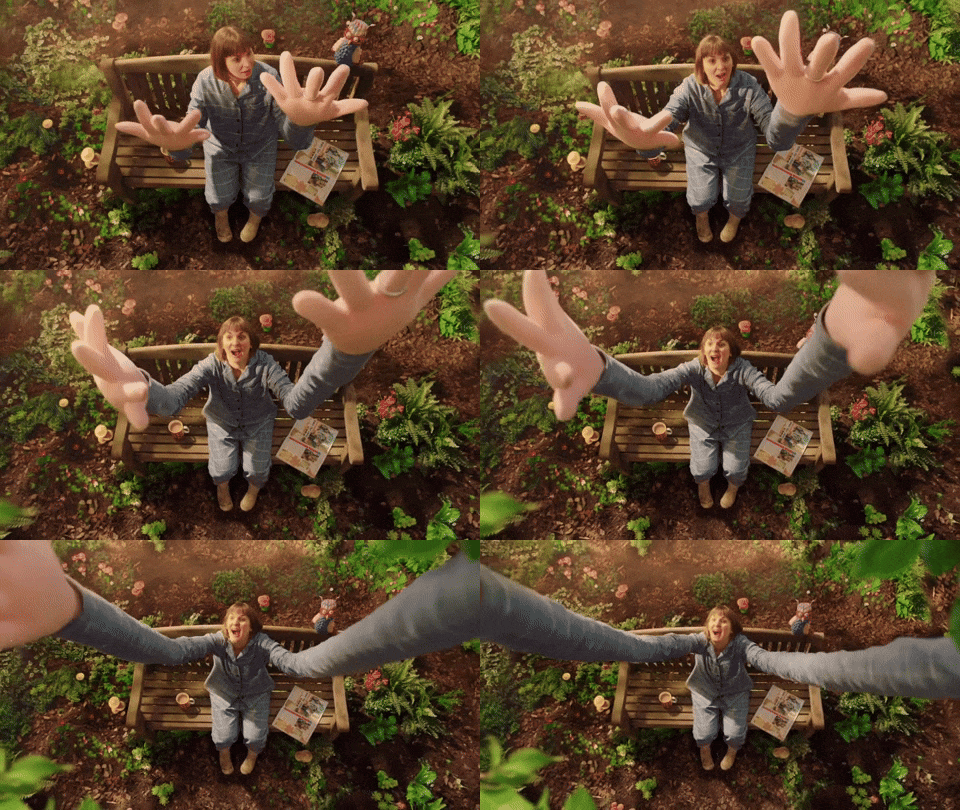
And every time their bodies change in some way they have to re-learn how to move them in a way that is conducive to good performance.
Think about the last time you were surprised when you saw that a young person who had been a cute little butterball a couple of months ago has suddenly sprouted up to become lanky and lean. Or how the scrawny little kid you remember has filled out and now looks like she could kick your butt in a wrestling match.
The passage of time, even as little as a month, allows you to see these differences because you remember who they were and now see who they are. You are far less likely to notice these same types of changes in someone you see every day because your frame of reference for the differences is hours instead of weeks or months. But they’re still there.
When those types of major body changes occur, they can throw off the entire the movement mechanism. Especially if the entire body hasn’t grown at the same rate.
Picture a young lady whose arms and legs have grown at a faster rate than her torso. Eventually her torso will catch up, but right now there’s an imbalance she isn’t used to.
Her body is still trying to move relative to her old proportions but that method doesn’t work anymore. Longer levers they’re not used to may make it more difficult to throw or pitch a ball or swing a bat because the way they used to feel those movements is not the way they feel it NOW.
We’ve all heard the expression “growing pains.” For those who experience a rapid, sudden growth spurt, those pains are very real.
Osgood-Schlatter disease is a great example. Rapid growth of the bones, muscles, tendons, and ligaments around the knee can create tremendous stress, causing anywhere from some to extensive knee pain, especially during athletic movements. It is difficult for young athletes to deal with it, and the old adage of “Rub a little dirt on it” doesn’t help much when your body is in revolt.
Changing bodies can also affect athletes’ balance and coordination. Their center of gravity can change, or the way they perceive their bodies in space can change, affecting athletic performance until they internalize those changes.
And this doesn’t happen just once. It can happen over and over until they make it out of that phase of their lives.
That means there will be a lot of ups and downs in performance and progress until they reach the point of who they’re meant to be.
So when you’re wondering why your favorite player is putting in the work and paying attention to the details but not seeing the results she desires, keep the X factor of body changes in mind. It might help you weather the ups and downs more easily.
Main photo by Willians_photography on Pexels.com






 Life in the Fastpitch Lane