Blog Archives
The Effect Changing Bodies Can Have on Athletic Performance

No, this isn’t a “Freaky Friday” type of post, although I suppose that type of body changing could be an interesting topic. This is about physical changes with a player’s body.
Back around the fifth grade, most of us learned in health class that as we pass from childhood to adolescence, the hormones in our bodies start to go crazy and major changes begin to manifest themselves. One of the most visible and significant is rapid growth.
A girl who was once a cute little butterball suddenly shoots up 4, 5, 6 inches and becomes a lanky young woman. Another goes from a scrawny flyweight to a muscular middleweight.

Or maybe one day you look and realize the girl who used to have to look up at you now has a significant height advantage over you. (I was going to say looks down on you but, while that is also part of the deal, it’s a separate conversation for another day.)
Sometimes it happens gradually, but more often it seems like it happens overnight. And when those rapid changes do occur, they can have a significant impact on things like balance, proprioception, and coordination – all essential requirements for athletic performance, especially in a precision sport such as fastpitch softball.
Take hitting for example. We all know (or should know, at least) that a big contributor to good hitting is timing. You need to get your foot down on time and your body parts moving in a proper sequence in order to take a round bat to a round ball and hit it square while it’s traveling toward you at a rapid speed and moving (intentionally or unintentionally) in two planes simultaneously.
Sounds complicated doesn’t it? Well, it is.

Now imagine trying to do all that while standing on 4 inch high stilts while having the bat strapped to 3 inch long boards at the end of your wrists. It would be pretty awkward, don’t you think?
Yet that’s what kids who experience rapid growth spurts are going through every time they swing the bat. They used to know where their entire body was in space, including their limbs (which are the most difficult to manage), but surprise! those body parts suddenly aren’t where they used to be anymore.
The result is that hitter has to figure out how to manage this new, sometimes oddly proportioned body in order to achieve the level of performance she was achieving before. And worse yet, those body parts may still be growing, which means she’s trying to adjust to a moving target with runners on base and the game on the line.
And you wonder why she’s struggling some.
The same is true for pitchers and fielders. Things aren’t where they used to be anymore, and until they figure it out performing smoothly and confidently may be off the table for a while.
Another complicating factor is some of this growth may come with what we call “growing pains.” That’s not just a euphemism for the socially awkward teenage years.
It’s a real phenomenon causing physical pain every time they move. One place it shows up a lot is in the legs, or more specifically the knees, with a little gift from nature called Osgood-Schlatter Disease (OSD).
OSD causes pain just below the knee due to an irritation where the tendon from the kneecap attaches to the tibia, one of the bones in the shin. It can cause pain during activities such as running and jumping – or squatting.
Many a young catcher has had to find a new position thanks to a visit from the OSD fairly. And while it will eventually go away as the body settles in to its new configuration, it can take a while. In the meantime many movements that used to be pain-free now come with a cost.
Another thing that can happen during this time of development is what might be characterized as a “thickening” of the body. While your adolescent girl may not gain a great deal more height, especially if she’s not genetically disposed to being tall (thanks mom and dad), her body change from being a little twig to being more, um, stout.
While that will help her in certain ways – thicker muscles will add strength that can make up for a lack of overall size – she’ll still have to learn how to manage that newfound strength so she doesn’t fall into a habit of “muscling up” where she should be remaining loose and flexible. If that thickening happens rapidly it could throw her off considerably until she gets used to her new body.
Then, of course, there’s the elephant in the room for many young women – the development of breasts. That alone can have a serious effect on her movement patterns overall, how her back feels, her posture, her core strength, her flexibility in certain positions and more. And, of course, the larger they are the greater impact they will have on her physically.
All of which explains why your daughter’s or your players’ performance may suddenly go in the toilet for a little while. It’s not that she’s forgotten how to run, or hit, or pitch, or throw overhand, or field a ball.
It’s that what used to work for her body no longer works with the proportions she now has. And until she figures it out her performance may suffer for a little while.
So what can you do as a parent or coach? First of all, understand that his is going on and be a little more forgiving of any performance downgrades.
It’s not that she’s not trying, or is screwing up on purpose. It’s that she honestly doesn’t know how to overcome the situation right now.
Second, you can help her understand what’s happening to her as well. Explain that this is a normal, natural part of growing up, and encourage her to keep working hard. The coordination or balance that has temporarily abandoned her will come back once she gets used to playing as who she is now.
Once you have those parts understood, find devices or exercises or routines that can address the issues she’s having and help her get back on track faster. For example, if she is having trouble with balance get a balance cushion or pad and have her stand on one foot, first with her eyes open and then with her eyes closed, so she can feel her body in space. (The link will take you to a Google search results page.)
Seek out other exercises from professionals as well that can help her. Or you can hire a professional trainer to work with her while she’s having these issues.
If she’s having problems with feeling her body in space, especially her limbs, look into proprioception exercises. A new device from PantherTec called the Kinesthetic Awareness Training (KAT) module can also provide helpful feedback to bring the brain and body back into alignment. (Watch this space for a future product review.)
If she’s complaining about pain, especially in or around her knees, don’t just dismiss it as being soft. Get to your pediatrician have her checked out for OSD or other physical issues. Playing sports can take a toll on the body, and not all problems are the result of a specific injury.
Sometimes it’s cumulative wear and tear, and sometimes it’s something more serious. No matter what, get it checked out and addressed before the body’s instinct to avoid pain starts creating patterns in her movements that are less than ideal.
Finally, don’t assume this is just a preteen/early teen problem. The effects of puberty can last into young adulthood, and many of them can go up and down at different times.
Before you hit the panic button, try to recognize what’s happening physically with your daughter’s or your players’ body and help her address those changes. Because the sooner she is able to deal with how her body feels now, the sooner she’ll get back to performing the way you and she want.
Changing Bodies: a Big X Factor to Performance

I have written many times about how as much as we would like it to be, performance improvement does not always follow the neat, linear “hockey stick” pattern. In fact, it is often messy, filled with gains and losses, ups and downs, little wins and little defeats.
Or as Dire Straits so wisely put it, sometimes you’re the windshield, sometimes you’re the bug.
There can be a lot of reasons for this phenomenon. A player may be physically tired from a lack of sleep or a poor diet, may have a nagging injury you don’t know about, may be under mental stress that isn’t being shared, may feel overwhelmed by the moment, may be trying too hard to compete and tying herself up in knots, may feel un- or under-appreciated, may just be having an overall bad day, etc.
One I think a lot of people fail to take into account, however, is something that youth athletes and even young adults into their early 20s all are facing: their bodies are changing. Sometimes in obvious ways, sometimes subtly.
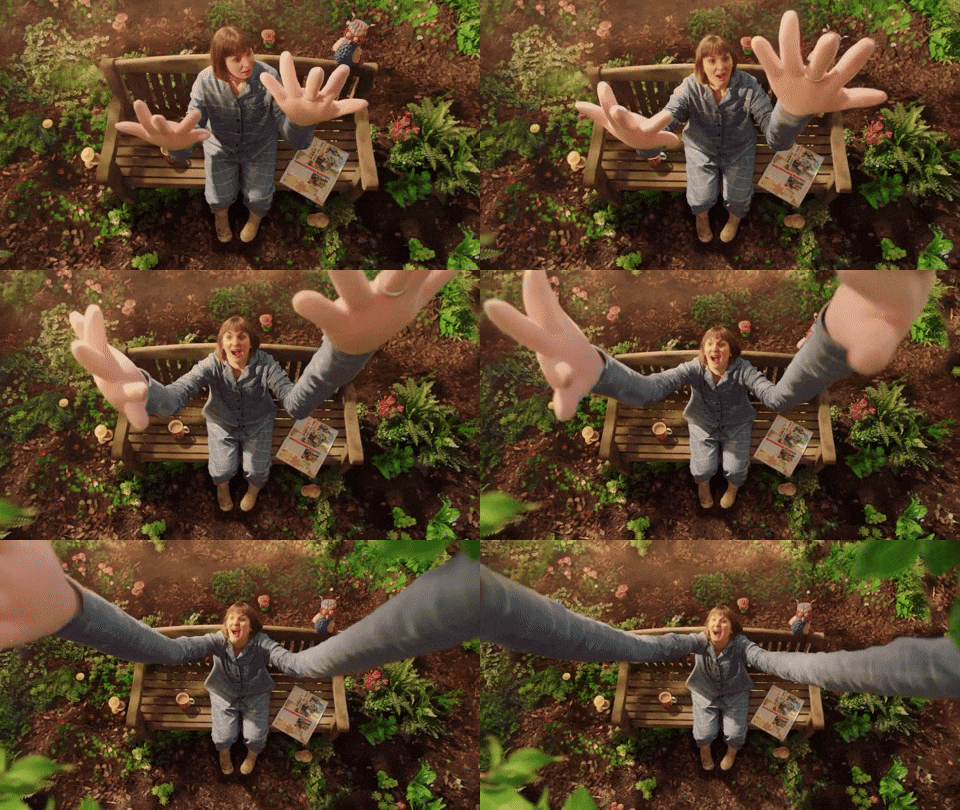
And every time their bodies change in some way they have to re-learn how to move them in a way that is conducive to good performance.
Think about the last time you were surprised when you saw that a young person who had been a cute little butterball a couple of months ago has suddenly sprouted up to become lanky and lean. Or how the scrawny little kid you remember has filled out and now looks like she could kick your butt in a wrestling match.
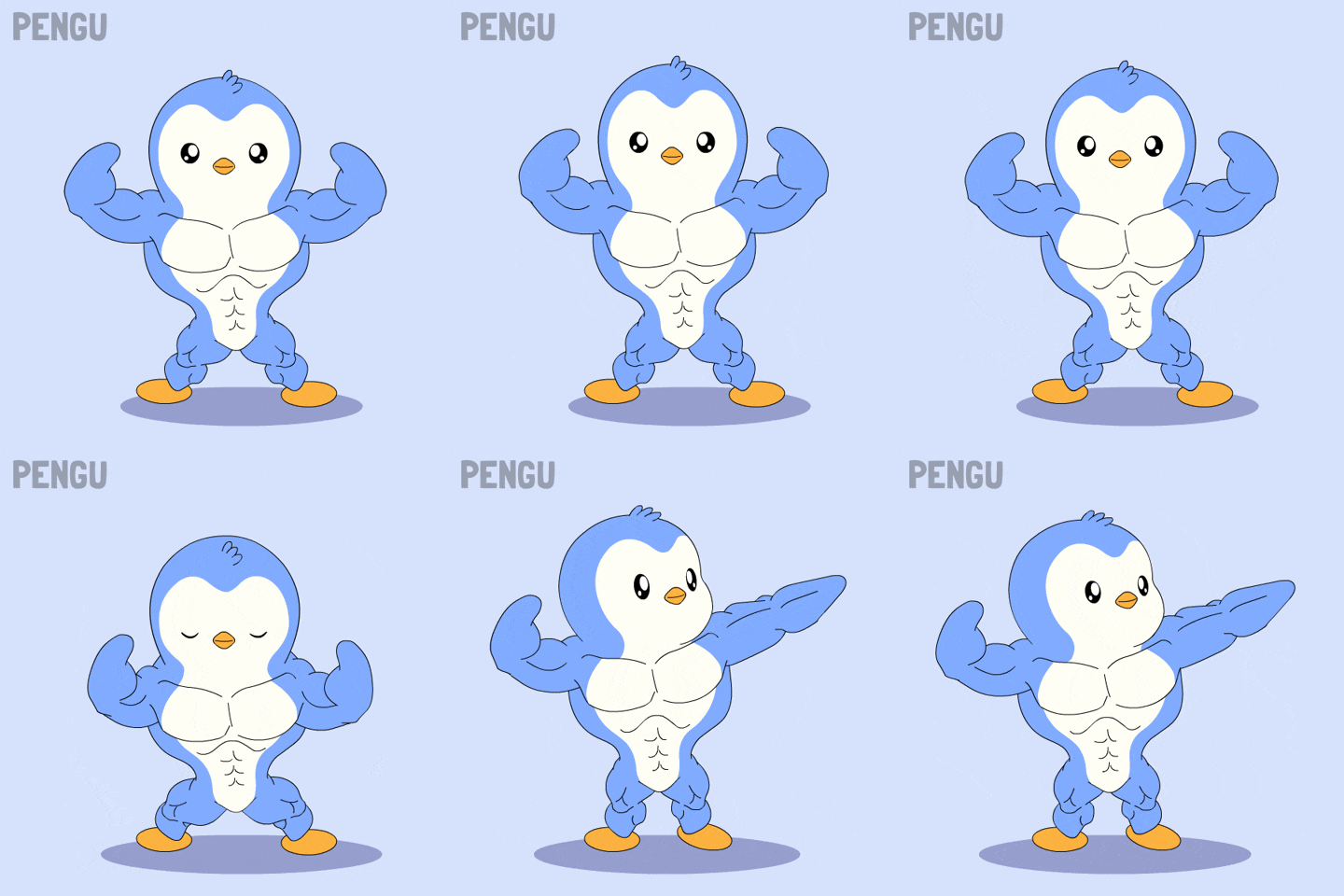
The passage of time, even as little as a month, allows you to see these differences because you remember who they were and now see who they are. You are far less likely to notice these same types of changes in someone you see every day because your frame of reference for the differences is hours instead of weeks or months. But they’re still there.
When those types of major body changes occur, they can throw off the entire the movement mechanism. Especially if the entire body hasn’t grown at the same rate.
Picture a young lady whose arms and legs have grown at a faster rate than her torso. Eventually her torso will catch up, but right now there’s an imbalance she isn’t used to.
Her body is still trying to move relative to her old proportions but that method doesn’t work anymore. Longer levers they’re not used to may make it more difficult to throw or pitch a ball or swing a bat because the way they used to feel those movements is not the way they feel it NOW.
We’ve all heard the expression “growing pains.” For those who experience a rapid, sudden growth spurt, those pains are very real.
Osgood-Schlatter disease is a great example. Rapid growth of the bones, muscles, tendons, and ligaments around the knee can create tremendous stress, causing anywhere from some to extensive knee pain, especially during athletic movements. It is difficult for young athletes to deal with it, and the old adage of “Rub a little dirt on it” doesn’t help much when your body is in revolt.
Changing bodies can also affect athletes’ balance and coordination. Their center of gravity can change, or the way they perceive their bodies in space can change, affecting athletic performance until they internalize those changes.
And this doesn’t happen just once. It can happen over and over until they make it out of that phase of their lives.
That means there will be a lot of ups and downs in performance and progress until they reach the point of who they’re meant to be.
So when you’re wondering why your favorite player is putting in the work and paying attention to the details but not seeing the results she desires, keep the X factor of body changes in mind. It might help you weather the ups and downs more easily.
Main photo by Willians_photography on Pexels.com
Softball Pitchers: Be A Queen, Not A Servant

One of the challenges of working with younger fastpitch softball pitchers is getting them to understand the importance of maintaining good posture during the pitch.
You want them to be upright, with a firm, straight posture and plenty of front side resistance. But what you get instead is more of a hunched over look.
There can be a variety of reasons for it. One is that they don’t have the core strength to maintain good posture, especially at the younger ages.
More often than not, though, it’s either inexperience or a desire to keep the pitch from going high. They figure if they schlump their shoulders down, or bend at the waist, that will help them keep the ball down.
Unfortunately, the opposite will most likely occur due to Coach Ken’s law of opposites, i.e., to make a ball go down you must first go up.
Now, you can tell them to stay up straight, but the words alone aren’t always meaningful. Sometimes you need to illustrate it more for them.


To do that I will tell the pitcher that she has the choice of being a servant or a queen. A servant stands with her shoulders bowed and head down. A queen stands up straight, with her head up. Then I ask her – which would you rather be, a servant or a queen?
I have yet to have anyone answer servant. So I tell them if you want to be a queen, finish like one. If they bend over while pitching, I can then ask them if they were a servant or a queen? That’s something they understand.
(Another way to make the same point, by the way, is to compare a chimpanzee or baboon to a giraffe. The primate hunches over. The giraffe stands tall.)
So if you’re having trouble getting a pitcher to stay up straight, give this idea a try.






 Life in the Fastpitch Lane