Blog Archives
There’s No Good Reason to Squeeze the Strike Zone
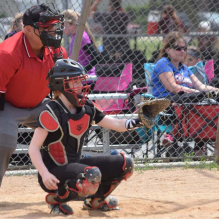
Before I start I want to say that this is not your typical rant about how umpires are terrible and shouldn’t be allowed to walk free with the rest of us. To the contrary, I have tremendous respect for umpires because I know it’s a tough and often thankless job, and that nearly all umpires do the best they can to keep each game fair for all involved.
That said, one thing I’ve never understood is why some umpires seem to have a strike zone that is roughly the size and shape of a child’s shoebox. Who do they think it’s benefiting?
According to the USA Softball Rulebook (which is the book all other sanctions are based on) the strike zone runs “from the batter’s arm pits to the top of the knees.” Further, it is “that space over any part of home plate, when a batter assumes a natural batting stance adjacent to home plate.” (Rule 1, Definitions. I looked it up so you don’t have to.)
That’s a pretty big area, really. Note that it doesn’t say the entire ball must be over the plate when it crosses, just that the ball must cross some part of the plate.
So that’s about 18-19 inches wide if you just catch the corners. The vertical area will vary by the height of the batter and her natural stance, but it’s still a lot larger than the 4 inches to either side of the beltline that some seem to demand.
If that’s the case, what reason could there be for shrinking it any smaller than that? Who does it benefit?
Let’s look at all the possibilities.
The Pitcher
That’s a big negatory. You could try to make an argument that the pitcher must learn to spot her pitches better when the strike zone is small.
But the effect that happens in 99.999% of the cases is it forces the pitchers to throw meatballs all game long because that tight little zone sits over the heart of the plate. Pitchers should be learning to pitch the corners – preferably no more than half a ball on – and nip at the very top and bottom of the strike zone.
When she’s forced to throw it down the pipe or have it be called a ball all you’re doing is discouraging a pitcher from growing her craft and creating unnecessary frustration that might discourage her from continuing in the position.

There is already a shortage of pitchers at the older ages. Squeezing the strike zone, especially on younger pitchers who are just beginning to find their way at the position, encourages their abandoning the position.
The Hitter
Sure, you would think forcing pitchers to throw meatballs would be a great thing for hitters. Who wouldn’t love a steady diet of easy-to-hit pitches?
But in many cases it has the opposite effect. Coaches who are more interested in winning a game today than in developing their players will often tell their hitters to keep the bat on their shoulders and wait for the walk instead of swinging.
At least until they get two strikes. Yes, they get lots of extra baserunners that way and might even get some extra runs on walks or wild pitches. But the HITTERS DON’T LEARN TO HIT.
They learn to stand there. At some point they’re going to have to swing the bat, but if they’re not getting reps because umpires are squeezing the zone they’ won’t develop the skills or the mechanics under pressure to execute a successful swing.
Once they’re playing in a game where a more realistic strike zone is being called they’ll be toast.
The Fans/Parents
Nope. Of course, the pitcher’s parents will be apoplectic watching a game with a shoebox-sized strike zone.
A little less if it’s being called the same way on both sides, but still angry that little Maizey is getting screwed over by the person in blue.
But even the hitters’ parents aren’t going to care for it much because it’s BORING. No one wants to watch a walkfest. No one.
The Coaches
Truthfully some coaches will be happy about it. Those are the ones for whom winning is the only important thing.
They’re the ones who are sending their kids to the plate looking for walks.
But any coach who is truly in it for the kids will want their kids to have the opportunity to learn all aspects of the game. That means pitchers learning to give their all instead of trying to hit one tiny spot, hitters swinging at pitches when they’re hittable, balls being put in play so fielders can make plays and learn how to react to different situations, and baserunners can learn how to run the bases.
The Umpires
Finally we get to the folks causing all the commotion. Why any umpire would squeeze the strike zone when it is counter to their own self-interest is beyond me.
Umpires should want to keep the game moving. If it is an untimed game, the more strikes they call the faster the game will go and the sooner they can get off the field and onto whatever they want to do after the game.
But even in a timed gameall they’re going to do is make coaches and parents angry. The last thing they need to do is encourage any more of that.
Not to mention that not calling the strike zone by the rules hurts the players as well as the game. Normally, well-meaning people volunteer to become umpires because they want to serve the game and those who play it.
Whether it’s due to a power trip or just not caring about calling a good and fair game, squeezing the strike zone goes against everything they are supposed to be doing.
At the end of the day there is simply no reason to shrink the strike zone into a belt-high, middle of the plate box. Call it properly and everyone will benefit.






 Life in the Fastpitch Lane