It don’t mean a thing if it ain’t got that spin
You would think this would be self-evident but apparently it’s not, so I bring it up here.
There are two things that make a pitch move — the direction of the spin and the speed of the spin. You need to have both in order for the ball to do what it’s supposed to do.
Still, I am amazed at how many times I will watch a pitcher throw a “curve ball” or a “drop ball” or whatever and see that it’s not spinning in the right direction. The Magnus Effect dictates that air rushing around a spinning ball will go across the sides at different rates, creating a difference in air pressure. When the difference gets to be enough, the ball moves. 
So, as shown in the illustration here, if you want the ball to drop sharply, it has to be spinning 12 to 6. No other spin will create that same effect. For a right handed pitcher to throw a curve ball, the ball has to be spinning 3 to 9 (from the pitcher’s perspective), or darned close to that.
So when you’re working with a pitcher, that’s the first thing to check on a movement pitch — the direction of the spin. Because if you don’t have that, none of the rest of it matters. You can do all the other mechanics perfectly, but if you’re not releasing the ball in a way that imparts the proper spin you’re wasting your time.
Keep in mind that a drop ball is not a ball that angles downward. It is a ball that comes in fairly flat, or maybe with a slight downward angle, and then drops suddenly — the old “falling off a table” description. A curve ball has to be more than a pitch that moves from throwing hand side to glove side. It has to be traveling in one direction, then suddenly change directions. If it doesn’t, it’s not a true curve ball.
The speed of the spin is the other factor. Once you have the direction correct, you need to make sure it’s spinning fast enough to move. The faster the spin, the more the ball will move because the bigger the pressure differential will be on the ball. Balls that spin in the right direction, but tumble more than spin, won’t move. You don’t need a lot of forward speed on the pitch to get it to move either. Even a 40-45 mph pitch can move if it’s spinning fast enough.
Once you have the spin direction and spin speed, then it’s time to worry about locating the pitch. Up until that point you’re wasting your time. Focus on good spin and the rest will fall into place. And if you have a pitch that isn’t moving sharply, check the spin. You may have some work to do.
Hitting and timing
Tried a little experiment this morning. We’ve been working on hitting mechanics for a while now, but last week during an indoor game we just didn’t hit the way I’d hoped. I would describe our hitters as looking surprised when the pitcher delivered the ball. We seemed to be defending more than attacking.
So we went back to the ol’ Jugs machine. I watched the first group as they approached their swings, and they were consistently behind the ball. Their timing just didn’t seem to be there. So we talked about loading and weight shift, and when to go about it. Essentially we went with a slower load and shift, with toe touch occuring about as the ball came out. The object was to get rid of the panicked or rushed feeling, and give the hitter more time to see the ball before committing.
The other thing we did was reemphasize turning the hips before the shoulders and hands move. This is kind of hitting101 these days. But I think because of that we’d quit looking at it, and our girls had started going upper body first. As we emphasized starting the swing from the hips, again it seemed to make a difference. They were in a better position to see the ball, the timing was better, and they started taking the fat part of the bat to the ball with more consistency.
Now, a pitching machine isn’t the same as live hitting. But it does give you a feel for how well you’re tracking the ball. Put another way, hitting off a machine doesn’t guarantee success. But NOT hitting off a machine is often a harbinger of failure.
Only time will tell how much difference it made. But right now it at least feels like a step in the right direction. Hopefully it will help make all the work on hitting mechanics pay off in a big way. You can never have enough offense!
Lighting a spark
This is one of those stories that again reminds me why I like coaching so much. It’s for those little breakthrough moments that crop up now and then.
I was getting ready to start a pitching last night with a girl named Ashlee. Her catcher didn’t show up so I told her I would catch for her. We did some warm-ups and she started pitching.
Now, Ashlee has developed a habit of stepping forward (off the pitching rubber) as she goes to launch. We’ve been working on correcting it for a while now, but nothing we tried seemed to work. She takes a very aggressive stride and as part of it would tend to shift her weight forward early. Her foot would move, then she’d plant and launch. The problem went from small to severe in various stages. And it is a problem for two reasons: 1) it’s illegal and 2) she loses drive and therefore speed (even though she feels strong doing it).
I came up to work with her on it, saying it was a good night to do it since her catcher wasn’t there, and she agreed. As I stood there, a sudden idea hit me. All this time we’d been trying to get her pivot foot to stay in place instead of moving forward. Whatever we’d tried just didn’t process with her.
So this time, I suggested that she start with her pivot foot well forward, with just the heel barely touching the pitching rubber. She would then go to her negative move like that. But as she brought her hands down below her waist, and before she made her positive move, pull the foot backwards so the pivot foot would wind up in the spot most pitchers start from (ball of the foot touching the rubber). That seemed to do it, at least last night. It helped her gather her energy more effectively, and transfer her weight with better timing. We walked through it a few times so she could get the feel of it, then started trying to go more aggressively off of it — none of this with the ball. You could see the light bulb come on for her.
As we stood there, she looked at me and asked, “Did you just come up with that right now?” I paused for a moment to think if I’d heard it anywhere, but couldn’t come up with a source offhand so I said yes. She got a little smile on her face, raised her hand and said, “Give me a high five on that one.”
Ashlee is not the sort who does that lightly, so it was pretty rewarding to have her feel that way. After the lesson she said, “We had a breakthrough tonight.” Of course, only time will tell if it sticks, but I think it will. I asked her to practice just that movement during the week and she said she would. I believed her too, because she seemed to like it. It felt “right” to her where previous ideas we’d tried just didn’t.
So yes, fixing the problem (we hope) was satisfying. But more satisfying, to me, was the reaction. I think Ashlee felt good that I’d come up with something specifically for her, and something she could buy into. Her high five gesture wasn’t a huge one. But it was very sincere. If I can help one pitcher make one breakthrough on one night, it’s a pretty darned good night.
An interesting spam
Just saw something in my e-mail spam folder that I had to share. I’m not sure if it was spam or legit, but it sure seemed like spam so I deleted it.
The subject line said the person was looking for lesson information. I was surprised it wound up in the spam folder at first, but that’s why I check instead of deleting blindly.
When I opened it up, though, I saw why it was there (I think). The message (which was not addressed to me in the To field, but to a David Dudley) said the person was looking for fastpitch lessons for a 15 year old boy coming in from the Netherlands. It didn’t say what kind — pitching, hitting, fielding, etc. — just generic “lessons.” It then asked for some information, including costs, location and contact info.
I dunno. Maybe it was legit, but it just didn’t feel right. It seems like if you were asking about lessons for someone coming in, you’d say the kid was coming to such-and-such town, is that anywhere close to where the instructor lives. The punctuation and grammar also had that spam-like feel to it, although that could be a function of writing in a language that is not your native tongue.
In any case, assuming it was spam (or phishing) I find it interesting that someone would go to those kinds of lengths to harvest names and e-mail addresses and put something like that together. I guess the usual standbys (cheap drugs, Nigerian princes, lottery winnings, etc.) aren’t working as well anymore.
On the other hand, if you are reading this and are the person who sent it (with a legit request for information) send it again with better info, and put the word fireant in the subject line! No special reason for fireant. I just like the word.
Skills videos
If you want an exercise in interesting, pop out to YouTube sometime and take a look at some of the softball skills videos that are posted there. I’d never done it before this morning, but I just finished watching several. All I can say is I wonder how college coaches ever figure out which players to check out based on a video.
I’ve never selected players by video and claim no expertise in this area. These are just my impressions after watching.
Understand that I’ve helped a couple of players put together their skills videos. One was a student of mine, the other one of my team’s players. Having studied video production in school (when video was still edited on tape) and having a decent laptop, I figured I did a credible job of showing off the players. Particularly since I followed the advice in Cathy Aradi’s book Preparing to Play Softball at the College Level on what to show and how long to show it for. But what I found today online definitely made me feel better about what we’d done.
I watched one video where the girl talked so fast and with such sloppy diction that it was tough to make out what she was saying in her introduction. I’m not expecting these kids to be Katie Couric, but at least make sure people can understand what you’re saying. Some of the videos would cross-fade between executions, i.e. the girl would field a ground ball, then there would be a cross-fade right into the next ground ball. It was probably done in the interest of time, but it did make me wonder what was cut out in-between. My understanding, from Aradi’s book and talking with college coaches, is they want to see continuous action. They want to see the error, and how the player recovers. Obviously they don’t want to see an entire video of errors, but one miss in a group of executions is not only ok but desirable, because it’s more honest.
One video I watched had a big section of game film, also listed as something not to do by Aradi. You may think it’s great that your pitcher struck out a kid, but no one knows how good the hitter was. Striking out a career .187 hitter is not that impressive. That same video also included some superimposed commentary intended, I suppose, to help a college coach know just how great the kid is. My guess is the coaches aren’t looking at the results, again because the quality of the opponent is in question. They just want to see the skills. Leave the game films out.
I’ve also talked to several coaches who said they really don’t look at a player’s stats. Making them a feature of the video is a waste of time. The only stats they really care about are your GPA and ACT or SAT scores, because they want to know if they bring you onto the team that you’ll still be eligible once school starts.
Awards and honors are nice, but don’t put too much weight on them. I saw video of a couple of kids claiming to be “All-City” or “All-Conference” as a freshman. After watching their skills all I could conclude is it must be a weak city or conference. They were competent, but no one you’d expect to build your team around.
If you’re going to add music, I’d say forget the ’70s porno music and get something stronger and more upbeat. But then, I have a musical background so I notice those things. I have no idea what the college coaches feel about it, although I’d guess since they’re human that having good music might encourage them to stick with your video a little longer, if for no other reason than to hear the rest of the song.
Speaking of sound, if you’re doing the filming remember that the camera has a microphone. Be careful what you say while taping. I saw one video where the coach or dad (or coach/dad) had to throw in a “good” or a “nice job” after every routine execution. If I were a college coach watching the video, I’d want to make those decisions myself. No need to comment on every skill.
My very favorite, though, was a video that started out with a 10 second promo for the video house that shot it. I really hope they added it just for the YouTube version, and not to send out to college coaches. That would be a real lack of prioritization in my mind. I don’t know if it would hurt the player from a recruiting standpoint, but it would definitely turn me off as a coach.
If you’re getting ready to shoot a recruiting video, check out what’s on YouTube before you start to see what you like and don’t like. Here’s another good resource, courtesy of Cindy Bristow of Softball Excellence. And definitely pick up Aradi’s book. It could help you avoid some classic mistakes.
More on choosing a glove
The universe is a strange, wonderful place, with its own interesting rhythms. If you don’t believe me, consider this.
My last post was about how to choose a softball glove — a suggestion from my friend Frank Morelli. Today I received the Jugs Co. newsletter in my e-mail, and what do I find? You guessed it. An article from their resident softball expert, Celeste Knierim, about how to choose a glove.
She goes through many of the same points I did, although she definitely put in more information when describing the different types of webbing.
The article also gives some tips on how to break in a glove. One thing I definitely disagree with is her recommendation to let the glove soak in rain water. I used to break in gloves by soaking them in water — a recommendation someone gave me. Then I read how it’s bad for the glove long-term. I’ve found that to be true — my Wilson glove has kind of deteriorated over the years, looking like it has water damage. Some of the glove sites have better tips. None recommend soaking the glove in water or throwing it in the oven.
Still, outside of that the article is worth reading. One last glove tip. If your glove is feeling a little loose, it probably is. Restringing by a professional is often very cheap, but a great investment. It’ll make you fall in love with your glove all over again.
Choosing a glove
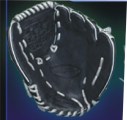 Sorry y’all, I’ve been a bit busy lately and have not been keeping Life in the Fastpitch Lane freshened up with new material. Guess that’s what happens when your day job expects you to actually be working at work. And your lesson schedule starts going crazy.
In any case, I was talking with my friend Frank Morelli a couple of weeks ago and he suggested I put up a post on how to select a new softball glove. I’ve done some stuff with bats in the past, but haven’t really addressed gloves. That’s interesting since you’ll probably keep your glove a lot longer than any particular bat, so you want to make a good choice. Thanks for the suggestion, Frank. Here we go.
Gloves tend to be items of individual preference. Just like bats, there’s no right one for everyone. Unlike bats, though, there’s not really a way of measuring which is better for you. In other words, if you’re a power hitter going for the long ball, you’ll probably like a RocketTech, whereas if you’re smaller and looking for singles a different bat might work better for you. There are some general rules regarding length and weight, which means there are some ways of narrowing down the choices, at least.
With gloves, not so much. So again, it’s a matter of preference. But here are some things to consider in any case.
First, if you’re a female player (or buying for one), get a glove (or mitt) designed for fastpitch softball. Cousin Billy’s old baseball glove, while it may be free, is probably not going to work for you. Fastpitch gloves are now designed for female hands, which means they have smaller finger stalls so they fit better. A lot of the manufacturers, realizing girls generally don’t have the same hand strength as boys, are using materials and designs that break in a little easier. Akadema, for instance, has only three finger stalls instead of the usual four. For years players have been stuffing their ring and little finger in the last finger stall to help the glove close easier. Akadema designed their glove that way to make it automatic, and to help out everyone who didn’t know that trick.
Glove size is another important consideration. Young kids will small hands playing with an 11″ ball can get away with an 11.5″ glove. My youngest daughter Kimmie had an 11.5 inch Mizuno at 10U that she absolutely loved. She would still be using it to this day if I’d let her. The look on her face when we told her she had to give it up was “You’ll get this glove when you pry it out of my cold, dead hands.” But it was too small for a 12 inch ball — especially since her positions are pitcher and outfield. An infielder might be able to get away with a glove that small, but probably shouldn’t. When you go to a 12 inch ball, I’d say go at least 12.5 inches on the glove size. That’s good for infielders (who need a quick transfer) and players with small hands. Pitchers and outfielders are better off with a 12.75 or 13 inch glove, which is a bit more forgiving. It’s not absolute, though. Kimmie uses a 12.5 inch and does just fine with it.
There’s also something to the design. Outfielders will tend to use open webbing, whereas infielders and pitchers used closed or checkerboard webbing. You want closed webbing for pitchers so hitters and base coaches can’t see the grip through the glove. Not that most really look that much, but that’s the rule of thumb.
Then there are the different brands. A lot depends on the model and the materials used, but you can find some general tendencies. Growing up, I was always partial to Wilson gloves. They broke in quickly and lasted a long time with a little care. As an adult I found that Mizunos were very similar to the Wilsons in terms of quick break-in and quality. Lately I’ve been recommending Akadema gloves, partially because they made me a distributor for some reason. But mostly because every kid I’ve gotten one for has loved it — including my own Kimmie. Again, fast break-in, the ball secures easily, and it’s easy to care for. It’s the glove I use now, although a baseball model since the little finger stalls of a fastpitch glove don’t work with my fat fingers. I’ve heard Nokonas are nice too, but pretty expensive. I have no personal experience with them, although if a Nokona rep wants to send me one I’d be happy to try it out.
About the only brand I’ve never liked has been Rawlings. Those gloves always seemed stiff no matter what you do to break them in. Maybe they’re better now, but the ones I tried I didn’t like. Sort of like the difference between the old, stiff denim jeans and the ones they make now.
For the materials, you want genuine leather. The synthetic materails are easy to mass produce and durable, but they don’t have the same feel to them. Sure they may be cheaper, but they won’t yield the same results. If you buy your kid a synthetic glove don’t complain when she’s making errors.
Does it matter if you have a mitt or glove to play first base or catcher? Depends on who you talk to, but I say yes. If you’re committed to one of those positions, a mitt designed for it can help. A first baseman’s mitt is a little longer, helping you reach those high throws while keeping your foot on the bag. It also makes it a little easier to scoop and secure low throws. A catcher’s mitt generally has extra padding, and a rounded pattern that makes it easier catch fast-spinning pitches and frame the balls when you catch them. It’s definitely worth the investment in my opinion.
Speaking of patterns, that’s another quirk of gloves and mitts. They’re not all the same. The pocket and overall design of the gloves and mitts are different, depending on what you need. One of the hot new designs for infielders is a flared glove, i.e. one that is wider at the fingers than at the pocket. It creates a sort of funnel to secure the ball. I have no personal experience with it, but a lot of people seem to like it.
Most manufacturers will provided details on design and a guide as to which glove works best for a given position. Read several Web sites to get an overall view.
The last word of caution is yes, you get what you pay for. But at the same time, there can be a point of diminishing returns, just as there is with bats. Choose a glove that’s appropriate for the level you play. A 10U player at any level does not need a $200 glove. If you’re basically playing a dozen games a year in the local park district league you don’t need one either. If you’re a serious player, though, a quality glove can give you an edge over an old beat-up one.
Hope that helps!
Catcher – a one-hand position
Lately I’ve been noticing an interesting phenomenon. For some reason, I’ve been seeing catchers trying to catch pitches with two hands. They start with their hand behind their back (also wrong) or behind their shinguard (correct position). Then as the pitch comes in, their throwing hand comes forward and they catch the ball with two hands.
That is not only poor technique, it’s dangerous to the catcher’s throwing hand. While we often stress two hands for catching in the field, catchers need to use one hand. There are a couple reasons for this.
One is foul tips. If the batter tips the ball it could deflect anywhere. If the throwing hand is coming up to help catch the ball, a foul tip can hit it. The result could be a jammed, sprained, or broken finger or thumb. None of those are very conducive to continuing to play.
The other is it it actually takes longer to throw the ball if the throwing hand is coming forward to help with the catch. In the field, using two hands helps both with securing the ball and making a quick transfer to throw. But at the catcher position, because the hand is starting behind the shin guard, you want to catch with one hand, then bring the glove (and ball) back to the throwing shoulder. The hand meets it there and the transfer is made.
So how do you get catchers to get in the habit of using just one hand? One way is to have them hook their thumb in the strap of their shinguards until after they make the catch while practicing. Then practice using one hand a lot.
It’s important for catchers to protect their throwing hands. Using one hand to catch will make that happen.
The image potential recruits portray online
Saw an article today in the Jugs Co. newsletter that I thought was worth sharing. It was written by their regular softball columnist Celeste Knierim, who is also a college coach.
She was talking about the e-mail addresses players often use today — names like blondebombshell, QTpie, things like that. These names don’t make the player sound like a serious person — not exactly the impression someone looking for a college scholarship wants to give.
Check it out — it’s definitely worth a read.
Maintaining connection to launch
There are all kinds of pieces that are involved in developing a quality, high level swing. But one of the toughest to achieve, from what I’ve seen is something called “connection.” That’s the proper name for the concept of tying the hands to the back shoulder in the early part of the swing and keeping them there until launch.
This is a very important factor in developing a “high level” swing. It’s something all great hitters do. But it’s easier said than done.
What often happens early in the swing is hitters will push their hands back as they begin their positive move forward. When that occurs, the hands have become disconnected from the back shoulder, and now have to cover a lot more ground to get to the contact point. The act of pushing the hands back will cause the front arm to “bar out” (a fancy term for getting straight to early), creating a long, slow swing. It is also one of the leading causes of bat drag, the condition where the elbow on the top hand gets ahead of the hands during rotation.
Unless you have a lot of experience it can be difficult to spot whether connection is being maintained or not during the swing. Here’s where video can be helpful. Shooting video from the side will allow you to walk through the swing, frame by frame, and see whether the hands are getting behind during the swing.
So what can you do if they are? One good drill is to use only the bottom hand to swing the bat to hit a ball off the tee. Have the hitter hold the bat at about the top of the tape with her bottom hand. Her arm should be bent, creating a V. Then have her move through her normal swing — negative move, postive stride/weight shift forward, rotate the hips and then shoulders, then pull the bat through the hitting zone, getting to extension and finish. Many hitters who lose connection do so because either the bottom hand pushes back, or it is weak coming through the zone. This drill will help them feel what it’s like to keep the bottom hand in place, and use it to get the bat moving properly.
If access to a gym or space is limited, another thing hitters can do is grab the back shoulder of their shirts, then go through their swing holding it until it’s time to get to the contact zone.
Yet another good drill is to hold a Frisbee with the bottom hand, and with the hands at the back shoulder. Then go through the swing. As the hands come into the contact zone, the hitters throw the Frisbee directly forward. Just make sure they don’t wind up with their hands way to the back before bringing them forward.
Here’s a link to a good example of a hitter maintaining connection. You have to have Quicktime to view it. If you need to download Quicktime, click here.






