Results of the IOMT Castaways experiment
Back in March I wrote about a different team concept I was doing this summer. In case you don’t feel like following the link, it was called the IOMT Castaways – IOMT standing for Island of Misfit Toys. The team was put together by invitation, and was made up of girls I’d either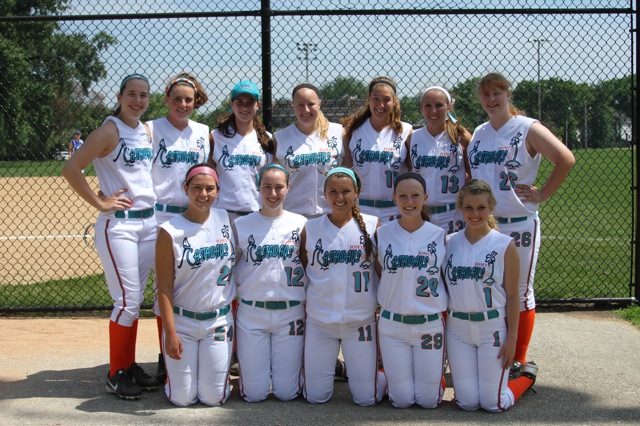 coached before on a team or who were pitching or hitting students of mine. (Some were both, too.)
The primary credential to be on the team (which led to the name) was having been underrated or under-appreciated on another team. Perhaps it was a school team where they were overlooked for varsity, or not given a chance to compete for their primary position. Perhaps it was a travel team that passed on them, or one that took them and then didn’t play them or constantly criticized them.
Whatever it was, these were essentially players that other coaches didn’t think much of but that I thought could play ball. We also looked hard at the kind of people they were. We wanted not just quality ballplayers but good teammates with good parents. We also made it clear that the goal of this team wasn’t college exposure. It was to give girls who just love playing softball an opportunity to play purely for the love of the game. )Truth is there were a couple of girls I knew who had all those other qualities but were still interested in pursuing college scholarships, so I suggested they play on a team that had that goal.)
In any case, we just finished up the season last Sunday. So how did the experiment go? Were we able to take these “castaways” from other teams and train them up to be competitive, or was it a nice idea that fell apart in the execution?
I’m glad to say it was actually a very successful season. We played a mix of sanctioned tournaments (A, B and open), and finished with a record of 21-14 across seven weekends. In our tournaments we earned one second place finish, two thirds and a consolation championship. Considering I would’ve been happy with any one of those results, to have achieved so much in a single year was outstanding.
Perhaps my favorite story came from one of our players, who knows some of the families in the host organization for one of the tournaments we played in. It was a USSSA A tournament where we took third, and came within a run of going to the championship game. Apparently we were quite the talk of the tournament. Everyone was asking “Who the (heck) are the Castaways, and where did they come from?” Of course, our Florida-like uniforms certainly helped keep the mystery alive.
More importantly, and I think anyone who has ever coached girls can appreciate this, we had no drama. None. There were no hurt feelings, no cliques, no catty remarks behind people’s backs. Our Castaways genuinely liked each, and embraced their differences and the quirks of their teammates. It was one of the happiest teams I’ve ever been around – at least until our last game was over, at which point there were many tears shed for the end of their careers, and the end of all of our time together.
The only regret our whole coaching staff had was that we started it at 18U instead of 14U. We couldn’t help but wonder what we might’ve been able to accomplish with them with a couple more years together. Often your better teams are those with at least a core of players who have been together for a while. Almost everyone on our team knew someone from having played with them before, but it was hardly a familiar group to start. To see them bond they way they did, and most likely make friends for life, was an amazing thing.
So there you have it. Proof that with the right group of players, the Castaways concept works. There are no plans for an IOMT Castaways in 2014. But I’m keeping the organization alive. It’s sort of like the Three Amigos. Whenever another group of players need a positive, supportive atmosphere where they can get an opportunity to show what they can really do, the Castaways will be there for them. And hey, who knows? Maybe a couple of the original Castaways will come back and coach.
Putting on the game face while coaching
As a general rule, I strive to keep myself out on the front end of the softball world. I’m constantly looking for new information and new ways of doing things.
There is one area, however, where I am pretty much “old school” – how I view opponents when we’re playing. Normally I’m a pretty friendly person. But when I’m coaching I tend to be rather, shall we say, focused and intense.
I am a competitor. I always have been. As the Billy Beane character says in the movie Moneyball, I hate losing more than I like winning. So when my team is playing, I’m not particularly interested in meeting new people and making new friends.
In fact, I can’t really understand those who are. I’ve seen plenty of coaches who like to come up and chat as though we’re just hanging out at a bar somewhere watching a game neither of us has a stake in. I’ll respond politely, usually. But I still don’t get it.
When we’re playing I’m not interested in being your friend or chatting about the weather. I’m interested in figuring out how to beat your team and not a whole lot else.
I dunno. Maybe it’s a character flaw. But at this point in my life, and my coaching career, I don’t see it changing.
So what about you coaches? Do you like chatting with the opponents? Or are you more like me and view them as an obstacle to be overcome and dispatched without prejudice?
Reversing the baseball/fastpitch swing connection
As you can no doubt tell from the title of this blog, and the posts, I am a fastpitch softball coach. I coached some baseball back when my sons were playing, but haven’t really done anything with baseball or boys in probably 10 years. Time flies!
But, of course, those who teach what I teach always say that there is no substantial difference between the baseball and softball swing. There’s just hitting. I got a chance to test that this spring, when I worked with my first baseball player in a long time.
Jack came to me as a result of my working with his older sister Emma, a high school freshman who the previous summer season had had some trouble getting the ball out of the infield. After working for a few months, she had quite a turnaround, eventually jacking “seven or eight” over the fence home runs and just hitting the heck out of the ball in her high school season. She did so well, in fact that her dad once mentioned how “a couple” of her home runs went too high and just barely cleared the fence. Wouldn’t you love to have that be your biggest worry?
In any case, Jack’s mom gave me the lowdown. Jack loves baseball, she said. In fact, he wears something with the Cubs logo on it every day. (I told her that could be his problem right there, wrong role models.) He was playing ball in the spring but really struggling at the plate. He is also under-sized, so was not going to be able to rely on strength to overcome his issues.
“I would just love for him to hit his way on base once before the season is over.” she said. So that became the goal: Quickly rework Jack’s swing and approach to the plate so he could hit the ball out of the infield and get on base. Adding to the challenge, of course, was Jack usually only got to bat once each game.
We first got together on a chilly, rainy May evening. I looked at how he was swinging, then proceeded to teach him the same mechanics I’d taught his sister. He was a quick and enthusiastic learner. He worked diligently at learning to drive his hips first, followed by the shoulders and then the bat instead of arm swinging the bat into the zone. Your basic sequence.
I ended up working with him for three or four more lessons in a short period of time, again on all the things I teach my fastpitch students. In his first game after we started working he hit the ball hard but still got out. His mom said it was an improvement, though, over what he’d been doing.
A couple of weeks later Emma came out for a lesson and shared some great news. Jack had gotten three hits in his last three games! So we not only hit the goal, we exceeded it by 3X. I told her “I guess that means the next goal is extra base hits.”
So there you have it – a little more anecdotal evidence that what works in baseball works in softball, and vice versa. For my part, I’m glad Jack was able to hit his way on base. It gives him a nice foundation and some happy thoughts moving forward. As they say in Cubland, wait until next year!
Jugs complete practice travel screen a great addition
I’ve been a big fan of products from Jugs Sports for several years. I own a Jugs pitching machine, a radar gun, a quick-snap protective screen and two of their original pop-up screens. I’ve used the screens for drills in practice, and for soft-toss before games. 
Most of the time they work well. But as you know if you’ve ever tried using them in breezy conditions there is a bit of a challenge in keeping them upright.
That’s why I was excited to get a chance to check out the new Jugs Complete Practice Travel Screen. It’s a large (7′), durable, square screen with a base that keeps it upright both in the wind and hit after hit.
The Jugs Complete Practice Travel Screen is easy to put together once you’ve done it once. (I may lose my guy card for this, but I did have to look at the directions once to figure out how to attach the screen to the frame.)
The pieces of the base are bungied together, and only two require working with the quick-snap locking device. The sides and top of the frame are also bungied together, and slip together easily. The net is also easy to put in place, and stretches tight against the frame. One person can put it together in about five minutes; it’s even easier with two.
Despite its light weight it seems to be very durable. My team, the IOMT Castaways, has been using it all season at practice and games and it still looks brand-new. We not only use it for soft toss, but also as a temporary backstop for front toss to our hitters. The netting is thick and strong, and the vinyl appears to be very strong as well.
Taking it apart is even easier. Because all the pieces except two just slip together you can pull them apart and put them back into the carrying bag quickly.
The 7′ height is nice because it cuts down on those errant balls hit when your hitters drop their back shoulders and take a big upper cut swing.
The Jugs Complete Practice Travel Screen retails for $149. It’s well worth the money. If you’re looking for a screen that sets up easily and can handle a heavy load, give this one a look.
Overcoming Playoff Game Day Jitters
Guest post by Heather Henderson,Associate Director of Internet Marketing at RIP-IT Sports
Almost every athlete will tell you that they get game day jitters before any big game, especially if it’s an all-star or playoff tournament. Sometimes the nerves will set in a few days or just a few hours before the beginning of the game and then either two things happen: 1) the nerves will get the better of the player and result in inconsistent play or 2) the jitters will inspire the player to really step up and compete at their best. Noted sports psychologist Jacqui Louder has said, “Good nerves are when our feelings and thoughts assist us positively to perform and complete the task or performance to a level we are happy with,” and today we will discuss a few drills (and tips) to turn playoff game jitters into “good nerves” and the best playoff performance possible.
A Few Days Before the Game
Many athletes will experience anxiety a few days (typically between 3 and 5) before a big playoff tournament or championship game. This anxiety is often called “pressure to compete” and leaves players feeling worried and nervous at the thought of participating in the game. Players who feel the jitters a few days before the playoff game often bombard themselves with negative questions like, “Will I let my team down?” “Will I play inconsistently?” “What if the team loses because of a mistake I made?”
These questions are not helpful and acclaimed sports and life coach Tony Robbins has recommended that asking the right questions can change a person’s outlook on the game and their performance. Instead of worrying if you let the team down, instead focus and ask yourself how you can lead the team to victory. Robbins also suggests that our physical state can impact play and suggests taking your energy level to a more efficient level, “The higher your energy level, the more efficient your body. The more efficient your body, the better you feel and the more you will use your talent to produce outstanding results.”
Tips for Jitters a Few Days Before the Playoff Game:
• Ask Questions- Avoid negative, self deprecating questions and ask constructive questions that help you envision a positive outcome.
• Change Your Physical State– This is done through smiling, standing upright and breathing confidently. Doing these things will change your state and provide a confident feeling as well as more personal/athletic energy.
On Game Day
If you are one of the lucky athletes who only experiences championship jitters a few hours before the game, the tips listed above are also helpful leading up to the first inning. But other ways to remove game day jitters can include process centered thinking, pre-game rituals, mental acceptance and meditation.
• Process Centered Thinking
Instead of thinking about a win or loss, center your thoughts on the process. Visualize a play point by point and engage in mentally focusing on the positive aspects of that play as well as how it could be improved. Countless studies have found that mental imagery (visualization) in combination with physical practice can produce incredible results on the diamond.
• Pre-Game Rituals
Almost every athlete at all playing levels has developed some type of pre-game ritual. Whether it is performing a warm up routine exactly the same, visualizing an outcome, listening to your favorite song or gripping your fastpitch softball bat a certain way, it is important to stick to that routine during the post-season. The brain often relaxes with routine and continuing a pre-game ritual will help the brain relax and prepare for optimal play in the big game.
• Mental Acceptance
Some of the best athletes in the world say they became professionals in their sport once they accepted the fact the pre-game jitters were a fact of life and that they usually did better when they were a little nervous. The mental acceptance of jitters can be ground breaking in actually focusing on the game at hand instead of worrying about the butterflies in your stomach. Also accept that there will be some things you cannot change on the game day… don’t fret yourself with the weather, the opposing team or the umpire, and instead focus on what you can change, which is your level of play and the outcome of the game.
• Meditation
Performing deep breathing exercises or listening to calming music are excellent ways that many athletes will relax/meditate before an important game. This is also an excellent time to ask the right questions (mentioned above) or to visualize the tournament’s overall outcome.
Transforming Game Day Jitters Into Good Nerves
Good nerves can result in better play and championship wins, which is why we suggest implementing any of the tips listed above to transform your game day jitters into positive play. We wish you the best of luck this post-season and the best playoff performance possible.
About the Author Heather Henderson is an Associate Director of Internet Marketing at RIP-IT Sports and loves dedicating her free time to volunteer with the Special Olympics organization’s softball teams. She also enjoys reading, the batting cages and spending time outdoors.
Muchera – a different type of sliding pants
The other day in my email I found an interesting note from someone who has invented a new type of sliding pants. These pants, under the brand name Muchera, combine traditional sliding pants with knee and shin protection.
That’s an interesting concept. Back when I started coaching in the 1990s, sliding pads were a big thing in fastpitch softball. Of course, the players wore shorts then, so if you didn’t have some sort of knee/shin protection you’d end up with some pretty nasty-looking scrapes and bruises. They also wore slider shorts – some padded, some not.
This new idea combines the two of them. Given that almost all female fastpitch teams these days are wearing regular baseball pants it makes sense. You can throw these on underneath and no one will be the wiser. No more hassling with trying to remember if you packed your slider after the last game or not. (Incidentally, for you slow pitch players they have them in men’s sizes as well.)
They’re not quite ready for purchase yet – the inventor is working on getting the first 300 pairs made. But be sure to check it out, because any aggressive baserunner is likely to want a pair of these pants!
NOTE: This post was edited because of a change in the plans for bringing the pants to market.
Pro athlete Kevin Durant shows amazing class
I don’t follow the NBA much, but I heard a cool story on the radio this afternoon and just had to share it. It’s about Oklahoma Thunder player Kevin Durant.
Apparently, shortly after the tornado tore through Moore, OK earlier this week, Durant donated $1 million of his foundation’s money for disaster relief.
We hear so much about the selfishness of professional athletes these days, how they only care about themselves and what they can take. How great to hear Durant sees himself as part of the community and chose to make that donation. I’ve also heard he’s been helping out in the community, speaking with people, lifting spirits and helping out where he can.
If only more pro athletes were like Kevin Durant.
A way to explain the power zone in hitting

Earlier today I was working with a 12U player named Sydney on softball hitting. She’s a lot of fun to work with because she’s very intense and focused, and really tries to absorb everything we’re working on.
As I was throwing front toss to her, I could see she was ahead of a lot of the pitches. I tried to explain the importance of timing to her, how she wasn’t hitting the ball as hard as she could because her bat was already slowing down by the time she hit the ball.
Part of that explanation was drawing a bell curve, with the optimum spot to hit the ball being at the top of the curve. I showed how if you’re too early, or too late you’re further down the curve, and thus have less power. It made sense to me, and Sydney dutifully nodded her head as I said it. But I doubt it really made much of an impression, or much sense to her.
As I walked back out behind the screen I had a sudden inspiration. I told her to imagine a banana. I asked her what the best color is to eat a banana. The answer was yellow, of course. I then told her that swinging too early was like the banana being green, and swinging too late was like the banana being brown. That seemed to help her visualize it better, and she started hitting the ball harder.
A banana is something pretty much everyone can relate to. We’ve all seen them green, yellow and brown (disgusting). It helps players visualize time, or rather doing things at the right time.
As a postscript to this story, when I asked Sydney whether the banana analogy helped, she informed me that she doesn’t really like bananas. So while I worked with her we changed it to strawberries – green for early, red for right/ripe, and brown for late. That worked better for her personally.
If you have a hitter who’s having trouble with the concept of timing, give this one a try. And let us know what explanations you’ve used to help hitters understand the importance of getting the bat to the right place at the right time for maximum power.
Learning to slap is an off-season project
I was talking to one of my softball hitting students the other day, and she was telling me how her high school coaches have been having her hit from the left hand side. Now, understand that in theory it’s a good idea. She’s very fast, and would probably benefit from being that extra couple of steps closer to first.
The problem is, no one ever said a thing to her about it during the off-season, or even hinted that she should learn it. They just sent her up to the plate and told her to hit from the other side.
That’s just insane. To get an idea of how difficult that is, try eating an entire meal with your opposite hand. Then try doing it with chopsticks. Then try doing it while someone moves the plate around while you eat.
Learning to slap from the left if you’re a right-handed hitter is an off-season project. It takes a good year for right handed hitters to really become comfortable slapping and drag bunting from the left side, and usually longer for them to be able to swing away competently. Everything is backward, and it’s awkward.
What I don’t get is no coach in his/her right mind would ever consider sending a player out to play a field position opposite-handed without training. That would be insane. The player might be able to catch the ball, but certainly wouldn’t be able to throw it very well. And hitting is a much tougher skill to learn than throwing.
I’ve said before that my philosophy on slapping is to “burn the ships.” If you’re going to become a slapper there can’t be any of that two strikes and turn around stuff. You’re either in or you’re out. But with no training, and with no time to develop, your chances for success are very low. Extremely low. Practically non-existent, even if you’re a great natural athlete.
If you’re thinking about turning a righty around, don’t do it now. Wait for the off-season and give her time to develop properly. Otherwise, all you’re really going to accomplish is making a player frustrated and unhappy.
Oh by the way — usually you turn around a righty who isn’t a particularly good hitter, because you’re not losing much and have a lot to gain. In this case, this girl is a very good right handed hitter. Even went yard in a high school game. So to take the bat out of her hands right now makes even less sense.
Yes, I’ve turned hitters around successfully before, and yes, I’ve worked with this girl on it a little. I stand by my original statement – it’s a project for the next off-season.
A sign that I’m learning
The other night I was out watching a high school softball game (no surprise there) when I ran into an interesting situation. I was watching with some guys I knew from outside the left field fence, pretty much looking down the third base line.
At one point, a bouncing ball was hit down the line, then crossed over into foul territory where it was snagged by the third baseman. “Foul ball” cried the umpire. Then some blowhard parent who was also out there said “That’s not a foul ball. It has to hit the ground in foul territory.” I’m pretty sure he said it because he was rooting for the team in the field and the third baseman made a great play to grab it and make a throw.
Anyway, at that point I decided to correct him for the benefit of everyone out there. “No, it’s foul,” I said. “It doesn’t matter where the fielder is standing. If the ball is touched in foul territory it’s foul.”
A few minutes went by and the guy decided to pipe up again. He again insisted the ball had to hit the ground in foul territory to be foul, and he was pretty belligerent about it.
I was about to argue with him again, but then realized it was pointless. Without a rulebook in my hand there was no way to prove I was right, so I just decided to let it go. A sign of maturity, right? I’m sure Mr. Blowhard Parent was convinced that he’d won the argument because A) he was louder than I was and  I didn’t argue again.
But no matter how loudly you proclaim your point, the rules are the rules. When I got back to my car I looked it up, just to be sure.
So to you, Mr. Blowhard Parent, I say look up Rule 1 in the ASA Softball rulebook, the one that’s for definitions. It clearly says that a foul ball is defined (among other things) as a ball that has hit the ground (regardless of being fair or foul) and is then touched by a player when the ball is in fair territory.
Ok, guess I haven’t matured as much as I thought since I felt compelled to address it here. But there’s no doubt I was right – again. So ha!






 Life in the Fastpitch Lane