Category Archives: Hitting
Demonstration of seeing and anticipating the ball
The example I’m providing today isn’t from fastpitch softball. It’s from soccer. But it really does a great job of showing how the eyes and the brain work together to provide athletes with important information. Softball players who understand this principle can use it to help them hit better.
So, check out this video from Sports Science, which shows Cristiano Reynaldo, arguably the greatest soccer player in the world at this time, demonstrating his prowess. Skip the first part, and advance it forward to around the 5:30 mark. That’s where it gets interesting.
The Sports Science folks set up a test to understand how his brain helps him score goals. In the test, he is set up in front of a net in an indoor facility. They have the ball off to the side. So far nothing unusual. But immediately after the ball is kicked the lights are turned off and Ronaldo has to try to knock the ball in the goal in pitch darkness.
First you see his attempts normally, which means the screen goes black. Then they show it with night vision video.
He does it every time, which is simply amazing. Then they run one more test which will blow your mind. In the last one, the lights go out right before the ball is kicked. It’s not a great kick, but he still manages to get a shoulder on the ball and knock it in the goal.
You have to see it to believe it. But in the analysis they talk about what’s going on, and how he’s able to do it.
The short version is he has a ton of experience, so he can recognize patterns. He can see where the ball is going to go before it goes by seeing the approach, the angle of the foot, where the ball is being contacted and so on.
Fastpitch hitters can learn a lot from this. Despite all the talk about watching the ball out of the pitcher’s hand, most hitters really don’t do that great a job of it. And those that do still may not be using what they see properly.
By watching more intensely, and training your brain to recognize the patterns of arm circles, hand positions, body leans, etc. you can get a better idea of where the ball is headed before it’s even thrown. It would be practically like hitting it off a tee.
Sounds good, doesn’t it? But how do you do it? I will be the first to admit I don’t have all the answers. But here are a few tips:
- Make a real effort to see the ball as it’s being pitched. Pay attention to the details. If you notice certain things about certain pitchers, write them down in a notebook so you can remember those little “tells” the next time you face her.
- See as much live pitching as you can. It doesn’t have to be from an actual pitcher, although that is certainly preferable. But the more you see the ball from a pitcher’s hand, the more you’ll be building up that little pile of reference cards that will help you know where the ball is going to go by the way the pitcher’s arm, hand, etc. are going.
- Test yourself by hitting front toss with your eyes closed. You don’t want to do this with a full-on pitch, but with a slower front toss close your eyes when the ball is about half way in and see if you can hit it. If you have some success, close them sooner. This may take quite a while to do successfully. Ultimately you’re going to want to track the ball in as long as you can. But if you can tell where a basic pitch is headed by the way it’s being thrown, you’ll have a great advantage when you can watch it much longer.
Take a look at the video to see what’s humanly possible. Then start training yourself to “see” better.
Crazy stuff people teach about hitting
So tonight I was doing my last lesson of the evening. It was scheduled as a pitching lesson, but the dad asked if I would take a few minutes at the end to look at his 13U daughter Hannah’s hitting. When we got to that part I asked what exactly he wanted me to look at and he said the whole thing. It seems Hannah wasn’t hitting the ball very hard.
I figured the best place to start would be to ask her what she thought she should be doing — what has she been taught in the past. She told me that she had been to a few hitting clinics at a local D1 college, one I think most people would consider a top 25 program. I couldn’t believe what she then told me.
Apparently, all of the instruction had focused on the following: to start the swing raise your front elbow, and bring your back elbow down into the slot (my term, not hers). Next pull the front elbow, and then push the hands through at the ball.
That was it. No mention of the lower body, or the hips, or how to use the shoulders. Nothing. Nada. It wasn’t that she didn’t remember. It’s that’s all there was.
I then had her demonstrate what she’d been taught. After a couple of swings, where she perfectly executed exactly what she’d been told, I stopped her and said no wonder she is having trouble. We then started working off a tee.
We only had a few minutes so I couldn’t get into a full bore hitting lesson. But I figured I could at least help her use her arms correctly. I put her into the “turned” position, where the hips have mostly come through while the shoulders were still in their starting position. (Some call this the “stretch” position, I believe.) I had her keep her bat angled, then hit the ball off the tee.
In just a couple of swings she was hitting the ball harder than she had with a full swing. We finished by having her take a few full swings, focusing on maintaining what we’d worked on for the end of the chain.
I don’t know if it’s going to help her much this weekend. I mean, I’m good but that’s spelled with two “o’s.” If she works the drill I gave her during the week it may. But at least it’s a start toward becoming a better hitter.
The reason I share this story, though, is as a cautionary tale that can’t be told too often. Remember, just ’cause someone coaches at or plays at a D1 college or has some other impressive-sounding credential doesn’t mean they know the first thing about hitting. Or pitching, or fielding, or any other aspect of the game.
When you’re told something, don’t take it as gospel. Look at what great players do and compare that to what you’re being told. If the instruction doesn’t match what you see, find a better instructor. (If it’s a team coach, find a diplomatic way to ignore it and seek out better advice.) There’s a lot of bad information and theories floating around there, and listening to it will actually make you worse than if you just tried to stumble your way through it yourself.
Fortunately, there’s a lot of good advice out there as well — advice that will match what you see being done by top players. Some of the “experts” may disagree with one another on certain points, because it’s not quite an exact science. There is still room for interpretation. But what you’ll see is a lot more similarities than differences among good instructors, especially in the bigger picture. Certain aspects, such as the sequence of events in hitting (hips, then shoulders, then bat) are universal.
In tonight’s case, I’d bet good money that not a single even decent hitter on this college team does anything close to what was being preached in the clinics during their games. They may think they do, but they don’t.
If you want to be successful, don’t take anyone’s word for it. Even mine. Verify what you’re being told by comparing it to what great players actually do. If it’s wrong you’ll save yourself a lot of wasted time, and you’ll experience success a whole lot sooner. And if you find it’s right, you’ll be able to pursue it a whole lot harder. As it should be.
More evidence that the sacrifice bunt is a waste
Watch any fastpitch softball game — travel ball, high school, even college — and there’s a pretty good chance you’ll see this scenario play out
First batter up gets on base — gets a hit, walks, reaches on error, hit by pitch, whatever. So what happens next? The coach in the third base box throws some signals, and the hitter promptly tries to sacrifice her over to second. The thought, of course, is that by moving the runner up 60 feet the team will have a better chance of scoring a run. And one run could be the difference between winning and losing.
The trouble is there are a few flaws in that thinking. One is that it’s not 1987 anymore. Between more players taking hitting lessons, the pitching rubber being moved back to 43 feet in most levels of play, and bat technology that can turn a checked swing into a double, the 1-0 or 2-1 game is pretty much a rarity.
But even if it were, as I’ve written before here and here, the facts don’t bear out the strategy. Instead of looking hopefully at the idea of moving a runner into scoring position, we need to look at actual outcomes — in other words check the facts instead of the assumptions.
I haven’t been able to find any stats specific to fastpitch softball, but I did a great chart that looks out the outcomes in Major League Baseball going all the way back to 1950. Take all the emotion out of it and just look at what happens in different situations.
Let’s take a look at our scenario again. Looking at the stats for 1993-2010, with a runner on first and no one out, MLB teams scored .941 runs from that point to the end of the inning. If you sacrifice the runner to second, which means you have a runner on second with one out, MLB teams scored .721 runs. In other words, by moving that runner up a base by giving up an out, you’re likely to to score .220 fewer runs.
Now take a look at the second chart, which shows the chances that any runs will score in an inning in different situations. With our runner on first and no outs, there’s a .441 chance a run will score. By moving that runner to second with a sacrifice bunt, you now have a .418 chance of scoring a run in the inning. Again, by making that move your chances of scoring have decreased by .033.
That’s not speculation. That’s science. The numbers don’t lie.
If you’re one of those who automatically goes to the sac bunt when you get a runner on base, maybe it’s time to re-think that strategy. Unless you’re playing my team. In that case, by all means please feel free to give up an out every time you get a runner on first. I’ll be sure to say thank you later.
Product Review: Personal Pitcher pitching machine
One of the challenges fastpitch hitters often face is getting the opportunity to get in a lot of quality swings outside of practices. While you can go to the batting cages to work with a live tosser or off a machine, that isn’t always possible — especially for younger players who don’t drive yet. So many players are limited to working off a tee in the back yard or garage.
Don’t get me wrong. Tee work is great for working on your mechanics, and I highly recommend a lot of it. Still, at some point you have to make the transition from a static to a moving ball, to work on your timing and ability to track the ball.
One product that makes it possible (and within reach of the average softball family) is the Personal Pitcher pitching machine from Sports Products Consultants. For $119 for the standard version or $149 for the deluxe version you can get a machine that shoots dozens of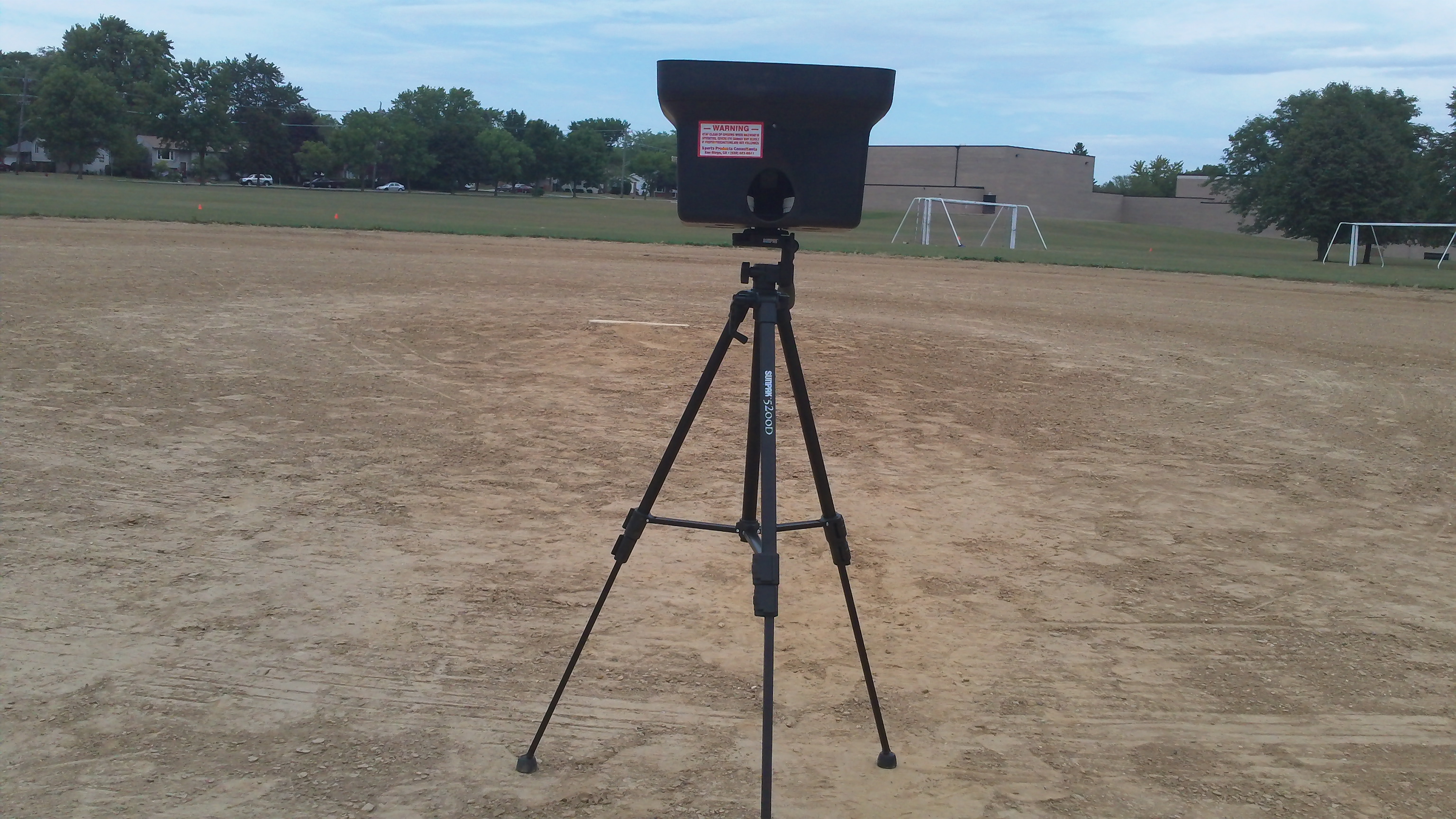 plastic golf balls in a timed progression to give you an opportunity to work on your vision, timing and swing. It’s like the best of pitching machines and soft toss with small objects.
I recently had the opportunity to test the deluxe version with some of my students, from age 10 through 16. (Full disclosure: the machine was sent to me to test by the manufacturer, although with the understanding that my review was my review, whether I liked it or not.) They definitely found it challenging. More on that in a bit.
The Personal Pitcher is a fairly simple machine. A wheel on the top drops balls into the delivery area one at a time. You can set the interval between balls for five or eight seconds, I used eight seconds, and wouldn’t recommend going less than that unless you’re trying to get a workout instead of work out your swing. 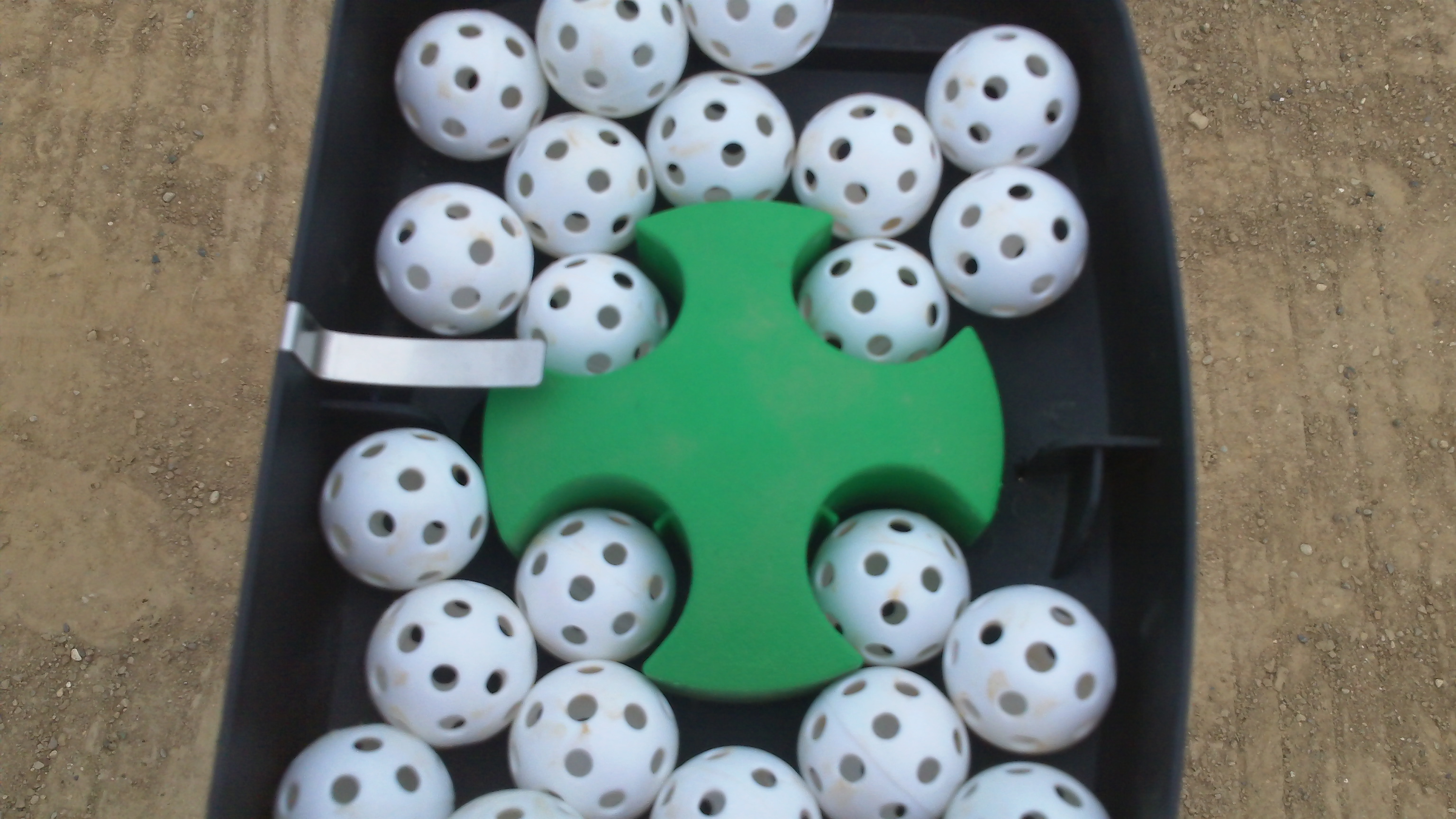
Inside the lower area are two wheels that catch the ball that’s been dropped and shoot it out a hole in the front. According to the manufacturer you can set the speed for 35, 45 or 55 mph. Considering you need to set the Personal Pitcher up about 15-20 feet from the hitter that’s plenty of speed. You can also set the unit I had to throw curve balls, sliders and screwballs, although I didn’t have the opportunity to play with those.
The Personal Pitcher mounts onto any standard camera tripod, allowing you to adjust the height to suit the hitter, and make up for non-level ground. The entire unit with the tripod is very light weight, making it easy to move around a field. It operates on a battery that carries a roughly four-hour charge, making it perfect for setting up as a hitting station at a team practice as well as setting up and taking down around the house. You can use it in the back yard, on the driveway, in the garage or even in the basement if you have the space.
While the unit comes with an instruction sheet that tells you to check for some things shifting during shipping, mine was perfectly set up and charged, so it was almost ready to go out of the box. The only things I had to do were connect the wires for the circuit board and battery — simple operations that require no technical expertise.
So, what did I think about it as a hitting device? Well, my first recommendation is the hitter should already have good swing mechanics before moving to the Personal Pitcher. Hitting those little golf balls, especially when they start veering off in different directions, isn’t easy. A hitter with poor or under-developed mechanics will probably abandon any sense of having a good swing in order to try to make contact with the ball. That will be counter-productive to your goals.
Once good mechanics are in place, however, it is definitely challenging. One of the toughest parts for hitters, at first, was getting the timing down. The Personal Pitcher has a green LED light on the front that glows brighter as it gets ready to deliver the ball, then goes dim right before it shoots out. For the first three trials, however, we used it in bright sunlight, making it difficult to see the changes in the LED. On the last one we tried it in the evening, when it was still light out but the sun was low. Definitely easier to see changes in the LED that way.
Not knowing when the ball was going to come out made it difficult to get the “load” part of the swing down. Since I emphasize load it threw everything else off. However, after a little while I would watch the balls get ready to drop into the lower chamber and say “load.” That helped the hitters figure the timing better. An audible alert, such as a click or electronic “beep” before delivery, would be a nice enhancement.
Once they got the timing down the Personal Pitcher really helped the hitters to learn to focus on seeing the ball. You would also see their determination go up after the first few misses, which was a positive in my book as well. The more hitters can learn to focus and concentrate at the plate the more their performance will improve. The Personal Pitcher definitely helps on that score.
I believe the more hitters work with the Personal Pitcher, the better they’ll get at dealing with its nuances, such as timing issues, which will allow them to take more quality swings. That was certainly my experience with it. Each hitter struggled at first, but improved as the session went on and they figured out how to work with it.
One other improvement I’d like to see made is a battery meter or some other type of warning that lets you know the battery needs recharging. If you’re using it at home it’
s probably not that big a deal. But if you’re using it in a team practice it would really be helpful to know how much time you have left on that charge, so you don’t show up to a field and have it shut down 10 minutes into practice. Of course, that would probably shoot the price tag up as well.
The standard version comes with 24 balls, while the deluxe version comes with 48 balls. Two loads of 48 balls is just shy of 100 swings, which is a pretty good workout. At eight second intervals you can hit 48 balls in roughly six minutes. That’s a lot of swings in a short period of time — as long as they’re good swings.
For more help with vision drills you can also purchase a dozen Focus Balls — a set of plastic golf balls with different colored stripes on them. Hitters can either stand and call out the color of each ball, or do so while trying to hit them. Use them alone or mix them in with standard white balls to help train hitters to see the ball better.
The construction of the Personal Pitcher is mostly plastic, but it seemed sturdy enough for normal use. If you treat it with the same care you would use for a camera or porcelain bowl (set it down, don’t throw it around) it should last a long time.
All in all, I think the Personal Pitcher is a great investment for serious fastpitch hitters and teams. It breaks up the monotony of endless tee work, and the different variations provide plenty of challenges to keep things interesting. The best part is hitters don’t need anyone else around to use it. They can set it up and get it going all by themselves.
If you’re looking for a device that gives the feel of hitting a moving ball with some speed yet is still affordable, check out the Personal Pitcher. At half the cost of a good bat it’s definitely worth the investment.
Fastpitch hitting: sometimes you just have to say huh?
Last night I was doing a hitting tune-up with one of my students. She’d been hitting the ball pretty well, but over the weekend she struggled a little bit. She told me her coaches told her she was dropping her back shoulder and her hands.
I just sort of rolled my eyes because usually when people say that they don’t know what they’re looking at. But then, before she stepped up to the tee I discovered the cause of the problem. She quietly said to herself “Hands to the ball.”
“Where did you get that?” I asked. “Did those knuckleheads tell you that?”
“Yes,” she answered.
“Ok then riddle me this,” I said. “If you take your hands to the ball, what are you going to do?”
She thought for about a second, went through the motion of doing it and the lightbulb came on.
“I’m going to drop my hands,” she said.
And there you have it. Her coaches were telling her to do the exact thing they were saying was a problem. It’s no wonder so many players have trouble hitting.
This is why you have to be careful about what you say as a coach. It also helps to actually know what you’re doing instead of repeating the same bad advice that limited your own playing career.
Most importantly, when you’re instructing a skill, listen to what you’re saying. You just may find what you’re saying, and the result you’re trying to achieve, are at odds with each other.
Fastpitch hitting: that magical moment
The other night I was doing a fastpitch softball hitting lesson with a high schooler named Becky. She has developed a nice swing overall, but I wasn’t quite seeing the pop I was looking for. She was trying, but it just seemed a little off.
Then all of a sudden it happened. Her timing was right, and she just turned like heck on the ball, and the ball really jumped off her bat! Like Lucy instructing Schroeder on how to play the piano I got all excited and said “That’s it! Keep doing what you did there.” And she did.
And that’s the thing sometimes with fastpitch hitters (and their instructors). We all get so caught up in trying to perfect the mechanics that sometimes we don’t put enough emphasis on just plain being aggressive. So what you wind up with is a swing that looks awesome when played back at 60 or 120 frames per second on video, but that doesn’t deliver a particularly well-struck ball.
That whole idea of being aggressive, or swinging with enthusiasm as I like to put it, is very important. As I’ve said many times there are no style points when you’re hitting in a game. On a tee, or in a drill, we’re going to work on getting the mechanics as close to what we think is perfect as possible. But when you’re in a game, or facing live toss or a machine, you need to forget about all that, go with what you have, and hit with the intent of driving the ball.
It’s an awesome sight when it comes together. With Becky I could just see the magic happening. She’d gone through her load, had gotten to toe touch at just the right time, and at that point she was able to let go and just finish the swing with a determination to hit the ball hard. If you’re not trained to it you may not know exactly what you’re seeing, but you just know it’s right. And it’s a beautiful thing.
What has your experience been? Have you seen a “magic moment” like that from a hitter, where it all just comes together?
Contact points as easy as tic-tac-toe
Yesterday during a fastpitch softball hitting lesson I was trying to explain the different contact points for pitches depending on their location, i.e. inside, down the middle or outside. The player, a girl name Sydney, is a 10U player so I tried to be aware of the terminology I used.
At first I said the usual – the contact point goes on a diagonal, from out in front on the inside to a little behind the front foot on the outside. I then asked if she understood the term “diagonal.” She nodded a weak yes, which I took to mean “not really but I don’t want to admit it.”
That’s when it hit me – a way to explain it using something famili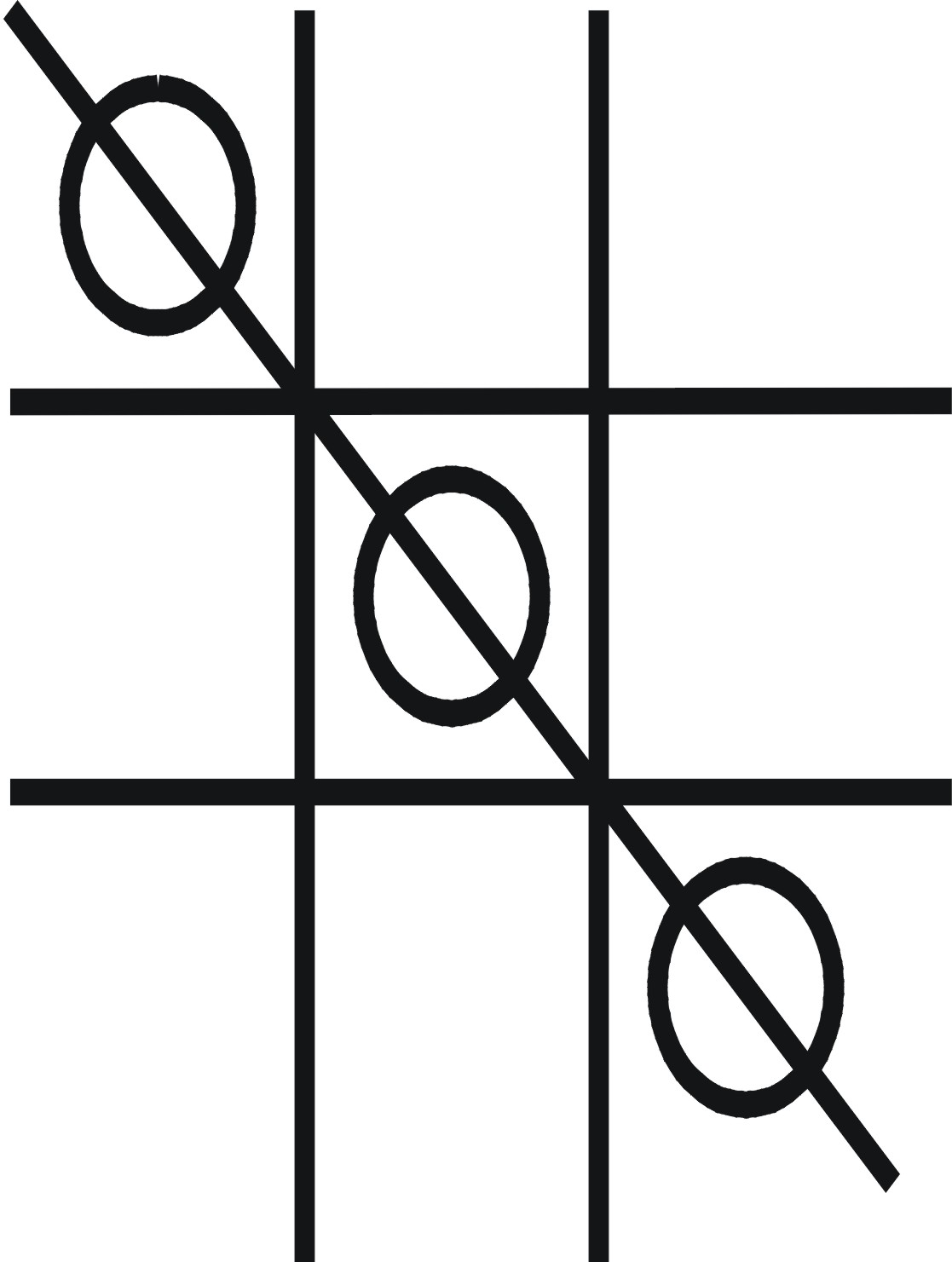 ar. I asked if she’d ever played tic-tac-toe. Of course she had. I drew an imaginary board, and showed how if you put an O in the upper left hand, center, and lower right hand boxes you get a diagonal, which corresponds with the contact points for a right-handed hitter. THAT she understood.
This was indoors, so we couldn’t actually draw the boxes. Outdoors you can draw the game board in the dirt if it helps. Either way, you have a winner!
Fastpitch softball hitting game — High Fives
One of the challenges of teaching fastpitch hitting, either in lessons or in a team setting, is getting some game-like pressure into practice. After all, just about anyone can look good in the cage when they’re relaxed. But when there’s something on the line it can be a whole different ballgame (so to speak).
Tonight I had that situation with a couple of hitters. I wanted to give them a little bit of skin in the game to see how they handled the pressure, and have a little fun while we were at it. So I came up with High Fives.
The rules are pretty basic. You can use a pitching machine, front toss or some other method of delivering the ball. You make the pitch, and if the hitter hits a line drive or strong fly ball she gets a point. If she swings and misses, fouls it off or hits a pop-up or weak grounder she loses a point. A strong ground ball is neutral — it doesn’t gain or lose her a point.
Score is kept in the same manner you use for basic card counting in Blackjack. (Originally I was going to make the game 21, but realized it could take forever to finish.) So if she hits a line drive with the first pitch, it’s +1. A fly ball on the next pitch is +2. A pop-up on the next pitch takes it back to +1 and so forth. You can also go into negative numbers, i,e, -1, -2.
Five is the magic number, which gives the game its name. If the hitter gets to -5 the game is over and she owes you five pushups. On the other hand, if she gets to +5, the game is over and you owe her five pushups. The hitters usually get pretty excited when they win and you have to drop and give them five.
Now, you don’t have to use the same exact scoring system I use. You can adjust it to the types of hits you’re trying to achieve.
If you’re looking for a way to spice up hitting practice give this game a try. Just be sure you’re ready to pay up!
There’s more to rotation than merely turning
It seems to be pretty well-established in most fastpitch softball circles these days that rotation is a critical, must-have element of good hitting. Yet it’s important to keep in mind that the mere act of rotating itself doesn’t guarantee success. When you rotate, you actually have to do something, i.e. generate power with it.
As a hitting instructor I see it all the time. Players understand that they have to “turn on the ball.” Yet they do it in a way that looks good in slow motion video but doesn’t actually accomplish what it’s supposed to accomplish.
The idea of rotation in hitting is to recruit the big muscles — thighs, butt, core, back, chest, etc. — to help move the mass of the bat. Those muscles create power and batspeed. The smaller muscles in the arms can then be focused on getting the bat head on-plane with the ball and making fine adjustments. But when the big muscles aren’t used, hitters have to depend on the smaller muscles to get the bat moving, which means they’re less capable of making adjustments. They also don’t hit the ball as hard.
However you go about it, rotating the hips has to be an aggressive, ballistic movement, not an easy turn into position. I will tell hitters to “pop the hips” to get them more aggressive. It’s not just about speed — the body has to be used properly, driving the back side up and around the front side — but assuming the right things are happening “pop the hips” gets the idea of being more aggressive.
Another thing a quick, powerful rotation does is give the hitter more time to see the ball before committing the bat to the swing. If the hitter can cut the time of rotation in half, that extra time can be added to the time he/she has to see the path of the ball (and if he/she is really good its rotation), which helps the hitter make a better final decision on where to take the bat.
I tell hitters I always want to see them making their positive move (striding as I teach it, although a forward shift with no stride also counts) and at least starting hip rotation on every pitch. Sometimes they worry that they’re going to swing at a bad pitch, but when they do it they see committing to strong rotation on every pitch actually makes it easier to hold back on a bad pitch because they can start the bat at the ball later.
When they make the powerful hip turn they also see how the ball jumps off the bat at contact. It just gets easier to hit well. Maybe when you’re moving faster overall you have less time to take yourself out of a good hit — you’ve gathered the info you need and now you’re just executing, reducing the act to see ball/hit ball.
Something you want to watch out for is the “rotation” that is more about turning the back leg than driving the back hip forward. The old “squish the bug” cue is the worst example of it, but there are other ways that are less than optimal as well. If the thigh bone (femur for those who like medical terms) is primarily rotating in the hip socket you don’t have rotation.
Instead, you want the back hip to drive forward around the front hip and into the ball, which at the point of contact generally results in the back foot being up on the toe with the heel pointed at the sky rather than the catcher. (Mark, I’ll save you the trouble — see these videos for some good examples.) I say generally because you’ll always be able to find cases where it doesn’t happen, but those are more the exceptions where a hitter has to make an unexpected adjustment, such as an inside pitch that gets to them more quickly than they were ready for.
The point is just turning isn’t enough. To really be successful with it, the hitter has to practice and become confident in his/her ability to rotate quickly and powerfully in order to maximize the swing.
Now it’s your turn. What have you observed in hitters when it comes to rotation? How have you gotten them to commit to doing it more powerfully? And what kind of results did you see?
Drill to help fastpitch hitters who drop their hands
A couple of weeks ago I was working with a 12U player named Carly who was having some issues with her hands dropping. The action of dropping her hands created somewhat of a looping swing.
The problem was she couldn’t feel it. So once again I brought out my trusty swim noodle. This time I placed it behind her, in an area I didn’t want the bat head to go. Her objective was to swing the bat without hitting the noodle.
At first, of course, she did hit the noodle. Here’s a slow motion video (taken later in the session) showing a “before” swing. (Notice the guilty grin after she hits the noodle.
After working on it for a bit we tried it again. Here’s the “after” swing, with Carly now taking the head of the bat on a more direct line to the ball instead of looping.
It’s a subtle difference but an important one. With this bat path she is now set up better to hit the ball more effectively.
By the way, back in the day I used to hold a bat behind the hitter, who would use an old bat in order not to damage her good one. But that became a bit intimidating. The noodle works much better, and allows the hitter to use her own bat.
As for Carly, we’re still early in her development as a hitter, but the noodle drill has been effective in helping her get rid of the looping swing. If you know a hitter who is having this dropping the hands issue, give it a try.
So what do you think? What drills or techniques do you use to address dropping the hands?






 Life in the Fastpitch Lane