Category Archives: Fielding
Getting into ground ball position
Watch the typical youth player working on fielding ground balls. More often than not, what you’ll see is a bend at the waist, with the arms hanging down like an orangutan and the ball being fielded at the feet.
There are any number of reasons for this poor technique. One is actually some of the coaching we do. We tell our fielders to get their gloves on the ground. So they follow those directions, taking the shortest distance between two points — a straight line. And that straight line is directly below her belt.
What we need to do instead is tell them to lower their hips. When their hips are lowered the glove will also get onto the ground, but a little more forward, forming the point of a triangle. (The feet are the base of the triangle.) Lowering the hips also allows the head to stay up so fielders can watch the ball all the way in — as opposed to bending at the waist, which causes the head to point down.
Try it. Get in the athletic position with the hands in front, then move down by lowering the hips. You’ll be in a much better position to both see and field the ball. And the nice thing is it’s a very specific instruction.
Choosing a glove
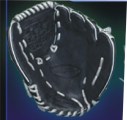 Sorry y’all, I’ve been a bit busy lately and have not been keeping Life in the Fastpitch Lane freshened up with new material. Guess that’s what happens when your day job expects you to actually be working at work. And your lesson schedule starts going crazy.
In any case, I was talking with my friend Frank Morelli a couple of weeks ago and he suggested I put up a post on how to select a new softball glove. I’ve done some stuff with bats in the past, but haven’t really addressed gloves. That’s interesting since you’ll probably keep your glove a lot longer than any particular bat, so you want to make a good choice. Thanks for the suggestion, Frank. Here we go.
Gloves tend to be items of individual preference. Just like bats, there’s no right one for everyone. Unlike bats, though, there’s not really a way of measuring which is better for you. In other words, if you’re a power hitter going for the long ball, you’ll probably like a RocketTech, whereas if you’re smaller and looking for singles a different bat might work better for you. There are some general rules regarding length and weight, which means there are some ways of narrowing down the choices, at least.
With gloves, not so much. So again, it’s a matter of preference. But here are some things to consider in any case.
First, if you’re a female player (or buying for one), get a glove (or mitt) designed for fastpitch softball. Cousin Billy’s old baseball glove, while it may be free, is probably not going to work for you. Fastpitch gloves are now designed for female hands, which means they have smaller finger stalls so they fit better. A lot of the manufacturers, realizing girls generally don’t have the same hand strength as boys, are using materials and designs that break in a little easier. Akadema, for instance, has only three finger stalls instead of the usual four. For years players have been stuffing their ring and little finger in the last finger stall to help the glove close easier. Akadema designed their glove that way to make it automatic, and to help out everyone who didn’t know that trick.
Glove size is another important consideration. Young kids will small hands playing with an 11″ ball can get away with an 11.5″ glove. My youngest daughter Kimmie had an 11.5 inch Mizuno at 10U that she absolutely loved. She would still be using it to this day if I’d let her. The look on her face when we told her she had to give it up was “You’ll get this glove when you pry it out of my cold, dead hands.” But it was too small for a 12 inch ball — especially since her positions are pitcher and outfield. An infielder might be able to get away with a glove that small, but probably shouldn’t. When you go to a 12 inch ball, I’d say go at least 12.5 inches on the glove size. That’s good for infielders (who need a quick transfer) and players with small hands. Pitchers and outfielders are better off with a 12.75 or 13 inch glove, which is a bit more forgiving. It’s not absolute, though. Kimmie uses a 12.5 inch and does just fine with it.
There’s also something to the design. Outfielders will tend to use open webbing, whereas infielders and pitchers used closed or checkerboard webbing. You want closed webbing for pitchers so hitters and base coaches can’t see the grip through the glove. Not that most really look that much, but that’s the rule of thumb.
Then there are the different brands. A lot depends on the model and the materials used, but you can find some general tendencies. Growing up, I was always partial to Wilson gloves. They broke in quickly and lasted a long time with a little care. As an adult I found that Mizunos were very similar to the Wilsons in terms of quick break-in and quality. Lately I’ve been recommending Akadema gloves, partially because they made me a distributor for some reason. But mostly because every kid I’ve gotten one for has loved it — including my own Kimmie. Again, fast break-in, the ball secures easily, and it’s easy to care for. It’s the glove I use now, although a baseball model since the little finger stalls of a fastpitch glove don’t work with my fat fingers. I’ve heard Nokonas are nice too, but pretty expensive. I have no personal experience with them, although if a Nokona rep wants to send me one I’d be happy to try it out.
About the only brand I’ve never liked has been Rawlings. Those gloves always seemed stiff no matter what you do to break them in. Maybe they’re better now, but the ones I tried I didn’t like. Sort of like the difference between the old, stiff denim jeans and the ones they make now.
For the materials, you want genuine leather. The synthetic materails are easy to mass produce and durable, but they don’t have the same feel to them. Sure they may be cheaper, but they won’t yield the same results. If you buy your kid a synthetic glove don’t complain when she’s making errors.
Does it matter if you have a mitt or glove to play first base or catcher? Depends on who you talk to, but I say yes. If you’re committed to one of those positions, a mitt designed for it can help. A first baseman’s mitt is a little longer, helping you reach those high throws while keeping your foot on the bag. It also makes it a little easier to scoop and secure low throws. A catcher’s mitt generally has extra padding, and a rounded pattern that makes it easier catch fast-spinning pitches and frame the balls when you catch them. It’s definitely worth the investment in my opinion.
Speaking of patterns, that’s another quirk of gloves and mitts. They’re not all the same. The pocket and overall design of the gloves and mitts are different, depending on what you need. One of the hot new designs for infielders is a flared glove, i.e. one that is wider at the fingers than at the pocket. It creates a sort of funnel to secure the ball. I have no personal experience with it, but a lot of people seem to like it.
Most manufacturers will provided details on design and a guide as to which glove works best for a given position. Read several Web sites to get an overall view.
The last word of caution is yes, you get what you pay for. But at the same time, there can be a point of diminishing returns, just as there is with bats. Choose a glove that’s appropriate for the level you play. A 10U player at any level does not need a $200 glove. If you’re basically playing a dozen games a year in the local park district league you don’t need one either. If you’re a serious player, though, a quality glove can give you an edge over an old beat-up one.
Hope that helps!
Learning to catch with two hands
One of the most common refrains you’ll hear from coaches in practice is “two hands,” i.e. use two hands to catch the ball. While there are some cases where you really don’t want two hands — catching and some first base come to mind — generally speaking that’s good advice.
Yet getting players into the habit of catching with two hands takes more than just yelling “two hands” every time they don’t. Here’s one of my favorite drills for forcing the issue.
Have your players play catch using the back of the glove instead of the pocket to catch. When they do that, they’ll either have to use two hands or the ball will fall to the ground. They’ll get the picture very quickly.
This drill is also good for teaching soft hands; if the player makes a stabbing motion they’re likely to push the ball away before they can clamp down on it.
Remember that you’re not using two hands just because it’s more secure for catching. It also makes it easier to make a quick throw since the hand is already on the ball, instead of fumbling for it afterwards.
Tag ’em low
This is one of those little things that can make a huge difference in a game. It’s the sort of thing every fielder should know, but many either don’t know it or forget about it.
When you’re making a tag, always try to apply it low, down near the feet. You’re far more likely to get the call. From an umpire’s point of view, a high tag (around the head or shoulders of a sliding baserunner) often implies that the runner slid under the tag. Now, that may not be true — the player may have applied the tag before the runner reached base — but it doesn’t matter. That’s what the umpire will see.
If you apply the tag around the feet or ankles, however, the appearance is you got the runner before she got to the bag, and she’s out.
Wherever possible, apply a low tag. And don’t forget to sell it at the end. Hold the ball and glove up high, show it to the umpire to say “see, I got her!”
Keeping one error from turning into two
Been a while since I posted on fielding. But as the summer season launches into full swing, it’s certainly worth addressing.
Errors are a part of the game. We wish they weren’t, but sooner or later every player is going to commit an errors. This happens even at the highest levels of the game. As Cindy Bristow once said in a coaching clinic about her pro team, “My girls make the same errors your girls do; they just do it faster.”
Where it really goes bad, though, is when one error turns into two. For example, a ground ball is hit to the shortstop. She bobbles it, has a little trouble picking it up, then rushes her throw trying to make up for the first error. The ball sails out of play and the batter/runner (who would’ve had first regardless) winds up standing on second.
Or what about a throw trying to get a runner at a base? The ball gets away from the fielder, and the runner takes off for the next base. Either the fielder or backup picks it up and then makes a wild throw to the next base, and the runner keeps going. You can hear the circus music in your head as the merry-go-round starts to run. Often it becomes the start of one of “those innings.” You all know what I’m talking about.
The reason these things happen, more than anything, has to do with the P word. No, not that “p” word, the other one — panic. Players hate to make errors; when they do, they begin to feel pressure to make up for the error. The internal clock is running, they know the runner might be safe when she ought to be out, and soon the panic sets in. Mechanics go out the window in the rush to get rid of the ball, and suddenly one errror turns into two.
It doesn’t have to, though. Train your team to avoid the panic, and to recognize when the internal clock has ticked its last tick. When that happens, it’s better to eat the ball than make a throw. In the second scenario, where a throw gets away from fielder at a base, it’s important to keep calm and make a good throw to the next base. If there’s a trailing runner, it may even be better to let a run score than put a second runner 60 feet closer to the bag. It’s hard sometimes to let a run score, but if you can prevent another run, or even get an out on the trailing runner, you might be able to short circuit one of “those” innings.
One other important skill to work on is recognizing when the runner is going to be safe no matter how hard you throw. Making the throw might make you feel better, but only bad things can happen. It involves some simple geometry — how close the runner is to the bag, how close the thrower is to bag, and how hard the thrower can throw. Knowing those things, and practicing various proximities, will help fielders know when to hold ’em and when to throw ’em.
Teach your players to stay calm and make good decisions and you’ll avoid having one error turn into two. Not to mention keeping the merry-go-round from starting up.
Blasting balls at fielders
You see it everywhere. Teams of younger players out on the field for fielding practice. A big coach (usually a guy) standing at home plate. He tosses the ball up, takes a powerful swing, and blasts a hard ground ball at one of the girls, who does her best to field it and make the throw. The coach is hitting the ball hard at the girls with the best of intentions. He wants them to learn to handle hard hit balls, and to improve their reaction time. Yet what he is more likely doing is practicing to lose rather than win.
Think about it. Let’s say the team is 10U or 12U. How many girls that age can hit a pitched ball as hard as a large, grown man can fungo it? You can probably count them on the fingers of one ear. Once in a blue moon a ball might be hit that hard, but it’s certainly the exception.
By hitting hard ball after hard ball, the coach is teaching his players to sit back and wait. He’s also teaching them that the elapsed time from contact with the bat to contact with the glove is one second or less. Yet that’s not really what happens on the field. It’s more likely that the ball will be hit softly, requiring the fielders to charge it. But since they’re used to sitting back so they don’t get killed, they’re slow to charge the batted ball. In the meantime, the batter is running up the first base line. The throw gets there late and everyone is unhappy that the fielder got to it late.
The other thing that happens with hard fungoes is the practice becomes more about survival than technique. The fielder may learn to knock the ball down or stab at it, but she’s not really learning proper fielding technique that will translate to the field. She’s less likely to be able to get her butt and glove down properly, receive the ball gently, scoop it cleanly and make the transition to throw. She’s just going to grab it and go.
Contrast that with what I see when I watch college teams practice. They often roll the ball by hand to players so they can work on their fundamentals — even before an actual game. When they do fungo ground balls, they’re hit lightly so the fielders have to be aggressive, rather than sitting back passively waiting for the ball to nearly overpower them.
It applies at every level, but especially at the younger levels. If you’re smacking hard grounders at your players, make a pledge to stop now. Hit the ball at the speed they can reasonably expect based on your level of competition so they set their minds on making the plays you need them to make. Believe me — if anything is hit harder and right at them, they’ll make the play out of self-defense. Coach for the majority of what you’ll face instead of the minority and you’ll make more plays and win more games. It’s just common sense.
Your favroite fielding drills
Mike Hanscom was looking for a way to exchange drills, so I have started a series of posts in various areas (which should make them more searchable down the line).
If you have a favorite fielding drill you’d like to share, please leave a comment. Thanks!






 Life in the Fastpitch Lane