Category Archives: Equipment
Product review: Jennie Finch Softball Powerline Pitching Mat
When you live North of the Mason-Dixon line, you tend to spend a good part of your fastpitch softball off-season training time indoors. While that certainly beats freezing your butt off in sub-zero temperatures, it also presents some interesting challenges — especially for pitchers.
For several years I have used a couple of different pitching mats rather than having students pitch off the floor. The mats have built-in pitching rubbers, which is good, and the one from Club K also had the powerline built into it. (The other one, a turf-type, did not, but I solved that with some line marking paint.) The trouble, though, was that they tended to slide on the turf surfaces used in batting cage facilities due to their rubber backing. I constantly had to adjust the mats to keep them lined up with the plate. I’m sure they work fine on a wood gym floor, but how many of us have access to those?
It’s not a problem anymore, though. I recently purchase two of the Jennie Finch Softball Powerline Pitching Mats with foam backs, and I have to say they’ve been acting as-advertised. The web listing claimed that the foam back would stick like Velcro to a turf surface, and by golly that’s exactly what has happened. After a week’s worth of using them in two different locations I can safely say that they have not moved an inch, even when used by some strong pitchers.
That alone made them worth the price ($215 plus $30 for shipping). But they are also good mats in other ways.
The turf surface itself is high-quality, and appears as though it will be very durable even under regular use. The bright green turf is split by a bright white powerline that makes it easy for students to see and keep themselves going straight. The mat is also thick, providing a little cushioning when landing versus the usual thin turf over concrete floors. My students have definitely appreciated that.
The transaction with On Deck Sports was smooth, and the mats were delivered within a few days. Incidentally, they come with a vinyl carrier that makes them easy to cart to and from a facility. The carrier was tucked into the center of the rolled-up mat, so you’ll want to grab it before you bring it somewhere.
Time will tell as far as durability goes. But if you’ve been struggling with keeping a pitching mat in place, I can definitely recommend this one. Just be sure you specify the foam backing.
One final word. If you watch the video demo, you’ll see Jennie Finch is illegal on every pitch she throws from it. That’s unfortunate, and I wish someone would notice and correct that. But don’t let that discourage you. It’s still a good product.
What’s in your coach’s bag?
Most coaches have a bag or two they use to carry various items. Typically, one bag has items such as lineup cards, a clipboard, maybe an eraseable board to post the lineup, a scorebook, pens and pencils and assorted other items. The other bag might carry a glove, an extra ball or two, a stopwatch and maybe a bat.
But after nearly 15 years of coaching, I’ve found there are a host of other items that can come in handy. Throw them in your bag and, like a Boy Scout, you should be prepared for just about anything.
- Dandelion puller — This tool comes in handy if you’re using the breakaway bases with the thin post. A little dirt gets in there after a slide and the base won’t sit right. If there’s no ground crew around, the dandelion puller will help you.
- Resin bag — On a hot, humid day it can be tough for pitchers to get a good grip on the ball. A resin bag can help keep the pitching hand dry. Some pitchers like them whether it’s hot or not because it helps them get a little extra spin on the ball.
- Towel — Into ever life a little rain must fall. Every coach should have a towel handy to dry off the ball when it gets wet. Sure beats using your shirt.
- Duct tape — You folks from the South know what I’m talking about. Duct tape can fix just about anything. Have a shoe falling apart? Duct tape it. Lineup board blowing around on a windy day? Duct tape it. Water bottle leaking? Duct tape it. Is there anything it can’t do?
- Glove repair kit — In a perfect world, all your players would take great care of their equipment and inspect it regularly. Doesn’t happen. You can’t do much about a dented bat, but if a player comes to you with a broken glove what are you going to do? Loan her a glove she’s not familiar with? Not good. But if you have a lace pulling kit you can make a quick repair and get her back on her way. Be sure to have some spare lacing just in case it isn’t just out but broken.
- Glove cream — Ok, so she decides to get a new glove and it’s not broken in. You can help get her on her way with a little glove cream. Just remember to do it after the game or practice, not before.
- Tape measure — I have been on fields that just didn’t quite look right. But unless you can prove the pitching rubber is set too far or too close, or the bases are the wrong distance, you can’t get it corrected. A 100′ tape measure doesn’t take up much room, but it can be a life saver. It’s also good for measuring pitching distances during warn-ups, too.
- Spare batting gloves — Let’s face it — kids lose things. If one of your hitters loses a batting glove you can come to the rescue with a loaner.
- Sunscreen — You need it yourself, but also make sure your players are wearing it. If they don’t have any you can loan them yours.
- Insect repellent — Shouldn’t need it during the day, but if you’re playing at dusk, or on a field with lights, you’ll be glad you have it.
- Fold-up jacket or poncho — When the rain starts you’ll want to be protected. After all, you’re not 14 anymore.
Those are many of the things in my bag. What’s in yours? Did I miss anything? If so, add them to the comments below.
A cue for hitters who are dropping their hands
Dropping the hands is a fairly common problem among young hitters. I personally think some of that is due to the number of coaches telling their hitters to “throw your hands at the ball,” and part of it is telling them to “swing level,” which translates in their heads to “level to the ground.” But mostly it’s probably just a natural reaction to trying to hit a moving ball with a moving bat.
Tonight I was working with a girl who was doing just that. She was trying to hit a thigh-high pitch, but her hands were coming down so low that there wasn’t much angle to her bat. I wanted her to make sure she was keeping her hands above the ball, but saying that just didn’t seem to make sense to her. So I told her to keep her hands above her waist, and just lower the bat to get to the ball.
Bingo! That seemed to work. She went from hitting bouncing ground balls to driving line drives and pounding some deep fly balls. She continued to hit through the ball consistently.
I don’t know if it will work for everybody, but it certainly worked tonight — probably because it was specific and measurable. Saying keep your hands above the ball requires judgment. Saying keep your hands above your waist (or bellybutton) is a lot easier to understand and execute.
Feeling better about my team’s hitting
Over the past couple of weekends our team has been struggling at the plate. It’s not that we’ve been overpowered by great pitching for the most part. In fact, I’d say the pitching overall has been on the weak side. But in spite of that we’ve been popping up and hitting a lot of weak ground balls. It’s been maddening, really.
So tonight I’m watching the KFC World Cup series — USA v. Australia. USA got up 3-1 early, and was in command of the game. Then Australia brought in a relief pitcher, a girl throwing a lot of pitches in the low 50s, with a few in the high 50s. So what do you think happened?
The USA has hit five straight weak pop-ups. They are really struggling with the off-speed and general junk.
These are some of the best hitters in the world, and they’re having trouble making the adjustment — doing exactly what we were doing. Somehow I suspect they’ll get through it quicker, but I guess tonight I’m seeing it can happen to anyone. I’m feeling a little better about our difficulties adjusting. But just a little!
More on choosing a glove
The universe is a strange, wonderful place, with its own interesting rhythms. If you don’t believe me, consider this.
My last post was about how to choose a softball glove — a suggestion from my friend Frank Morelli. Today I received the Jugs Co. newsletter in my e-mail, and what do I find? You guessed it. An article from their resident softball expert, Celeste Knierim, about how to choose a glove.
She goes through many of the same points I did, although she definitely put in more information when describing the different types of webbing.
The article also gives some tips on how to break in a glove. One thing I definitely disagree with is her recommendation to let the glove soak in rain water. I used to break in gloves by soaking them in water — a recommendation someone gave me. Then I read how it’s bad for the glove long-term. I’ve found that to be true — my Wilson glove has kind of deteriorated over the years, looking like it has water damage. Some of the glove sites have better tips. None recommend soaking the glove in water or throwing it in the oven.
Still, outside of that the article is worth reading. One last glove tip. If your glove is feeling a little loose, it probably is. Restringing by a professional is often very cheap, but a great investment. It’ll make you fall in love with your glove all over again.
Choosing a glove
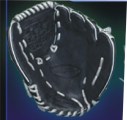 Sorry y’all, I’ve been a bit busy lately and have not been keeping Life in the Fastpitch Lane freshened up with new material. Guess that’s what happens when your day job expects you to actually be working at work. And your lesson schedule starts going crazy.
In any case, I was talking with my friend Frank Morelli a couple of weeks ago and he suggested I put up a post on how to select a new softball glove. I’ve done some stuff with bats in the past, but haven’t really addressed gloves. That’s interesting since you’ll probably keep your glove a lot longer than any particular bat, so you want to make a good choice. Thanks for the suggestion, Frank. Here we go.
Gloves tend to be items of individual preference. Just like bats, there’s no right one for everyone. Unlike bats, though, there’s not really a way of measuring which is better for you. In other words, if you’re a power hitter going for the long ball, you’ll probably like a RocketTech, whereas if you’re smaller and looking for singles a different bat might work better for you. There are some general rules regarding length and weight, which means there are some ways of narrowing down the choices, at least.
With gloves, not so much. So again, it’s a matter of preference. But here are some things to consider in any case.
First, if you’re a female player (or buying for one), get a glove (or mitt) designed for fastpitch softball. Cousin Billy’s old baseball glove, while it may be free, is probably not going to work for you. Fastpitch gloves are now designed for female hands, which means they have smaller finger stalls so they fit better. A lot of the manufacturers, realizing girls generally don’t have the same hand strength as boys, are using materials and designs that break in a little easier. Akadema, for instance, has only three finger stalls instead of the usual four. For years players have been stuffing their ring and little finger in the last finger stall to help the glove close easier. Akadema designed their glove that way to make it automatic, and to help out everyone who didn’t know that trick.
Glove size is another important consideration. Young kids will small hands playing with an 11″ ball can get away with an 11.5″ glove. My youngest daughter Kimmie had an 11.5 inch Mizuno at 10U that she absolutely loved. She would still be using it to this day if I’d let her. The look on her face when we told her she had to give it up was “You’ll get this glove when you pry it out of my cold, dead hands.” But it was too small for a 12 inch ball — especially since her positions are pitcher and outfield. An infielder might be able to get away with a glove that small, but probably shouldn’t. When you go to a 12 inch ball, I’d say go at least 12.5 inches on the glove size. That’s good for infielders (who need a quick transfer) and players with small hands. Pitchers and outfielders are better off with a 12.75 or 13 inch glove, which is a bit more forgiving. It’s not absolute, though. Kimmie uses a 12.5 inch and does just fine with it.
There’s also something to the design. Outfielders will tend to use open webbing, whereas infielders and pitchers used closed or checkerboard webbing. You want closed webbing for pitchers so hitters and base coaches can’t see the grip through the glove. Not that most really look that much, but that’s the rule of thumb.
Then there are the different brands. A lot depends on the model and the materials used, but you can find some general tendencies. Growing up, I was always partial to Wilson gloves. They broke in quickly and lasted a long time with a little care. As an adult I found that Mizunos were very similar to the Wilsons in terms of quick break-in and quality. Lately I’ve been recommending Akadema gloves, partially because they made me a distributor for some reason. But mostly because every kid I’ve gotten one for has loved it — including my own Kimmie. Again, fast break-in, the ball secures easily, and it’s easy to care for. It’s the glove I use now, although a baseball model since the little finger stalls of a fastpitch glove don’t work with my fat fingers. I’ve heard Nokonas are nice too, but pretty expensive. I have no personal experience with them, although if a Nokona rep wants to send me one I’d be happy to try it out.
About the only brand I’ve never liked has been Rawlings. Those gloves always seemed stiff no matter what you do to break them in. Maybe they’re better now, but the ones I tried I didn’t like. Sort of like the difference between the old, stiff denim jeans and the ones they make now.
For the materials, you want genuine leather. The synthetic materails are easy to mass produce and durable, but they don’t have the same feel to them. Sure they may be cheaper, but they won’t yield the same results. If you buy your kid a synthetic glove don’t complain when she’s making errors.
Does it matter if you have a mitt or glove to play first base or catcher? Depends on who you talk to, but I say yes. If you’re committed to one of those positions, a mitt designed for it can help. A first baseman’s mitt is a little longer, helping you reach those high throws while keeping your foot on the bag. It also makes it a little easier to scoop and secure low throws. A catcher’s mitt generally has extra padding, and a rounded pattern that makes it easier catch fast-spinning pitches and frame the balls when you catch them. It’s definitely worth the investment in my opinion.
Speaking of patterns, that’s another quirk of gloves and mitts. They’re not all the same. The pocket and overall design of the gloves and mitts are different, depending on what you need. One of the hot new designs for infielders is a flared glove, i.e. one that is wider at the fingers than at the pocket. It creates a sort of funnel to secure the ball. I have no personal experience with it, but a lot of people seem to like it.
Most manufacturers will provided details on design and a guide as to which glove works best for a given position. Read several Web sites to get an overall view.
The last word of caution is yes, you get what you pay for. But at the same time, there can be a point of diminishing returns, just as there is with bats. Choose a glove that’s appropriate for the level you play. A 10U player at any level does not need a $200 glove. If you’re basically playing a dozen games a year in the local park district league you don’t need one either. If you’re a serious player, though, a quality glove can give you an edge over an old beat-up one.
Hope that helps!






 Life in the Fastpitch Lane