Category Archives: Coaching
It’s OK To Go After the Lead Runner. At Least Sometimes.
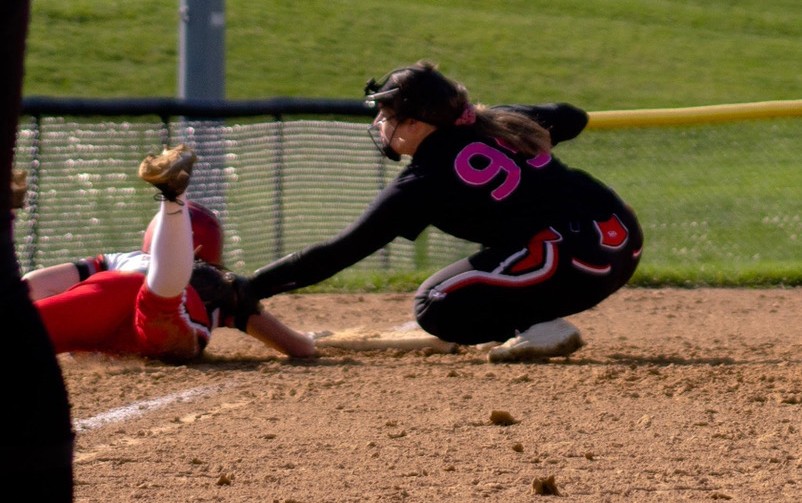
With my heavy lesson schedule I don’t often get a chance to go out and watch actual youth softball games. But over the last couple of weeks – thanks to the miracle of modern streaming technology – I’ve been able to watch several games online.
While I was mostly watching some of my students as a fan, the coach in me couldn’t help but notice something rather, well, odd. Let’s set up the situation then we’ll get to what was strange to me.
In the plays I’m talking about there were runners on second and/or third base with less than two outs, and only a run or two separating the team on defense (which was behind) from the team on offense. A ground ball was hit right to an infielder or the pitcher and – and the fielder immediately picked up the ball and threw it to first base.
No checking to see what the lead runner was doing – which in most cases was taking off immediately. No awareness that I could see that there even WERE runners on base.

Just automatically making the play at first, which resulted either in a runner scoring, putting the team on defense even further behind, or a runner advancing to third, increasing the offense’s chances of scoring again, especially if the out at first was the first of the inning.
I don’t get that at all. Why wouldn’t coaches be teaching their players to at least take a look at that lead runner, and if there is a play there go for that instead of throwing to first?
To be honest, in the plays I saw the lead runner should have been caught dead to rights. There was plenty of time to make a play if the fielder had been trained to think, “I should see what that lead runner is doing and throw her out if I can.”
In one example, the lead runner on second ran right past the shortstop. Had the shortstop noticed her, she could have made a quick pivot to throwing side and either gotten the runner immediately on a tag play or else created a rundown situation.
But instead, the shortstop showed no awareness at all of the runner who had just passed right in front of her and instead opted to make the long throw across the diamond. Yes, she got the out, but the lead runner eventually went on to core.
Had the shortstop made the throw to third instead that runner would have likely been erased. And since the chances of scoring from third with two outs are more than double than the chances of scoring from first with two outs (.321 v .144) according to 643 Charts, the defensive team wouldn’t have had as a big a hole to climb out of when it was their turn to hit.
Another situation was a combacker to the pitcher with a runner on third. Rather than checking the runner to see if she was going (she was), the pitcher automatically threw the ball to first, allowing an easy score.
Had she looked at the runner she would have seen that a simple toss home would have resulted in either an easy tag play or at least a rundown that, if it was properly executed but didn’t get an out, would prevent a run from scoring.
So does that mean you should always go after the lead runner? Of course not.
There are a number of situations where the out at first is your best option – not the least of which is when your team is having trouble getting outs at all. In that case get an out somewhere and get out of the inning!

Another obvious situation is a ground ball to the second baseman, especially if she is playing somewhat deep. She probably doesn’t have the arm to make a throw home and get the runner so going to first is the smarter move.
Even if she does have the arm, though, if it’s going to be a close play at home but an easy play to first, take the out. There’s probably little likelihood of getting the out at third either so take the out at first.
Bunts in general tend to be another exception. If the catcher fields the bunt she might have a chance of making the play at second because she’s used to making that throw and she’s moving in the right direction to do it.
For everyone else, unless there’s an extremely slow runner on first, take the out with the hitter.
There are some other factors as well, such as whether your team is good at putting up runs. If you’re struggling on offense already, either overall or in that game, you might want to do everything you can to keep the game close, including not giving up runs when you don’t have to. On the other hand, if you’re confident you can trade a run for an out because you’ll make it up in your next at bat, take the out at first.
Another factor is where you are in the game. The fewer outs you have left on offense, the more important those runs given up on defense become.
Even if your philosophy is “take the easy out,” you may need to adjust if you’re coming down to the last inning or two. Yes, there is a risk of making the situation worse if your team can’t execute the throw and tag, but hey, that’s what practice is for.
On the other hand, if your team is up by six runs late in the game, trade that run for the easiest out. You have runs to spare, while the offensive can’t spare any outs.
Early in the game, keep in mind that a well-executed play on a lead runner may cause the other team’s coach to become more cautious on the basepaths. No one wants to get a runner thrown out at home so if you can show you’re able to do it you might just keep the pressure off your defense for the rest of the game.
Speaking of which, the other big factor is your team’s ability to judge whether they can make the throw in time and your confidence that they can execute the play overall. There’s a big difference between trying it with a college or 16-18U travel team versus a 10U travel team versus a rec league team.
Clearly, there is no “one-size-fits-all” solution here. But going for the lead runner is at least worth considering.
Teach your players HOW to do it, then teach them when. You never know when that one out your saved can mean the difference between winning and losing.
Giving Players the Chance to Work Through Adversity

One of the most common phrases you will hear in all of sports is “player development.” Whether it’s a 10U girls fastpitch softball team coached by volunteers or a multi-billion dollar NFL franchise, everyone likes to talk about how important player development is for the short- and long-term success of the team and the organization.
That is, of course, until somebody makes a mistake or a problem arises. Then all that talk about letting players develop goes out the window as the coach unceremoniously removes said player from the game so the team doesn’t face the unthinkable prospect of possibly losing a game because of that one play.
Yeah, I’m getting a little hyperbolic but it’s to make a larger point: how in the world will players develop when the minute something bad happens they are removed from the situation?
We’ve all heard the phrases “iron sharpens iron,” “steel is forged in heat,” and “diamonds are lumps of coal that stood up to pressure.” But none of those great outcomes happen if you remove the object from the situation the second any stress occurs.

That’s why, if you are actually committed to seeing your players develop, you have to leave them in to face their greatest difficulties or fears, even if it means you might lose a few more games here or there rather than pulling them something starts to go wrong. By giving them a chance to work their way out of a difficult situation, even if they ultimately fail today, you will help them become better-prepared for the next time they face similar pressure.
Take a pitcher, for example. Maybe she is fairly new to pitching, or has been sidelined for a while with an injury.
She starts the game and does ok in the first inning, but then she walks a couple of hitters on 8 or 9 total pitches. Time to pull her, right?
Not necessarily. If you’re in an elimination Sunday game maybe.
But if you’re playing a meaningless weekday friendly, or a showcase where no college coaches are there to see someone specifically, or a pool play game (especially where seeding will be decided by a blind draw) a better strategy for the player and the team might be to go out and talk to her, try to reinforce her confidence, then leave her in there to try to work her way out of the situation.
She just might surprise you. And even if she doesn’t, who cares?

Losing that game doesn’t really affect anything but your ego around your team’s record. But giving that pitcher a chance to work her way through difficulty might be just the boost she needs to help her contribute more to the team down the road.
After all, pitchers need innings if they’re going to be effective. Taking them out of the game because you panic at the first sign of trouble (or are more worried about wins than giving your players a chance to develop) will just set them back further on their own journeys – and could even cost you players who become great when someone else shows a little more faith.
The same is true for fielders and hitters. If you pull a fielder after one or even two errors rather than giving her a chance to recover she’s not going to learn very much – except that you have no faith in her.
If you constantly DH for a hitter because you don’t want to give up an out, or put in a pinch hitter any time the situation is remotely tense, it’s unlikely she’s going to develop the confidence it takes to swing the bat effectively.
Then, one day when she comes to the plate in a meaningful game where you have no other options, you’ll have no one to blame for her failure but yourself.
Ok, so does this mean I think you should never pull a pitcher or make another substitution? Of course not.
There are times when it has to be done. If you’re in a “win or go home” situation and your pitcher is starting to struggle, you’re probably going to want to look to the bullpen sooner rather than later.
Although even then, if you truly believe in that pitcher, you might consider leaving her in a little longer with the understanding you may not win this lesser tournament in order to make sure she’s ready for a more important one down the road.
Same with the fielder or hitter. If the fielder looks like she’s not mentally focused, or is herself panicking over the error(s), and there is a risk of elimination (or even dropping needlessly into the loser’s bracket), you may have to take her out.
But if you do, don’t just send her to Purgatory. Talk to her, try to reinforce her confidence, and assure her she’ll get more opportunities. Today is just a tough day.
If you have to DH or pinch hit for a hitter, let her know it’s not the end of the world. This particular situation needed a change, but she will have more opportunities to work herself back into the batting lineup, because the change is situational, not permanent.
Then live up to it.
Bottom line is there are times when hard decisions have to be made and players need to come out. But all too many times, coaches are making those decisions for the wrong reasons.
Instead of making a knee jerk decision at the first sign of trouble, give those players an opportunity to face the tough challenges and work their way out of an issue for a little longer than you might be comfortable. You never know when it will be just the thing to spur the creation of your team’s next superstar.
And help you build a reputation as a genius at handling players.
My good friend Jay Bolden and I have started a new podcast called “From the Coach’s Mouth” where we interview coaches from all areas and levels of fastpitch softball as well as others who may not be fastpitch people but have lots of interesting ideas to contribute.
You can find it here on Spotify, as well as on Apple Podcasts, Pandora, Stitcher, iHeart Radio, or wherever you get your podcasts. If you’re searching, be sure to put the name in quotes, i.e., “From the Coach’s Mouth” so it goes directly to it.
Give it a listen and let us know what you think. And be sure to hit the Like button and subscribe to Life in the Fastpitch Lane for more content like this.
Top photo by Kindel Media on Pexels.com
Understanding Why Athletes Quit Playing

As another softball season heads into the final stretch run, many softball players are making the tough decision whether to stay with their current team or make a switch. For some, though, the decision is a little different: they are deciding whether to play at all anymore.
There are lots of reasons players stop playing. But in survey after survey, you’ll find one common reason overriding all the rest: it’s just not fun anymore.
When kids are small, they sign up for sports because they look like fun. Sometimes they find it’s not as much fun from the inside (for example, kids who don’t like to run usually don’t stick with soccer or basketball) so they move on to something else.
Once they find something they like, though, they tend to stick with it. At least for a while.
For some, the fun just keeps growing. They like the act of playing, they like the competition, they like the atmosphere.
But for others, it can become overwhelming. And that’s when they start to consider whether playing ball is something they want to continue doing.
This lack of fun can take a number of forms. Some call it burnout.
They’ve been doing the same thing over and over, constantly working on their games to get better. While that can be a driver for some, for others they just grow tired of it and decide they need to move on to something else.
For others it’s outside pressures, especially as they get better and begin to play at higher levels. These higher levels come with higher expectations, from coaches, from parents/guardians, from fans, from recruiters and others.
There is more pressure to win, and losses become more traumatic, especially if they’re playing for coaches with a “win at all costs” mindset.

Some thrive on the pressure, but others find themselves overwhelmed by it. They lose their sense of self and the reasons they started to play, and all they can think about is how bad it will be for them if they fail.
Eventually they succumb to those negative thoughts and just feel like they need to get out from under it so they stop playing before everyone thinks badly of them (in their minds).
In some cases the responsibilities of playing make them feel like they have no time for anything else. Yes, playing at a high level often requires sacrifice, such as missing a trip to the amusement park or a concert or a bestie’s birthday party because they have yet another tournament that weekend.
If there’s nothing they’d rather be doing they don’t mind missing those events. But if they start feeling like softball is starting to keep them from living the rest of their lives, they may decide to play at a lower, less-demanding level or not play at all.
So when does this feeling begin to occur? Typically it’s around the age of 13.
The game starts getting harder and their lives start getting more complicated. Instead of just playing for the love of the sport, they start feeling like they have to perform in a certain way in order to attract the attention of colleges so they can secure a scholarship to their college of choice.
If they don’t, even temporarily they can feel like they’re not enough or like they’ve let the people they love down. Rather than risking it, they decide to eliminate the problem by dropping out of the sport entirely.

So how do we keep that from happening and keep more players in the sport they love?
One is to understand that they’re not perfect. Your favorite player is going to go through tough times.
They’re going to strike out a little too often, or walk a few too many hitters, or make a few too many errors, or have some other issue. Instead of coming down on them about it, recognize that they didn’t fail on purpose.
Then give them the support they need. Encourage them, and help them through the tough times.
Remind them that it’s not the end of the world, and one bad game or even a series of bad games doesn’t have to define them.
Maybe they need a little extra practice time, and if you can help them with it do so. But maybe they need a break, something to take their minds off a bad game or series, so take them out to dinner or to a movie or to their favorite beverage retailer and talk about anything but softball.
In other words, help them clear their heads of the bad juju that’s going on in there and let go of whatever is dragging them down.
If they feel like the level they’re playing at is too much, talk to them and maybe suggest they drop a level to see if they can find their love of the sport again rather than abandon it entirely. Just like learning a new skill, sometimes you have to take a step backwards before you can take a step forward. They may find themselves reinvigorated and may even want to start pursuing it a higher level again once the pressure has been relieved.
You know your child best, so think it through and help her find the fun and the love she once had so she can get it back again.
Now, understand there can be other reasons a player may not want to play anymore. She may still love the game but her life priorities have changed. That’s not what we’re talking about here.
I’m thinking more about the player who has had the love of the game sucked out of her; she probably still wants to play but can’t quite get back into the right headspace.
The fun doesn’t have to be gone forever. Recognize the warning signs and help your player get back on track, and maybe everyone involved can enjoy this great sport a little longer.
When Old Ways Become My Way or the Highway

I recently received a rather exasperating note from the mother of one of my catching students. She told me her daughter’s team coach is now insisting that their catchers rip off their hockey-style masks when going after foul balls and making other types of plays.
Neither her daughter or the other catcher is happy about it. They’ve both been taught (one by me, one by someone else) to leave the mask on.
But they are both concerned that if they don’t follow what the coach says they won’t get playing time. In my mind if they both band together and refuse what’s the coach going to do – pull in an outfielder to catch? But let’s table that discussion for now.
The coach’s admonition was, “You play for me and not your catching coaches,” thereby asserting the right of kings in making decisions regardless of the facts or the best information available. In other words, it’s the old coaching philosophy of “my way or the highway.”
From what I am told, this entire controversy cropped up when the other catcher missed a pop-up. The coach drew the conclusion the miss was caused by a lack of visibility within the mask without any real evidence to support it.
The reality is of the many things that could have caused the catcher to miss that pop-up, a lack of visibility caused by the mask is one of the least likely. That’s because the hockey-style masks are designed specifically to provide full visibility throughout the catcher’s field of vision.
Back when I was a catcher, in the days when dinosaurs roamed the earth, we used flat masks that were held in place by elastic straps on the back of your head. They provided good visibility straight ahead, i.e., in the direction the pitch would come from, but restricted your peripheral vision, making it difficult to locate pop-ups or see a ball coming in from the side on a tag play at the plate.
Additionally, those masks were easy to pull off and toss out of the way, so it made sense to remove them for anything that wasn’t a pitched ball coming from straight in front of you.
Today’s masks are large hunks of plastic designed to protect the catcher’s entire head. They are form-fitting and difficult to remove quickly. In fact, trying to remove the mask when doing something like chasing after a foul ball can become a huge and painful distraction if it gets caught on your nose or ears or forehead.
Ripping the mask off can also cause problems if you’re wearing sunglasses or even worse prescription glasses in order to see. The glasses get pulled off and now you’re far worse off than you would have been had the helmet remained in place.
Then there’s the problem of getting rid of it. The old flat masks were lightweight and easy to toss; a full-on hockey-style mask is much bulkier, making it harder to toss and creating more of a tripping risk because of its size. Tough to catch a pop-up when you’re lying flat on your belly, no matter how well you can see it.
Finally, we come to what happens on a play at the plate. When a runner is sliding into home (or worse, crashing into the catcher as she goes to apply the tag even though the runner is supposed to avoid contact) the catcher will be much better protected with the helmet on than the helmet off.

No cleats to the face, no banging your unprotected head on the ground if you’re knocked backwards.
By the way, this isn’t just me saying all this, although it is what I tell catchers. A quick Google or AI search will find pretty much all top-line catching instructors saying the same thing. Removing the catcher’s mask is both unnecessary and less safe.
So the only reason left to insist your catchers rip off their masks when making a play is because YOU ARE OPERATING OFF OF OLD AND OBSOLETE INFORMATION (saying it loud for the folks in the back), and you are letting your ego get in the way of doing what’s best for your players.
This is why it is so important for coaches to continue to seek out new information and learn. Not just about catcher’s masks but all aspects of the game.
The old ways may have worked, but there are a whole lot of smart people out there who have the time, tools, talent, and budget to research every aspect of the game more thoroughly. If new discoveries or information come along that can help your players do better why wouldn’t you want to take advantage of it?

I know some people hate to admit that they may have been wrong in what they were teaching, but they need to get over it. They need to understand it isn’t that they were wrong – it’s that they were using the best information they had at the time, and now they have new and better information.
As my buddy and podcast partner Jay Bolden says, as coaches we expect our players to be learning and improving all the time. Why shouldn’t we demand the same of ourselves?
The fact is we should be eager to learn more, because the smarter and more informed we are, the better chance we have of developing better players who will help us win more games. Sticking with something because that’s the way you’ve always done it is a very poor way to coach, and one that could hurt a player’s development – or even end up with her injured.
The catcher’s mask discussion is just a symptom of a larger issue. Before you insist on players doing something in cases where they’ve been taught something else, take the time to do a little research and see WHY it’s being taught differently.
You might just learn something that will help you not just now but in the future as well.
My good friend Jay Bolden and I have started a new podcast called “From the Coach’s Mouth” where we interview coaches from all areas and levels of fastpitch softball as well as others who may not be fastpitch people but have lots of interesting ideas to contribute.
You can find it here on Spotify, as well as on Apple Podcasts, Pandora, Stitcher, iHeart Radio, or wherever you get your podcasts. If you’re searching, be sure to put the name in quotes, i.e., “From the Coach’s Mouth” so it goes directly to it.
Give it a listen and let us know what you think. And be sure to hit the Like button and subscribe to Life in the Fastpitch Lane for more content like this.
Coaches, Stop Putting Pitchers in Games without Warming Them Up

Today’s post was a suggestion from several of my pitching coach colleagues who all shared similar horror stories. As you can probably tell from the title, it comes from their pitching students being put into game situations (usually very difficult ones) without the opportunity for a proper warm-up.
If you’ve been seeing this rest assured you’re not alone. Apparently it’s happening all over the softball world based on the stories I’ve been hearing, and expect to hear in the comments afterward.
Now, let me state up-front that I don’t think too many coaches are doing it intentionally. It’s more a matter of circumstances.
Here’s a typical example. Pitcher A starts the game and is doing fine for three inning. Then, in the fourth, the other team figures her out and starts hitting her, or she starts walking batters like she’s being paid to do it, or a combination of both.
Suddenly the coach realizes he/she needs to bring in a reliever and calls in Pitcher B from first base, or right field, or the bench, or wherever Pitcher B has been spending her time this game. No warning, no warm-ups, just her name called and a frantic gesture to come to the circle.
Of course, Pitcher B isn’t at all ready to come in and pitch effectively, either physically or mentally, so she throws her five allotted warm-up pitches and then proceeds to struggle. In the meantime, the coach gets mad because Pitcher B is not performing up to her usual standards; doubly mad if Pitcher B is normally his/her reliable Ace.
It happens. I’ve seen it happen. I’ve counseled distraught pitchers after it happened, because they feel like they let their teams down, their coaches yelled at them for not pitching their usual games, and in some cases they’ve now lost confidence in their ability to pitch at all.
But the problem isn’t with the pitcher. It’s with the coach who didn’t plan ahead and perhaps doesn’t understand that going in to pitch is a little different than subbing in at second base or shortstop or center field.

There is a reason pitchers typically warm up for anywhere from 10 to 40 minutes or more. Pitching a softball well requires a complex set of movements that are unique to that position and that must be precisely timed.
A little stiffness here, a little imbalance there, and the whole mechanism is off enough to cause pitchers to struggle. It doesn’t take much. It also requires a certain rhythm that must be found before the pitcher is ready to go full-out. And that’s just for a basic fastball.
Each pitch also needs its own warm-up time to help the pitcher home in on the precise mechanics that will make it do what it’s supposed to do, whether it’s to move in a certain direction, give the impression it will come in at a different speed, or do something else that will cause the batter to either swing and miss or hit the ball weakly.
On top of all that, pitchers need that warm-up time to prepare themselves mentally for the battles ahead. They need to find their inner calm or inner fire or whatever it is they use to help them compete, and they need to feel ready to face the trial by fire that is inherent in the position.
None of that will happen if the pitcher is suddenly yanked into the game and given five warm-ups. It also won’t happen if a pitcher is pulled from the game or the bench and told to go warm up quickly and then two minutes later the coach is asking “Are you ready yet?”
Oh, but you say, the pitcher warmed up before the game. I guess that’s better than nothing, but just barely. Keep in mind that that warm-up likely happened more than an hour ago.
In the ensuing time most if not all of the benefits of warming up have been lost. The pitcher’s motion is cold (even if the arm isn’t), her rhythm has been lost, and her mind has been focused elsewhere.
It’s almost the same as saying she warmed up before the game yesterday so should be ready today. In pitching terms, that hour is so long ago it’s as if it never happened.
I understand that there are times when it’s unavoidable. Sometimes the pitcher gets injured, whether it’s taking a line drive off the bat, having a runner slide into her on a play at the plate, getting hit by a wild pitch when she’s batting, or twisting her ankle landing halfway into a hole that resulted from no one dragging or raking the field after the first of the day was thrown.

At that point someone has to take over. In these types of emergency scenarios it’s important for coaches to keep their expectations (and their game plans) realistic.
Keep pitching calling simple (fastballs and changeups most likely) and don’t be surprised or express disappointment or anger if the pitcher isn’t as effective as she usually is. She’s trying, coach.
In any other situation, remember these wise words: Your lack of planning does not constitute my emergency.
Even when things are going well, coaches should have a backup plan in place. Keep a pitcher warmed up and ready to go in at a moment’s notice, just in case whoever is in right now needs to come out. Unless there is a huge disparity, a warmed up #3 will probably do better than a cold #2, or even a cold #1.
Also keep in mind the health and safety factor. A pitcher who has not gone through a proper warm-up is at higher risk of injury, especially in and around joins like the shoulders, elbows, knees, and ankles. Giving your pitchers adequate time to warm up before heading into that stressful, high-impact position will make it far more likely she’s ready to go not just this time but the next time you need her too.
Pitching is hard enough on the body, the mind, the emotions, and the spirit. Don’t make it harder by pulling a pitcher in without a warm-up.
With a little planning and forethought you can keep your pitchers healthier and produce better results for the team.
7 Lessons from the 2025 WCWS

Like many coaches I’m sure, over the last couple of weeks I’ve been telling my students that they should watch the Women’s College World Series games. See what they do and how they do it, because in most cases
it’s a master class in how to play the game.
Students aren’t the only ones who can learn from it, however. There were a lot of lessons in there for coaches at all levels as well.
In some cases it was the strategies those coaches followed, whether it was using the element of surprise (such as a flat-out steal of home) or how they used their lineups. In others it was how they dealt with their players through all the ups and downs of a high-stakes series, or even their body language (or practiced lack of it) when things went wrong.
So with the WCWS now concluded and a champion crowned, I thought it would be a good opportunity to recap and share some of those lessons (in no particular order). Feel free to add any you think I may have missed in the comments.
WARNING: There be spoilers here. If you have games stacked up to watch and are trying to avoid learning the outcomes of those games stop reading now, go fire up your DVR, then come back afterwards.
Individual Greatness Doesn’t Guarantee Success
Ok, quick, think about who were the biggest names going into this year’s WCWS. Odds are most of you thought of three pitchers in particular: Jordy Bahl, Karlyn Pickens, and NiJaree Canady.
They have been the big stories all season, and for good reason. All are spectacular players who make a huge difference for their teams.
Yet only one of those names – NiJaree Canady – was in the final series, and her team did not win the big prize. This is not a knock any of these women, because they are all outstanding.
It is merely an observation that for all their greatness, it wasn’t enough in this particular series. To me, the lesson here is not to get intimidated by facing a superstar and fall into the trap of thinking your team simply can’t match up.
Teagan Kavan, the Ace for Texas had almost double the ERA and WHIP versus NiJaree Canady, almost double the ERA of Karlyn Pickens (although their WHIPs were close), and a somewhat higher ERA and WHIP than Jordy Bahl. Yet in the end Kavan was the one holding the champion’s trophy.
Get out there and play your game as a team and you can overcome multiple hurdles as well.
Riding One Pitcher Doesn’t Work As Well As It Used To
Back in the days of Jennie Finch, Cat Osterman, Monica Abbott, Lisa Fernandez, etc., teams used to be able to ride the arm of one pitcher all the way to the championship. That is no longer the case.
One reason for that is the change in format, especially for the championship. It used to be you only had to win one final head-to-head matchup to take home the prize. Now, it’s best two out of three, which extends how much a pitcher in particular has to work, especially if you’re the team coming back through the loser’s bracket.
It’s not that today’s athletes are any less than those of the past either. I’d argue they’re probably better trained and better conditioned that even 10 years ago.
But the caliber of play has continued to increase, and every one of the players is now better trained and better conditioned than they used to be, with science and data leading the way. That elevation in performance makes it that much tougher to play at an athlete’s highest level throughout the long, grueling road to the final matchup.
The stress and fatigue of playing on the edge takes it toll, especially on the pitchers who are throwing 100+ pitches per game. And while the effort of pitching in fastpitch softball may not create the same stresses on the body as overhand pitching, repetitive, violent movements executed over and over in a compressed time period are going to take their toll.

Smart teams will be sure to develop a pitching staff and use that staff strategically to preserve their stars for as long as they can. Yes, when you get to the end you’re going to tend to lean on your Ace more.
But the more you can save her for when you need her at the end, the better off you will be.
(NOTE: This is not a critique of either coach in the championship series. This is more advice for youth and high school coaches who over-use their Aces to build their won-loss record instead of thinking ahead to what they will need for the end of the season.)
In a 3-Game Series, Winning Game 1 Is Critical
Winning that first game gives you some luxuries that can help you take the final game.
When you win game one, you have the ability to start someone other than your Ace because worst-case if you lose you still have one more game to try to win it all. You can bring your Ace back fresher, and you won’t have given opposing hitters as many looks at your Ace as they would have had otherwise.
If you lose game one, it’s do-or-die. You need to do what you need to do to keep the series going so you will pretty much be forced to use your Ace. She gets more tired, and opposing hitters get more looks at her in a short period of timing, helping them time her up or learn to see her pitches better.
That makes it rougher to win game three for sure.
Even the Best Players Make Errors Under Pressure
So there’s Texas, sitting on a 10-run lead in the top of the 5th inning with three outs, then two outs, then one out, then one strike to go. One more out and the run rule takes effect, making them the 2025 WCWS champions. I’m sure their pitcher, Teagan Kavan, was looking forward to it all being done since she’d throw her fair share of pitches in the WCWS too.
But then disaster struck. Texas Tech put the ball in play and a throwing error by Texas put what should have been the third out on base. Another throwing error and a couple of hits later the score is now 10-3 and Texas Tech feels revived.

I’m sure the original error was a play they’ve practiced a million times. But in that situation the throw pulled the first baseman off the bag and kept Texas Tech in the ballgame.
That’s something to remember with your own teams. Even the best players make mistakes and/or succumb to pressure. The key is to not hit the panic button (or the scream at players button) and instead keep your cool so the players calm down and get back to business.
Also notice Texas coach Mike White didn’t pull his shortstop in the middle of the inning because she made an error. Instead, he put his faith in her and she made plays later that preserved the win.
It Ain’t Over ‘Til It’s Over
Same situation but from the Texas Tech side. It would have been easy for them to say 10-0 was an insurmountable lead and begin to let up a little.
Instead, they battled to the final out, and played like they always believed they could still win it. While it would have been tough, if a few more things went their way who knows?
Every player on that side did their jobs to the best of their ability, always believing they could still take the lead. And for a while there it looked like they might.
Now, one thing they had was the luxury of time. With no time limits and no run limits, they had the potential to score enough runs to get back in the game.
It didn’t happen, but it could have. As long as you’re not restricted by time there’s always that chance you can come back. Keep doing your best and you never know what might happen.
Pay Attention to the Little Opportunities
You have to admit the steal of home by Texas Tech was both fun and a gutsy call. I don’t have any inside information on it, but I’m guessing Coach Gerry Glasco knew it was an opportunity long before he called for it. He just had to wait for the right situation.
In watching the replays, it looked to me like the catcher wasn’t paying attention when she threw the ball back, because who would be crazy enough to try to steal home like that? The Texas Tech runner, though, was on a flat-out sprint from the moment the pitch was released and she ended up scoring pretty much unchallenged.
The lesson her isn’t just to keep awareness of what’s happening when you’re on defense, although that’s important. It’s also to think ahead and see what’s happening on the field when you’re up to bat, to see if there are opportunities to advance baserunners or score without putting the ball in play.
It was a gutsy call for sure. But I doubt it was done without a lot of forethought.
Practice the Little Things Too
On the other side of the coin was the hit off the intentional walk in the first game of the championship series. After throwing the first three balls, NiJaree Canady apparently lost a bit of control on the last pitch and Texas took advantage of it, swinging on a pitch that was too close to the plate while the defense was relaxed knowing it was an intentional walk.
Again, I don’t have any inside information but I’ll bet Texas Tech didn’t spend much time practicing intentional walks. Why would they when they had the two-time NFCA Pitcher of the Year throwing for them? Why would she need to walk anyone intentionally?
So when the situation came up, perhaps she wasn’t quite as ready as she should have been. I know you may be thinking “how hard is it to throw a pitch to a spot off the plate for someone who has pinpoint control everywhere else?”
It’s actually harder than you think, and a skill that has to be practiced like any other. Your pitchers are used to throwing strikes. Throwing a ball on purpose may seem as foreign to them as throwing with the opposite hand.
If you think you might throw an intentional walk, or do anything else out of the ordinary for that matter, be sure you practice it first. The less you leave to chance the better chance you have of it working.
Murphy’s Law In Action
Cindy Bristow once told a clinic full of coaches “My girls make the same mistakes your girls do. They just make them faster.” Over the years I have found that to be true.
If things can go wrong they will go wrong. Nothing you can do will change that.
But you can be as prepared as possible, and remember that no one ever sets out to perform poorly. Those things just happen.
Even the best players and coaches make mistakes or have good intentions blow up in their faces. Hopefully we can all learn from them and use that knowledge to help us get better for the next time.
6 Benefits of Playing Under Sandlot Rules

Let me start by acknowledging that today’s ballplayers are far more technically skilled and athletically knowledgeable than they were when I was young lad, and even when I started coaching more than 25 years ago. If you go out to a ballpark this weekend, even to a local B-level or C-level 10U tournament, you’re likely to see a higher level of overall performance than you would have even 10 years ago.
Don’t even get me started on how crazy good high school and college softball players are today.
We can attribute a lot of that growth, in my opinion, to the tremendous amount of information that is available to coaches today as well as the tremendous amount of time teams and individuals invest in structured, organized training sessions and practices. With competition levels already high and improving each year, you’re either getting better or getting left behind.
Yet for all their technical prowess, I think today’s players may be missing out on a few things that are equally important to their level of play – and probably more important to their development as human beings: the benefits of playing under what’s called “sandlot rules,” i.e., unstructured playtime.
Following are some of the benefits that could be gained by downsizing the organized team activities (OTAs) and giving players more time to play under “sandlot rules.” And not just softball but whatever games those players want to play at the time.
1. Acquiring decision-making capabilities
In OTAs, coaches or other adults decide what players are going to do pretty much every minute of every practice or game. They determine who’s going to play where, what order they will bat in, what strategies they’re going to follow, even what uniforms to wear, right down to the color of socks.
Under sandlot rules all of those decisions have to be made by the players themselves. They pick the teams (if teams are needed), agree on the rules, determine what equipment is needed, set the boundaries for play, etc.
Whatever needs to happen to get game or activity going, players get to decide on them. If they can’t decide, that leads to the benefit of…
2. Learning conflict resolution
Let’s say the players want to play a game of softball, but there are no lines on the field. A batter hits a ball down the line and the defense says it’s foul while the offense maintains it was a fair ball.
With no umpire to look to, the players on both sides will have to come to a conclusion. If neither side can convince the other of its position, the likely outcome is the ol’ do-over.
No matter what they determine, however, they will have worked the problem and decided on an outcome. Or they won’t agree on one, in which case the game is probably over and no one gets to play anymore.
Either way, they will have learned a valuable lesson about the value of cooperation and compromise to achieve a higher goal (in this case continuing to play).
3. Developing problem-solving skills
Certainly the situation in point #2 also involves an element of problem-solving too, but I’m thinking of more general problems for this benefit.
For example, let’s say there are enough players to have 7 on each side. But a full team requires 9 on each.

When I was a kid and that was the case, we would close an outfield section (usually right field except for me, who hits left-handed) and have the team on offense supply a catcher. It was understood that the supplied catcher was obligated to perform as if he was a member of the defensive team and do all he could to get the out if there was a play at home, or backup any plays out on the field.
If you only had 4 or 5 kids available to play, you’d switch to a different game such as 500, which incidentally is where most of us learned to fungo, helping build hand/eye coordination and bat control. Whatever the issue is, under sandlot rules there are no adults to solve the problem even make suggestions so it forces the players to work together to overcome any obstacles themselves.
What a concept.
4. Improving athleticism
There is a lot of talk these days about the benefits of playing multiple sports instead of specializing early, especially in terms of cross-training muscle groups. Heck, I’ve written about it myself.
But you don’t need OTAs to get that benefit. It’s all available on the sandlot, or at least your local park.
Want to improve speed, quickness, and agility? Playing tag is a great way to do it, especially if you have two people serving in the “it” role. Nothing brings out competitiveness and causes people of all ages to run fast, cut hard, and move their bodies in impossible ways like trying to avoid being tagged. Remember, though, to let them set the rules.

Want to build some upper body strength? Go find some monkey bars or something else to climb and let them go wild.
They’ll do it with an enthusiasm you don’t usually see during formal pull-up sessions. Add a competitive element of some sort and they’ll drive themselves to exhaustion.
Just be sure to avoid the temptation to tell them what to do. Simply put them in the situation, or better yet encourage them to do it in their free time, and you’ll all reap the rewards on and off the field.
5. Elevating their mental health
Mental health among young people has reached a crisis level, and the decline of independent activity is often cited as one of the leading causes. According to data from the Centers for Disease Control and Prevention (CDC), 4 in 10 high school students (40%) said they had a persistent feeling of sadness or hopelessness, and 2 in 10 (20%) said they seriously contemplated suicide while 1 in 10 (10%) actually attempted it.
This was a significant increase over the same questions asked just 10-15 years prior. And even more younger students are exhibiting these tendencies at the same time school days and years are getting longer, homework is increasing, and recess time is being cut to just 29.6 minutes a day on average – if they get recess at all.
Giving players of all ages more unstructured free time to “just go and play” may help turn this trend around, resulting in happier, healthier, more well-adjusted, and more productive young people – and adults.
6. Letting them have fun
Always remember that fastpitch softball is a game, and games are meant to be fun. Nobody signs up thinking “boy, I hope we do a lot of work today.”
In pretty much every survey of young athletes you’ll find, the #1 reason they quit sports (often around the age of 13 or 14) is that they’re not fun anymore. Inject more fun in their lives and we can keep more of our players playing longer.
Back to the sandlot
The game of fastpitch softball requires a lot of learning, both on the mental and physical sides, so it’s easy for coaches and parents to not want to “waste time on nonsense.” But that nonsense may be exactly what your players need to perform their best.
Give them the opportunity to get back to the sandlot now and then and you’ll help enhance their overall experience with sports – and help them become the adults they’re meant to be one day.
A Quick Guide to Working With the Littles

Congratulations! You missed your rec league’s organizational meeting and somehow got volunteered to coach an 8-10 year old team.
Or maybe you were once a player and thought it was important to give back to the game you loved so much growing up so you volunteered yourself. Or you’ve started doing private lessons and were looking to fill up your schedule.
Whatever the situation, you’re now faced with the challenge of trying to help one or more kids who just learned how to tie their shoes a couple of years ago now use a windmill motion to throw a ball 35 feet into a strike zone that feels like it’s the size of a baby’s shoe box, hit said pitch with a bat, throw a ball more than 20 feet and get it in the general vicinity of the target (who is hopefully paying attention), catch a ball thrown at them without running away screaming, and learn all the rules, strategies, and general requirements they need to know to play this complex game. Whew!
As someone who has done this for more years than some of the parents of those kids have probably been alive, I can tell you it can be quite challenging. But it can also be quite rewarding, especially when you see those kids’ eyes light up as they do something they’ve never done before, and hear them asking their parents when the next practice is because they can’t wait to come back.
So with that in mind, here are a few suggestions that can make your path to working with the littles a little easier and more comfortable – for you and for them.
Get used to stooping down or kneeling
There is a scene in the movie Hook where Peter Pan first wakes up to the fact that he is Peter Pan. He looks at Captain Hook and says, “I remember you being a lot bigger.”
To which Hook replies, “To a 10 year old I’m enormous.” Or something like that.
That’s how you look to the littles. Even if you’re considered to be short or even very short in the adult world, you’re still likely to loom tall over most of your players, which can make you seem scary. Double that if you’re male.

Squatting, stooping, or kneeling down can put you at their eye level, making you seem less intimidating and more friendly. It can quickly put your players at ease.
On the other hand, when you squat down don’t be surprised if at least some of your players do it too, thus taking away the purpose of squatting down in the first place. Just enjoy the cuteness overload of it and know that if they are reacting that way they’re already starting to see you as one of them.
Try to understand how they see the world
This goes double if you were a college player in my opinion, because like any human being your perspective of something is most likely to be colored by your most recent experience with it.
The most important takeaway you can have here, and probably from this entire blog post, is that kids are not just short adults. That is true of any kids, but especially the littles.
Some probably still believe in Santa or the Tooth Fairy. They’re barely out of their Paw Patrol phase and may still play with dolls or unicorns or trucks or simple video games, or have rich fantasy lives full of imaginary adventures.

In other words their life experiences are very limited, as are the reasoning skills for most of them. You really need to get out of your own head, with all you have learned over a lifetime, and see things from their perspective.
Assume they know nothing about fastpitch softball or its skills and strategies, not to mention life for the most part, and proceed from there.
Speak in words they understand
You may have a great vocabulary and lots of technical knowledge about softball, human anatomy, movement patterns, etc. Good for you, great job on improving your education!
But if you’re going to work with the littles you need to set all of that aside and speak to them in a way they understand. Use small words and keep explanations short and simple.
Instead of saying “Move on the frontal plane” tell them to go sideways. If you’re instructing them on throwing, call the upper arm the upper arm instead of the humerus. Say “see it in your head” instead of “visualize it.”
The more you talk to them with words or concepts they already understand the faster they’ll learn – and the less frustrated you will get.
Fit the drills to their skills – and size
You may be all excited about teaching your players your favorite hitting drill from high school or college, or a new throwing drill you learned from a college coach at a coach’s clinic. But before you trot it out, take a good look at your players and see if it’s a fit, figuratively and literally.
Here’s an example of NOT doing that. At a facility where I give lessons, the last two weeks I’ve watched the cutest little 8U (I presume) team doing hitting drills where they get down on one or both knees and hit off a tee.
Nothing wrong with that in theory. But in practice the problem is when they are on one or both knees the ball is about nose-high even with the tee all the way down. So all they’re really being taught is to swing at pitches out of the zone.
Making things worse, at times they are doing one-handed drills. Most of those girls can barely hold their bats up with two hands, much less one. And yes, they are choking up on the bat when they’re doing it.
They’d be much better off standing up and learning the basic sequence of how to move first. Then, when they get a little bigger, stronger, and more accomplished, they can work on isolating different parts of the swing.
The same goes for many other parts of the game. Think of it as a pyramid.
Start with the very general as the foundation, then work your way up to more narrow and advanced components as they master the basics. They’ll learn better, and your team will perform better while having more fun.
Exercise – or learn – patience
This is probably the most important skill you can develop as a coach. Not just for the littles; for everyone, but especially for the littles.
Remember their brains are still in the process of forming, and it will be a long time before they’re fully formed. Like their mid-20s.
Also remember that everyone is an individual, so the pace of their development in various areas will be different. Some will be able to do things right away, others will struggle, no matter how hard they try.
Be patient with all of them and meet them where they are. Praise progress, not just success.
When you get frustrated, take a deep breath and maybe try to explain things in a different way. Find something they can relate to and use that to help explain what you want to them. A great coach will have 100 different ways to say the same thing.
You’ll also need patience when it comes to their attention spans. Some littles are really good at paying attention. Others have a circus going on in their heads at all times so it can be a little tougher to keep them on-task.

I’ve had some of those. One in particular I can think of is a girl named Katie, who was a pitching and hitting student.
She was a good athlete, even at that age, but at any given time her brain could turn on a dime and she’d be far away from what we were trying to do, and I’d have to try to corral her back again. Her mom was a teacher, too, so she’d get aggravated when Katie wouldn’t pay attention.
I, on the other hand, chose to find it amusing and would laugh at her flights of fancy, which I think helped build the relationship.
As she got older, her focus got better and she turned out to be a terrific pitcher, the kind that typically didn’t need to throw more than 10-12 pitches to get through an inning. Although she eventually gave up pitching she went on to play high-level travel ball and become a high school varsity starter as a freshman in both softball and basketball. (I had nothing to do with basketball, just pointing it out for accuracy’s sake.)
Again, everyone develops at their own pace, and the weakest or least attentive player today may go on to become the best player on her team down the road. With a little patience you can help get her there.
CAVEAT: The one area where that doesn’t work is the kid who is purposely being disrespectful or disruptive or uncooperative. I have no patience for that. If they clearly don’t want to be there nothing wrong in my opinion with telling them to get on board or get out. It’ll save everyone a lot of heartache.
Be kind
I shouldn’t have to say this but again, based on my extensive experience watching how the littles are treated in games and practices, it needs to be said anyway.
None of your players are purposely trying to walk every hitter, strike out, drop easy pop-ups, boot grounders, forget to tag up, throw the ball into the parking lot, or commit any of the other basic softball sins. That stuff just happens.
When it does, you don’t have to scream at them or berate them or call them names. Instead, help them learn from their mistakes in a kind and respectful way.
Be encouraging. Tell them you believe in them, and that they should believe in themselves.
Give them corrections when and where needed without belittling them (no pun intended). You may have to do that a few times before it really sinks in, but keep doing it.
Years down the road they will remember you fondly, and may even invite you to their wedding! Help them feel good about themselves, even when you’re secretly mad as heck at them, and you’ll not only help them become winners as ballplayers; they’ll become winners as human beings.
Have realistic, age-appropriate expectations
Even though I’ve been doing this a long time I’m still shocked at some of the stories I hear about the expectations coaches can have of their littles.
Pitching is a good example. There are coaches of 8U and 10U teams that insist their pitchers have to “hit their spots” or throw a certain velocity if they want to pitch for the team.
First of all, at those ages “hit your spots” should mean throwing strikes enough of the time to keep the game moving. To expect kids who are just learning how to pitch to throw to an exact spot with precision is simply ludicrous.
Expecting certain velocities is silly too given how much of a size difference there can be as kids develop. To think a pitcher who stands less than 5 feet tall and weighs 70 lbs. will throw as hard as a pitcher who is 5’4″ and weighs 120 lbs. is unrealistic, to say it kindly.
These ages (and I will include 12U in this one as well) are about development and gaining experience, not meeting certain “minimum standards.” That extra small little will grow someday, in her own time, and my actually pass by all the girls who started with greater physical advantages because she wanted it more.
You just never know. Your job as the coach is to encourage and create opportunities for every kid on the team so they develop a love for the sport and go on to become the best they can be. The rest will sort itself out down the road.
The rewards are there
I won’t kid you. Working with the littles isn’t easy; it definitely has its challenges with coordination and attention spans being at the top of the list.
(On the other hand, when they get to be teens with attitudes and petty squabbles you may long for the days when your biggest coaching challenge was getting them to keep their elbows up when they throw.)
Just keep in mind you have the unique opportunity to shape the next generation of fastpitch softball players, and perhaps coaches after that. What you do matters than you may realize.
Thank you for taking on this important challenge. Now go get ’em, coach!

Energy Creation: The Rolling Snowballs Corollary

This seems like an apt analogy since as I write this much of the USA is still dealing with a fair amount of snow, including many places that rarely get any. Welcome to my world, although we actually haven’t gotten much all winter.
Anyway, the other day I was trying to explain the concept of acceleration to a young pitcher. We were talking about the need for her arm to pick up speed down the back side of the circle instead of staying at one speed if she wants to throw harder.
Then an idea hit me, thanks to a childhood misspent watching Saturday morning cartoons.
“Think about a snowball rolling down a hill,” I said. “At first, the snowball is small. But as it rolls down the hill, the snowball starts picking up more snow, getting bigger and bigger. Then, when the snowball reaches the bottom and stops, the snow explodes all over the place!
“That’s what needs to happen with your pitching arm,” I continued. “As you come down the back side you start moving your arm faster, which gathers more energy like the snowball gathers snow, until the ball explodes out of your hand at the end.”
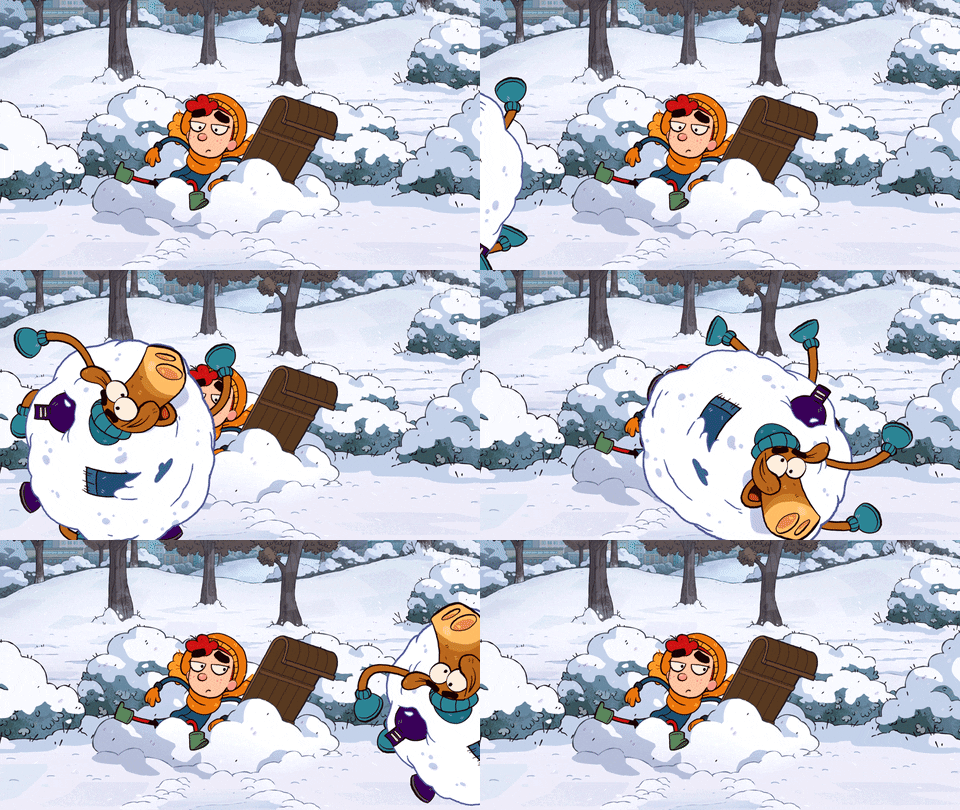
That made perfect sense to her. The more the snowball moves downhill the faster it goes and the more snow (energy) it picks up.
Ergo (love that word, rarely get to use it in a sentence), getting that arm to move faster down the back side of the circle is critical to maximizing speed. Logical, right?
But that doesn’t mean pitchers can always do it. Some will do it naturally. Others will do it once your bring it up. But some have to unlearn old movement patterns and replace them with new ones before they can execute it.
One of the best ways to help them learn that acceleration is by moving the pitcher in close to a net or tarp, having her stand with her feet and body at 45 degrees to the target, and then throwing with a full circle, emphasizing the speed on the back side of the circle. You can also do that with six or eight ounce plyo balls into a wall.
I also prefer they move their feet as they do it since body timing is also crucial to great execution.
The key here is feeling the arm moving as quickly as it can. But there’s another caveat.
To really make this work and get the acceleration, the arm has to be loose and the humerus (upper arm) has to be leading with the forearm trailing behind, i.e., throwing with whip. Moving the whole arm in one piece, as you do when you point the ball toward second base and push it down the circle, will not yield the same level of results. In fact, it could cause injuries.
Once the pitcher can execute this movement from in-close, start moving her further away and trying it again. Take your time with this process, because if you move her back too fast and she perceives the target is too far away she will start muscling it to make sure it gets there rather than letting it move naturally.
At each step, take a video and look to make sure there is at least somewhat of a bend or hook at the elbow instead of a straight arm. If not, move her back up or slow her down temporarily so she can get the proper mechanics.
Then speed it up and try again.
By the way, the energy snowball concept is not just for pitchers. This type of acceleration into release or contact is also critical for overhand throwing and hitting.
Or pretty much any other athletic skill requiring power.
Now, if you’re an adult with lots of real-world experience, all of this may seem obvious to you. You may even be wondering why I’m spending so much time on it.

But a young player, or even a young adult player, may not have the real-world understanding of basic physics or biomechanics to tie acceleration into energy production. For them, it’s helpful to put it in a context that they can easily comprehend based on what they have already seen.
Even if it comes from a Saturday morning cartoon.
If you have a player who’s struggling to understand the concept of acceleration into action, try talking about the rolling snowball. It just might break the ice with them.
My good friend Jay Bolden and I have started a new podcast called “From the Coach’s Mouth” where we interview coaches from all areas and levels of fastpitch softball as well as others who may not be fastpitch people but have lots of interesting ideas to contribute.
You can find it here on Spotify, as well as on Apple Podcasts, Pandora, Stitcher, iHeart Radio, or wherever you get your podcasts. If you’re searching, be sure to put the name in quotes, i.e., “From the Coach’s Mouth” so it goes directly to it.
Give it a listen and let us know what you think. And be sure to hit the Like button and subscribe to Life in the Fastpitch Lane for more content like this. Commercial over.
Snow roller photo by Perduejn, CC BY-SA 4.0 https://creativecommons.org/licenses/by-sa/4.0, via Wikimedia Commons
Be the River, Not the Rock

Here’s a simple question for you today: which is strong, the river or the rock that sits in the middle of it? The answer is it depends on your point of view.
Taken at a glance, a snapshot in time if you will, it appears the rock is stronger. After all, the rock stands steadfast, unmovable, while the river must divert around it.
But if you take a longer-term view, the answer is the river, because over time it will erode the rock until the rock is no longer an obstacle to its path.
I know, very Kung Fu of me (which is probably where I got the idea). You can hear the pan flutes even as you read this.

That doesn’t make it any less true, however. Which is a good lesson for playerstrying to learn or improve a challenging skill such as pitching or hitting, as well as for coaches trying to get the best out of their teams.
Players
Let’s start with players. They can take the rock approach to learning new skills or improving/revamping current ones for a variety of reasons, including:
- What they’re currently doing has worked for them before. For example, a 12 year old pitcher who is used to pushing or lobbing the ball toward the plate instead of using her whole body to throw. She threw more strikes than the other pitchers she knows and if that’s her only measurement of success why change? .
- They’re not comfortable doing something new. With minor exceptions, who is? It’s a lot easier to do what you’ve always done than to change it.
- When they try something new their performance goes down (in their mind). Such as a hitter who used to make weak contact but is now swinging and missing while trying to learn a new way to swing the bat.
- They just don’t want to change. Typically seen with players who are forced to take lessons by their parents or players who believe they are better than they actually are (big fish in a small pond).
The problem here, as they say, is if you do what you always did, you’ll get what you always got. But if others around you are improving their games, what you always got may not be good enough anymore and you’ll find yourself sinking down the batting order or the pitching rotation – or maybe even out of the starting lineup.
The important thing to remember when players make a change is that it doesn’t have to be permanent. Try something for a little while and see if it works. If it doesn’t, you can always try something else.
I do that a lot with my students. I have an idea, based on science and experience, of what will work, but I’m not omniscient. (That means all-knowing for those who don’t feel like looking it up.)
Try it and see how it feels. Sometimes you’ll hit farther or throw faster.
Sometimes it will throw you off your game completely. But you don’t know until you try it.
Remember, as the rock wears down the river changes its course. Be the river.
Coaches
Coaches, too, can benefit by taking the river approach instead of being the rock.
We see the rock approach a lot. Something new will come along and you’ll have a percentage of the coaching popular who will say “I’ve been doing it my way for 10/20/30 years and have had success. Why should I change?”
The answer, of course, is because new discoveries are being made all the time – data-based discoveries that can help players get better, shortcut the learning process, overcome deep-seated challenges that are built into the DNA, or otherwise improve.
It’s the same with game strategies. You may have followed the same playbook for X number of years, but what if there is information out there that could turn a few more of those losses into wins because you knew how to use it?
The best coaches I know are constantly scouring every source they can find to obtain new information in the hopes that it might help them. They are moving their knowledge forward like the river instead of standing in one place like the rock.
Imagine if you could discover just one little tip or trick or way of looking at things that would give you a significant advantage over your rivals. That’s the premise of the book and the movie Moneyball.

The Oakland Athletics used data to find players others didn’t value very highly to help them field a team that could win 100 games while fitting their very limited budget. It was a game-changer for them, and for the rest of Major League Baseball who followed that example.
Besides, learning new things is fun. Again, you may try something only to find it doesn’t work for you.
That’s ok. Now you know more than you did before.
But if you do discover some new strategy or approach that pays dividends you’ll be glad you gave it a try. Even if you had to change your world view a little.
It’s easy to be the rock, staying in one place while the world rushes past you. But eventually it will wear you down too. Be the river.
Check Out Our New Podcast
Speaking of learning new things, my good friend Jay Bolden and I have started a new podcast called “From the Coach’s Mouth” where we interview coaches from all areas and levels of fastpitch softball as well as others who may not be fastpitch people but have lots of interesting ideas to contribute.
Our first two episodes are in the books. In the first we spoke with pitching guru Rick Pauly of PaulyGirl Fastpitch, and in the second we heard from Coach Sheets (Jeremy Sheetinger), head coach of the Georgia Gwinnett College baseball program.
You can find it here on Spotify, as well as on Apple Podcasts, Pandora, Stitcher, iHeart Radio, or wherever you get your podcasts. If you’re searching, be sure to put the name in quotes, i.e., “From the Coach’s Mouth” so it goes directly to it.
Give it a listen and let us know what you think. And be sure to hit the Like button and subscribe to Life in the Fastpitch Lane for more content like this. Commercial over.
River photo by Matthew Montrone on Pexels.com






 Life in the Fastpitch Lane