Monthly Archives: May 2024
Re-Thinking the Traditional Batting Order

One of the most important responsibilities a team coach has is putting together a batting order that will produce runs. Yet all too often these same coaches become so bound to a particular way of thinking that they don’t take advantage of opportunities that might be available to them if they’re willing to think a little bit outside the box.
Let’s start with what is the norm for most teams. The traditional batting order usually looks something like this:
- Leadoff – Fastest girl who can put the ball in play reliably; often a slapper if one is available; tends to hit mostly singles; often called a “table setter”
- Two hitter – Primary job is to move the leadoff along when she gets on base, either by hitting a single, bunting, or hitting behind the runner; mostly puts the ball in play on the ground
- Three hitter – Best all-around hitter on the team; can hit for power, hit for average, doesn’t strike out much; her job is to bring the table setters in
- Cleanup – Your most powerful hitter, the girl who is a threat to go yard any time she steps up to the plate; not too worried about average so it’s ok if she strikes out a lot as long as she hits those deep balls
- Five hitter – Second-best all-around hitter on the team; she’d be the three hitter if three wasn’t there; maybe has a little lower average or slugging percentage than three but still a huge threat at the plate
- Six hitter – She’s ok and you hope to get her on base but you also know it’s not as likely; mostly a singles hitter, might be good at drawing walks
- Seven hitter – Great defensive player
- Eight hitter – Shows flashes of being good but not strong enough to make the top five; probably there to drive in six and/or seven in case either one is fortunate enough to get on base
- Nine hitter – Second base candidate for leadoff; while she thinks you put her there because you think she’s bad, you’re actually hoping she gets on base so the top of the lineup can drive her in; generally fast, could be a developing slapper; OR, your worst hitter who you’re trying to limit in how many times she comes to the plate
That’s a lineup that has worked for many teams for decades, and certainly a valid approach. But it’s not the only one.
One of the determining factors should be your personnel, i.e., your players and how they hit. A smart coach will look at who he/she has available and will try to take the best advantage of them regardless of what the “experts” say.
And in doing so, he/she may just catch the more traditional-thinking coaches off guard as they call pitches based on their assumptions. Here are a couple of examples.
More power at the top
Instead of opening with a couple of table setters, try taking a traditional five hitter and batting her at leadoff. She hits for average so will likely get on base, and since she also hits for power she could lead off the game with a double or triple.
That way you already have a runner in scoring position after one batter and have three outs to bring her in. Statistically you’re more likely to score in that situation than if you get a runner on first and sacrifice her to second. You also deflate the opposing team (and especially their pitcher) psychologically by opening with a big hit.
Then put your traditional three hitter in the two spot. A second big hit in a row scores the first one and probably leaves this hitter in scoring position as well.
Worst case you have two runners on base with no outs, with one or both already in scoring position. Then put your cleanup hitter in the three slot.
If she goes yard you have three runs before you have any outs, and even if she just hits a deep fly ball that’s caught you score one and probably advance the other runner to second or third where you still have two outs to bring her in. Worst case she strikes out but you still have two more outs to score at least one run.
From there, you can bunch your traditional one, two, and nine hitters to see if you can scratch a couple more runs together. You might want to put two in the four spot so that the traditional four, if she gets on base, isn’t in the way of your speedsters.
With this lineup you maximize the number of at-bats your best hitters get while minimizing the at-bats of your weakest hitters. It does create a potential hitter desert at the bottom of the lineup so you have to hope the top does its job so you’re not depending on the bottom to win a close game.
But hey, no risk, no reward.
Focus on speed
What if you don’t have any (or at least not many) big hitters? In that case you might want to bunch your fastest players (who can hit) at the top and try to create havoc and errors with aggressive baserunning.
Your leadoff hitter would be the same as a traditional lineup. But then bring the traditional nine up to the two slot, and follow her with another speedster in the three slot.
With three girls who can get on base with a slight bobble you are putting a lot of pressure on the defense to perform. And as we’ve all seen, errors often happen in bunches.
Force one bad throw that results in an extra base or two, then keep applying the pressure, and you may get another, or a fielding error as the fielder tries to rush her play on the ball. You could easily end up with a run or two without the ball leaving the infield.
You could also end up with demoralized opponents, especially if the opposing coach has to stop the game to yell at his/her players about making plays.

After those first three, put in whoever is closest to a traditional three (great power, great average) to see if you can clear whoever is left off the bases. You can then start again with speed, or if you have a traditional cleanup hitter put her in there before going back to the speed game.
The 5-4 lineup
There is probably a better name for this one but this is what I call it.
Basically what you’re doing is structuring the lineup so the first five hitters follow the tradition lineup. But then then next four act like a second top of the lineup.
In other words, your six hitter would probably be your traditional nine – the girl who would be leadoff if you didn’t have your one hitter. The seven hitter will be a traditional six – decent hitter but not good enough to crack the top five.
The eight hitter would be the same, a budding traditional three or five. Then the nine spot would be that great defensive player. You’re basically willing to take the out, or maybe that’s a good spot for the designated player to add one more decent bat to the lineup.
The turtle parade
This one is definitely driven by your personnel. And as you can probably guess by the name, while your team can hit pretty well it’s not exactly blessed with speed.

In this case I’d say take your fastest player who can get on base regularly and put her in the leadoff spot. She may not be all that fast, but compared to the others she’s a rabbit so give her the opportunity to run.
From there, if everyone is about 4 seconds or more down to first, base your lineup on batting averages – highest in the two spot, second highest in the three spot, etc. Figure you’re going to mostly be running station-to-station, so give the most reliable hitters the most at-bats.
Just be sure not to put the slowest turtle in the nine spot, because if she gets on base your only girl with any speed at all is going to be stuck behind her.
Be creative
Those are just a few options. A lot of what you can or should do will depend on who you have on your team and how consistent they are.
One other thing to keep in mind is how they handle things psychologically. I can tell you from personal experience I was a good three or five hitter, but for whatever reason struggled at four.
I’ve also coached girls who could hit .750 from the seven spot, but put them at one or two and they folded like a cheap card table. When weighing your options be sure to account for those factors.
With a little creativity, however, and a willingness to buck the norms (even when the parents don’t get it) you can find a lineup that helps you produce more runs and win more ballgames. And look like an offensive guru in the process.
How to Increase Your Coaching ROI
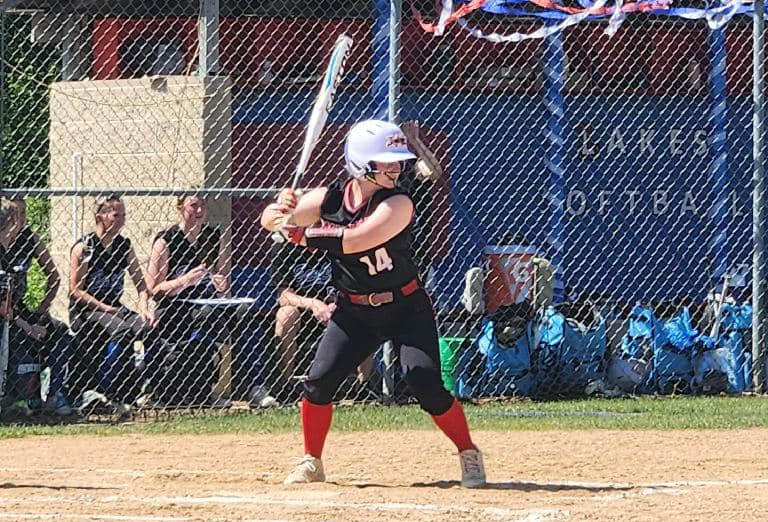
If there’s one thing just about every coach complains about when talking about coaching challenges it’s that they simply don’t have enough time.
It seems like there’s always a hundred things to go over in every practice and about 20 minutes to go over them. Hopefully things aren’t really that bad, but it can certainly feel that way.
So with that type of work/time pressure it’s important for coaches to invest their limited time where it will do the most good. Unfortunately, human nature being what it is, many seem to do the opposite of what they ought to be doing.
What mistake is it that so many make? Spending too much time trying to “fix” their best players, i.e., the ones who are performing best on the field, while ignoring or giving scant time to every one else.

I see it and hear about it all the time. Let’s say you have your top three hitters, all of whom are hitting the ball for average and power.
Their batting averages are above .333, which is pretty darned good unless the teams you’re playing are pretty darned bad, and their on base percentages (OBP) and on base plus slugging (OPS) are equally on the high end.
Then you have the bottom part of the order that can’t hit water if they fell out of a boat. (Thank you Bull Durham – one more funny line to add to last week’s blog post.)
Every time one of them comes to the plate in a tight game you suddenly rediscover religion, hoping and praying that somehow they manage to put the bat on the ball, even if it results in a duck snort or a swinging bunt, so for once you can move those runners along and score a little more than you usually do.
So where do you think you will get the best return on investment for your time and effort in practice?
To me, logic says that if you can improve those bottom few players and get them to go from poor to even below average, you’re going to score more runs and win more games. That would be a huge gain that would continue to pay dividends throughout the season.
Ok, now, answer this: where do most coaches tend to spend the bulk of their time? Unfortunately, it’s trying to make incremental improvements with their top three hitters.
Why do they do that? Because A) it’s more fun to work with a good or great player than with one who seems to barely know which end of the bat to hold and B) they often want to get a share in the glory that comes with seeing a player they’ve coached go on to do well. In other words, they want to stake their claim that they helped that player become the star she is today – even if their suggestions were actually getting in the way of that great player playing great.

The reality is it isn’t that hard for a bad coach to screw up a high-performing player. All he/she has to do is give bad advice and then insist that it be followed.
For example, the coach can tell a top-performing hitter that she should widen her stance and not stride, even though her narrower stance and normal stride have been resulting in her hitting bombs. Then the coach stands there during batting practice and forces the hitter to follow the advice he/she gave until that hitter is dragged down to the level of everyone else.
Or there’s the case of the coach who thinks he/she knows everything about pitching and decides to have all his/her pitchers do a certain set of drills he/she saw at a coaching clinic instead of realizing that the top pitcher(s) got that way by doing whatever it is they’ve been doing.
Throwing in an arbitrary set of drills just because he/she can could end up hurting the top pitcher’s performance on the field, creating unnecessary losses. If the coach feels he/she has to contribute to the pitchers, do it with the ones who are already struggling. They have far less to lose – and so does the team.
As the high school and college seasons end and the rec and travel ball seasons begin in most of the country, please keep this idea in mind: You will gain far more benefit by investing the bulk of your time bringing your least-performing players up to an average level than you will by trying to wring a little more performance out of players who are already playing at a high level.
This is a team sport, after all, and no single player, no matter how good they are, can make up for eight others who are below average. But bring the rest, or even a few of the rest, up to a higher level than they were and you’ll stand a much better chance of putting more Ws on the board.
One last thought: don’t assume you know who your best players are just by gut feel. Look at their stats too.
You may just be pleasantly surprised – and it will help you narrow down where you spend your limited time.
Funny Lines for Your Back Pocket

We’ve all experienced this phenomenon at one time or another. You get into an argument or a tense situation and instead of defusing the situation with a witty one-liner you just choke out some nonsense.
Then later on you think of the perfect comeback or bon mot, but by that time it’s far too late to say it because the moment is over.
Well, my softball friends, I have a solution for you. Instead of trying to think up something clever to say on the spot, it’s better to have a set of great one-liner in your back pocket that you can pull out when the occasion warrants it.
But you’re not a funny person who can come up with one-liners even when you’re not under pressure? Or the ones you do come up with tend to thud?
Not to worry, because we’re going to put some of Hollywood’s and the entertainment industry’s best writers on the job for you. Spend a little time committing these lines from movies and TV shows to memory, along with my suggestions on when use them, and you’ll quickly be revered as that person who always knows what to say when the need arises.
I know all the lines aren’t exactly from the movie or TV show, but they have been adapted to match the situation or reference softball or keep it appropriate for all ages. Attributions are in parentheses afterward.
- Your pitcher gives up a home run and you have to make a circle visit #1 – Wow. Anything that travels that far in the air should have a flight attendant on it. (Bull Durham)
- Your pitcher gives up a home run and you have to make a circle visit #2 – Don’t worry, that wouldn’t have been out of a lot of parks. Like Yellowstone, Yosemite, etc. (Major League)
- Your pitcher gives up a home run and you have to make a circle visit #3 – Looks like she launched that one toward South America (Major League)
- You take a risky suggestion from an assistant coach or even a player, then send the team off to do it; you then look at the person who made the suggestion and say – This had better work. (Moneyball and The Imitation Game)
- Pre-game speech before an important game – A win right now takes us to the championship (or whatever) so it’s very important we don’t stink today. (That Thing You Do)
- Answer to the above statement from a player – I make no guarantees. (Also from that Thing You Do)
- Response to a parent who has “a few thoughts” on how you should run the team – I have your phone number. When what you think becomes important to me I’ll give you a call. (NYPD Blue, although that one may not quite defuse the situation. It’s still funny though.)
- When a pitcher throws a wild pitch into the backstop – JUST a bit outside (or wherever it happened to land. (Major League)
- When someone tells a hitter her brain is getting in the way of her hitting – Well, can’t say that’s happened very often. (Tin Cup)
- When the whole team is getting down on themselves or getting nervous – Remember that softball is a game, and games are supposed to be fun. (Mr. Baseball)
- When the team has a particularly bad inning or makes a particularly bad series of goofs on one play – Well, that was a defining moment, and the definition was *poop* – (Tin Cup)
I think that’s plenty to get you started. Just think of the situations you think you’re most likely to find yourself in and focus on those first. Then you’ll be ready for whatever comes your way.
Laughing photo by Hannah Nelson on Pexels.com
Fastpitch Pitching Advice from Taylor Swift

This week’s topic goes hand-in-hand with last week’s blog post about the art of pitch calling. If you haven’t read that one yet I suggest you do; it’s brilliant.
All too often these days it seems like fastpitch pitchers are treated like a vending machine. Someone puts a pitch call in and pitchers are expected to spit it out with zero thought involved.
To me, and I think to most pitching coaches (PCs chime in here in the comments) that is absolutely the wrong approach. Instead, pitchers need to be playing along in their heads, thinking about what that hitter looks like, what’s worked on her in the past (if she’s faced her before), what pitches are working today (and how well), and what she thinks ought to be the next pitch she throws.
Then, if the pitch call lines up with what she’s thinking (more or less), she throws it. If it doesn’t, she takes the advice of the ubiquitous Ms. Swift to:
I know it can be difficult. Sometimes nigh on impossible if the pitcher has a coach who believes in his/her own omniscience when it comes to pitch calling, whether that opinion is justified of not.
But if the opportunity is there the pitcher really ought to be the final deciding factor on which pitch gets thrown next. Just like a pilot is the ultimate decision-maker when the plane is in the air.
After all, it’s the pitcher who is going to have to live with the consequences of her pitch.
Of course, in order to do that effectively someone has to train the pitcher on how to set up a hitter and keep her off balance. In other words, how to make decisions on which pitches work best in which situations.

I like to do this during lessons. Team coaches can do it during bullpens. Here’s how.
Select a type of hitter and a situation. For example, no one on, no one out, left slapper leading off.
Then ask the pitcher which pitch she wants to throw. If she’s not sure where to start, guide her with some parameters such as whether the slapper is experienced or a newly converted righty, whether she runs toward the pitcher or toward first base as she comes out, if she stands tall or squats down, how good the defense is behind her, etc.
You can also give some general hints, such as slapping is about timing and slapper are usually trying to put the ball on the ground between shortstop and third. All of that will factor into which pitch to throw.
The pitcher then makes the call. If it’s a good one, she throws it and the outcome (ball or strike) leads into the next pitch call. If the pitch decision isn’t so good, the coach talks it through with the pitcher a little more to help guide her.
With some regular training the pitcher can become smarter, and thus an active participant in the pitch calling decision rather than just a robot programmed to follow directions.

I understand that it’s difficult for a player to feel confident enough in her own decisions to try to overrule a coach by shaking off a pitch. Doubly if the coach is a parent or teacher or just someone who has a more authoritarian approach to their coaching.
But it’s a skill worth learning. And not just for softball.
There’s a pretty good chance that at some point in her life, that pitcher will face a non-softball decision that involves some risk, or perhaps even a moral dilemma. The easy thing to do will be to just follow along with whatever the person in charge says.
But the easy thing isn’t always the right thing. Gaining experience in being part of the decision process, and standing up for herself when she feels strongly another way, will help her avoid much more serious issues later in life than whether a particular hitter got on base in that at bat.
Again, I know it isn’t easy. But it’s worth learning.
Knowing when to shake off a pitch call, and having the confidence to actually do it, is an important of growing as a player, and growing up.
Don’t just be a pitching vending machine. When pitchers become an active part of the pitch calling decision they’ll find they have more success – and more fun.
Vending machine photo by Jenna Hamra on Pexels.com
The Art of Pitch Calling

Whenever a group of fastpitch softball fanatics gets together to talk about pitching, they (we) often talk about the three S’s – speed, spin, spot. You need a healthy dose of all three to be successful, especially at the higher levels.
Within that, however, there is one significant caveat.
Success with speed and spin is almost entirely pitcher-driven. In other words, when you get into a game the pitcher takes whatever skill she has acquired in these areas and applies it to the best of her ability.
Spot, however, is a little different, because often the pitcher doesn’t really have a choice in which spot she is throwing to. She may want to (or prefer to) throw high and inside in a particular situation, for example, but if whoever is calling the pitches wants it low and out that’s where she’s expected to throw it.

That’s what makes pitching calling such an art. No matter how great the pitcher is at hitting her spots, that alone isn’t enough. The pitch caller also has to be smart enough or experienced enough to call the right pitch in each situation or all that spot-hitting ability is essentially neutralized. Or even detrimental.
So how do you go about calling pitches? That really depends on the level of play and the ability of the pitch caller to determine what will work based on all the available information.
For example, in the P5 conferences, and I’m assuming many other collegiate programs, the team has a wealth of data on each hitter and what her tendencies are. Especially for long-term players. There’s a lot of data science in it.
They know what pitches and locations a hitter strikes out on the most and what she pummels over the fence on a regular basis. They know if she’s susceptible to certain locations based on past performance and they know which pitcher threw that particular pitch.
After all, if a hitter has trouble on the inside against a pitcher who throws 70 mph, it doesn’t mean she’ll always have trouble in that location. The more varying the data is, and the more of it you have, the better chance you have of making a good decision.
That, incidentally, is why some freshmen or newly elevated-to-starter-status players will start out hot and then cool as the season wears on. At first there isn’t much reliable data about them, but eventually it starts to accumulate.
But what if you don’t have the luxury of well-populated spray charts and other data? That’s where it becomes more of an art form.
There are some charts out there (like this one) that offer some guidance based on things you can observe. Most of them are based on common sense, such as if a hitter is crowding the plate try to jam her inside with your fastest pitch.
Again, however, it’s not quite that formulaic. It could be that this particular hitter is crowding the plate because she is awesome at hitting inside pitches and not so good at hitting outside pitches.
You try to smoke her inside and she’s going to turn on the ball and launch a very long, dispiriting home run.
That’s why it’s important to develop a feel for pitch calling rather than simply relying on charts or conventional wisdom or other things from the past. You need to be able to look at a hitter and see what she’s bringing to the plate that day.
Another important skill is learning how to set the hitter up for the outcome you want. For example, if she awkwardly swings at a low outside pitch for strike one, she just showed you she’s probably not comfortable out there.
Try another one a little further off the plate. If that induces strike two, see if you can get her to swing at a curveball off the plate.
If she doesn’t bite, you can try coming inside, then going back outside again if necessary. The idea is to make sure she never gets totally comfortable with what she’s seeing.
Another good strategy is if the hitter fouls a ball straight back on a speed pitch (fastball or drop ball), come back at her with a changeup. If you make her look bad with that she’ll probably figure you’re coming in for the kill with a speed pitch again so maybe throw her another change that falls off as it reaches the plate.
The possibilities are endless. The key is to see where she looks least comfortable and use that information to keep her off-balance and uncertain.
One other key piece of information when you’re calling pitches is to never throw more strikes than you have to. What does that mean?
When you get two strikes on a hitter it’s tempting to try to just put her away right then and there by overpowering her, especially at the younger ages. But unless the other team’s hitters are completely over-matched by your pitcher, that’s a bad idea.
They’ve already had an up-close and personal look at two pitches. If the hitter is any good at all she is starting to figure out your pitcher a little more.
Instead, throw a ball that looks like a strike. It could be a drop or curve or rise that starts in the zone but gets out of it by the time it reaches the plate.
It could be a fastball that’s a ball’s width too high or too wide to be hit effectively. It could be a dying quail of a changeup that starts out thigh-high and then hits the plate or the dirt in front of it.
Just don’t give them anything too good to hit. Work the edges, throw off the hitter’s rhythm, or do something else to make sure she can’t take her best swing at the ball and you’re likely to achieve much better results.
While there is science to pitch calling, at the end of the day it’s still more of an art. And like any art, some people have a knack for it and others don’t.
If you find you’re a don’t-have, find someone else on the team who does have it – an assistant coach, a catcher, even another pitcher – and let them do it. If there are no other options talk to people you know who are good at it to learn their thought processes as to why they call the pitches they do.
That way when you call a spot you’ll not only expect your pitcher to hit it. You’ll be confident it’s a spot worth hitting.






 Life in the Fastpitch Lane