Blog Archives

It Pays to Know the Rules
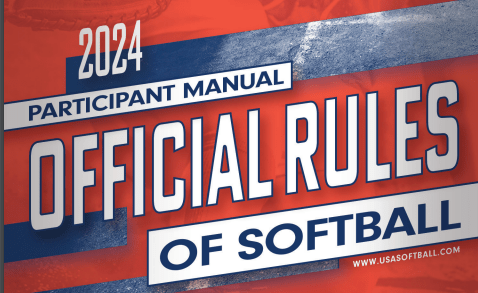
When I was coaching teams, one of my yearly rituals was to read the ASA (now USA Softball) rulebook from beginning to end before the season started. Including the applications scenarios in the back.
I would also scan the rules for other sanctions my team was playing in just to make sure I knew about any variations so I didn’t embarrass myself or my team on the field.
Why would I do that? It wasn’t for fun, I can assure you. The rulebook is pretty dry.

No, I read it to make sure I was ready for those little odd things that can happen that, if you don’t know what you’re doing, could cost you a game. Or even a championship.
With the college softball season getting under way, the high school season about to start in many parts of the U.S., and travel and rec ball not far off, it seems like reading the rulebook and understanding it thoroughly would be a good use of coaches’ time.
What made me think of this is what happened in Super Bowl LVIII (58 for those of you who don’t read Roman numerals).
ICYMI, the game was tied at the end of the fourth quarter so it went into overtime. Which means the Chiefs and 49ers had to do a new coin toss, with the winner deciding whether to take the ball first or let the other team have it.
The 49ers won the coin toss and elected to receive the ball. Under ordinary circumstances that might seem like a good decision because usually overtime is “sudden victory,” the politically correct term for what we used to call “sudden death.” In other words, first team that scores wins.
But what the 49ers allegedly didn’t realize is that the overtime rules changed this year, which meant both teams would get a guaranteed possession, i.e., a chance to score. That rule change gives the advantage to the second team to get the ball because by then they will know what they have to do when it’s their turn.
So after the 49ers notched a field goal (worth 3 points for those who don’t follow football), the Chiefs knew they could tie the game with a field goal if they had to or go for the win with a touchdown, which is ultimately what they did. They succeeded, which meant a lot of third world children are looking forward to receiving free San Francisco 49ers Super Bowl LVIII Champions t-shirts.

After the game, it was brought up that where the 49ers weren’t aware of the new rules, the Chiefs had been going over them twice a week or something like that since the preseason. While it might have seemed boring at the time, it paid off.
There are always new additions (and subtractions) to the rulebook, so taking the time to understand them is critical if you want to serve your team best. Of course, one of the biggest examples here in 2024 is the change to the pitching rules which now allows leaping – although not crow hopping supposedly.
We’ll see about that, but that’s a topic for another post.
It would be pretty embarrassing for a coach to complain that a pitcher’s foot is coming off the ground on her drive forward when that’s now allowed. It would also be pretty risky for a coach to allow or encourage a pitcher to crow hop (replant the drive foot before the stride foot lands) thinking that that is the same as leaping, only to have it get called correctly in a critical game.
Knowing the rules can also help you prevent an umpire who doesn’t know the rules from costing you a game. I can speak to that from personal experience.
A team I was coaching was on defense in a “national” tournament. The other team had runners on second and third with one out so we elected to intentionally walk the current hitter to create a force at home.
My catcher moved behind the left hand batter’s box to receive the ball as I had taught her, and our pitcher threw a pitch. The umpire immediately called an illegal pitch saying the catcher was out of the catcher’s box, which meant the runner on third would score and the runner on second would advance to third. Not exactly the outcome we were looking for.
I went out to argue the call. I explained that unlike baseball, where the catcher’s box is narrow, in fastpitch softball it extends from the far edge of one batter’s box to the far edge of the other.
The umpire disagreed so I asked him to ask his partner. His partner also disagreed so I asked them to get the umpire in chief, which to their credit they did.
After about 10 minutes of consultation between them (and a rule book), they conceded the point, sent the runners back to their original bases and wiped the run off the board.
I’d love to say we got the out at home and went on to win the game. That would be a nice topper, wouldn’t it?
Unfortunately, the next hitter got a ground ball through the pulled-in infield and we went on to lose. But hey, at least it wasn’t because of a rule problem.
The fastpitch softball rulebook is filled with plenty of rules, some common, some obscure, but all worth knowing. Because you never know when a situation will come up where knowing the rules can change the situation immensely.
I know it’s boring, coaches, but do yourselves a favor. Either read the rulebook cover-to-cover yourself or assign someone on your staff to do it.
You never know when a season might turn on it.






 Life in the Fastpitch Lane