Category Archives: General Thoughts
A Practical Fastpitch Softball Tips Grab Bag!

Normally posts in Life in the Fastpitch Lane revolve around a central theme. Today, though, I thought we’d try something a little different.
There are plenty of topics that don’t rate a post by themselves but are still important to the overall experience. I know this because I see many of these topics asked over and over on different softball forums and Facebook groups.
So I figured why not gather them together in a sort of grab bag of ideas? Hopefully you’ll find one or more valuable, and that you’ll have a little fun along the way.
Ok, let’s get to it.
How to clean white uniforms
I have to tell you I loves me a white uniform. It’s a classic, elegant look that just screams “Champions.” When I was coaching teams I always preferred my players to wear the all-white uniform for bracket play.
But I also know why softball parents, especially moms, hate them: they’re hard to clean. Particularly the pants.

If you get dirt on gray, or black, or green, or pretty much any colored pants, really all you have to do is get rid of most of it. On white pants, though, it’s all or nothing, because any little bit of leftover dirt (or other substances) that are left just make them look bad.
Ordinary laundry detergents don’t really work. But there is something that does.
Fels-Naptha is your best friend. It may not be available at your local grocery store but you can find it all over in hardware stores and home centers such as Ace and Home Depot. Pick up a supply and you’ll make your life a whole lot easier.
Get your daughter a good metal bat
Yes, it’s true that your best bang for the buck (literally as well as figuratively) comes from a composite bat. An Easton Ghost or equivalent can turn even your 98 pound weakling of a daughter into a potential power hitter (if she can just get the bat on the ball).
The problem with those bats is they’re only good down to about 60 degrees. After that, the manufacturers will tell you not to use them because they are likely to break much more easily.
So what do you do if you live in an area (or are traveling to an area) where spring and fall gametime temperatures are likely to be closer to 40 than 80 degrees?
You can roll the dice and take your chances, but don’t complain if a manufacturer refuses to honor the warranty. A better alternative is to invest in a quality metal bat.
They’re still around. Bats such as the Anderson Rockettech will give you plenty of pop in cold weather without the risk of seeing it crack in half the first time your daughter makes solid contact on a 50 degree day. And if she really likes it, those bats perform just fine in warmer weather too.
At one time, back in the early 2000s, Rockettechs were THE bats to own – before composite bat technology became what it is today.
As a bonus, metal bats tend to hold up better when hitting pitching machine balls as well. I wouldn’t necessarily use one at a commercial cage, where the balls are more focused on lasting longer instead of the effect on bats. But for the rest, you can save yourself a lot of time and trouble by having a good metal bat in the ol’ bag.
Pack extra hair ties – and sunglasses
Yes, your daughter should be responsible and think ahead to ensure she has them in her bag. No, she won’t always do it. Or maybe she did, but it broke.
No matter, these are little things that can make a big difference during a game.
Take a hair tie for example. If your daughter needs one and doesn’t have one, it’s likely to be a huge distraction to her.
Her hair will blow with every breeze, and if there is any truth to Murphy’s Law it will blow in her eyes right as she’s trying to catch a fly ball or field a ground ball with runners in scoring position. My kingdom for a hair tie!
For the sunglasses, perhaps it was cloudy before the game so your daughter didn’t think she’d need her sunglasses and didn’t pack them. But then the sun broke through and suddenly she’s squinting directly into it.

Having an extra pair of sunglasses in your softball “go bag” will be a lifesaver. And may save you a few hours in the ER if she loses a ball in the sun.
BONUS TIP: Keep some duct tape handy too. As any good Southerner will tell you, duct tape can fix anything.
Keep a charged power block with you
This is especially true for parents with multiple daughters playing at different fields.
You’re going to want to check on your other kids’ games via GameChanger or a similar app. It’s only natural.
What you may not realize is these apps keep running in the background by design, so while you may have closed them they’re still sucking up battery power. If you have a long day at a tournament you may find yourself running out of power before the day is done.
Grabbing a high-quality power block will give you enough spare juice to keep going no matter how long the day goes on. Even enough to power your phone’s GPS to get you to the out-of-the-way restaurant the other parents chose for a team bonding meal at the end of the day.
Spend a little more to get a comfy chair
The same parents who will spend several hundred dollars to buy their daughter a bat, then several hundred more on another one in case the first one breaks, are often the ones who decide to save money by purchasing a cheap chair for themselves. Don’t do it.
A good quality chair that provides adequate space and good support, plus a strong cupholder or two, is worth every penny.

You’re probably going to spend more time at a field than at home on softball weekends. Be sure you have comfy chair to do it in.
For skills training, hire a coach
I’m not just saying that because I am one. It really does make a difference.
Not necessarily on the basis of knowledge either. You may have a lot of personal expertise and be fully capable of training your daughter yourself
But the parent/daughter dynamic is a tricky one. I have seen it in action often.
For example, you might tell your daughter to do things the same way that I tell her. When she hears you say it, though, she hears her father or mother criticizing her and shuts down.
When I tell her, she’s all about whatever I said – because I’m her coach, not her parent. And if she isn’t interested in it, you can just walk away from the lessons. Not so if she’s going home with you.
I have trained and continue to train the daughters of people who work with other people’s kid on hitting, pitching, catching, etc. They find it a relief to just sit on the bucket instead of having every session turn into a battle of wills.
Besides, there’s always the practice sessions between lessons where they can interject. But they can say “remember what Coach Ken said” to soften the blow.
The bag is full
Hopefully I covered some topics that you’re interested in or always wondered about. If you have other experience-based knowledge to share, or want to suggest a future topic to cover in another grab bag article, leave it below in the comments.
Grab bag photo by Angela Roma on Pexels.
Champions Never Take a Day Off

At first glance, today’s headline probably sounds like BS. I’m sure there are those among you who are saying “I see lots of high level coaches and healthcare experts who talk about the importance of rest and recuperation as part of an overall training strategy,” or something to that effect.
That is very true, and I am definitely an advocate of not only building some unscheduled time into the season but also taking time off post-season to recover both physically and mentally. But that’s not what I’m talking about here.
Today’s subject is more about the approach players need to take whenever they are practicing.
We tend to think about practice time in terms of quantity. A question coaches are often asked is “How often/how long should my daughter practice?”
The implication is if you fully fill out the practice time card you will magically get better. All you need to know then is what the numbers are.

But that’s not how it works. The real question is how focused are you in the time you do practice?
Think about two players. The first one is more oriented to the time-based approach.
She goes out for a half hour every other day to practice on her own in addition to attending two or three team practices a week.
Sounds like she ought to be seeing huge gains, doesn’t it? Yet her improvement is slow, and she gets frustrated because she’s investing all this time for very little reward.
Yet the answer lies in HOW she is practicing. When she’s on her own, she basically goes through the motions, doing what she has always done.
Maybe she’s a pitcher who needs to work on her leg drive. But that takes a lot of effort and concentration, which is hard, so instead she just continues to pitch the way she’s comfortable.
Yes, she is out there putting in time. But as far as effort goes she’s pretty much taking the day off.
Then she wonders why her speed isn’t going up the way she should.
Player B, on the other hand, is driven to get better all the time. When she goes out to practice, whether it’s on her own or with her team, she is legitimately trying to improve some aspect of her game all the time.
If she’s a pitcher who needs to improve her leg drive, she’s out there doing her assigned drills and pushing her body to the max with every repetition to try to see improvement. And she doesn’t try to throw a full-distance, full-motion pitch until she feels herself generating a higher level of energy.
If she’s a hitter who has a problem with dropping her hands to swing, she takes dry swing after dry swing with her hands in the proper position before she even thinks about hitting a ball. She starts slowly so she can get it right, and gradually builds the speed up, always being careful to ensure she continues to keep her hands up.
If they start dropping, she backs off a little on the speed, recovers the proper form, then starts increasing speed again.
The same is true with her approach to fielding, throwing, running bases, and every other softball skill. She tries to make every repetition count because she knows that the more she does things correctly, with intensity and a purpose, the better she will play when it’s game time.
And the better chance she will have of becoming a champion.
The reality is we are whatever we do repeatedly. If we are sloppy and lackadaisical in our approach to practice because we don’t feel like it today or it’s just easier, that sloppiness or lack of effort will show itself on game day.

But if we are focused and have a goal in mind for every minute of practice time every day, when game time comes around performing at a high level becomes much easier.
It’s easy to say you want to be a champion, win trophies, play for a particular high-level team, etc. The question is, are you willing to pay the price to get there?
True champions don’t take days off when they are practicing – or playing. They work on their weaknesses and give their all with every repetition, even when it’s frustrating.
The next time you go out to practice, give this approach a try. Dedicate yourself to accomplishing a goal, and be single-minded in your effort to achieve it.
And if you find you can’t give your all that day just stop, because you’re probably wasting your time at best and possibly even making yourself worse. Then come back when you’re ready to go 100% on every repetition again.
I think you’re going to like the results a whole lot better.
Be Willing to Go Backward to Move Forward
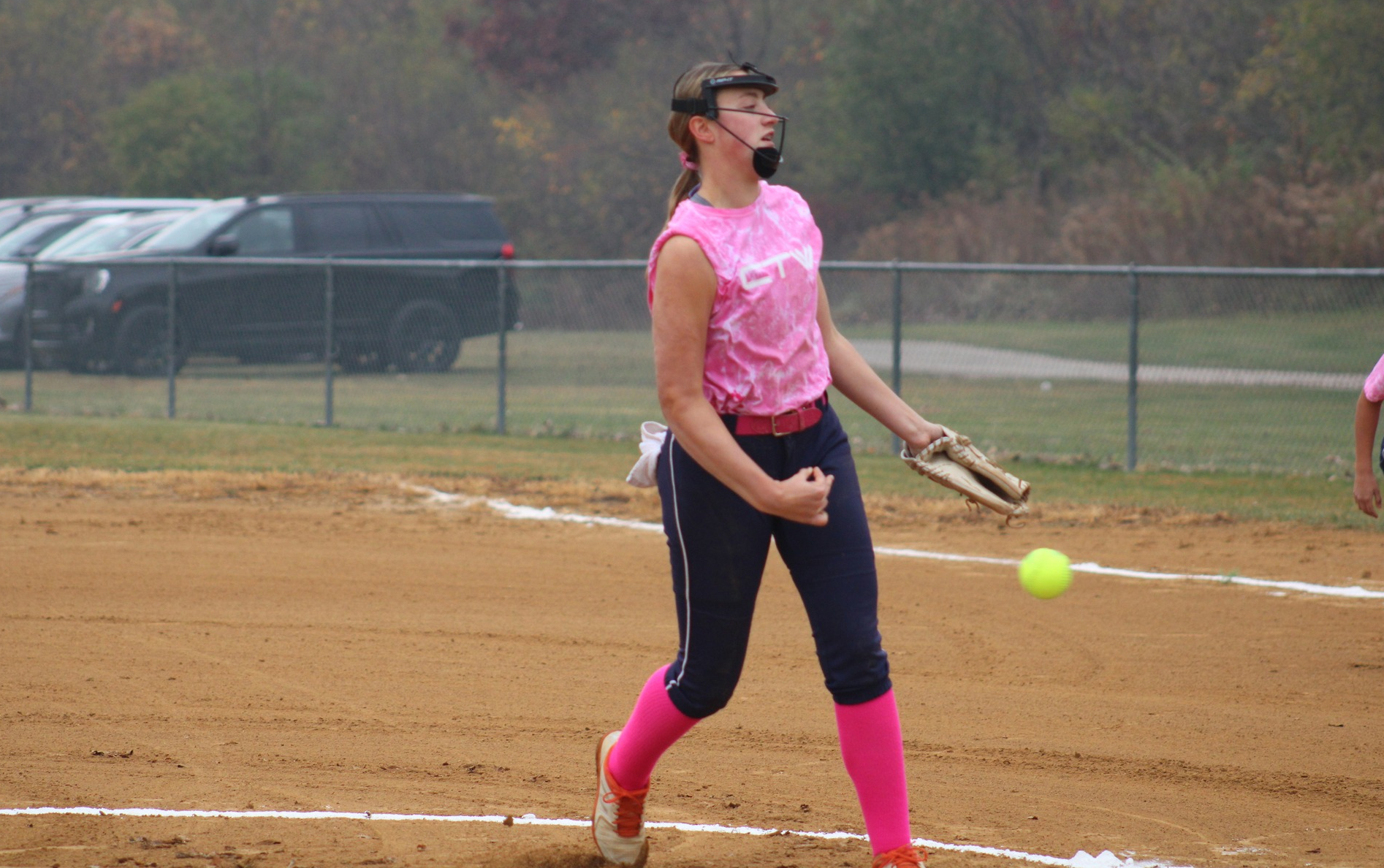
It sure would be nice if getting better at fastpitch softball was a linear progression upward. You start at one point, put in some time, and your performance (measurable and intangible) just keeps on getting better.
Unfortunately it doesn’t always work that way. In fact, often times it can go the other way for a while.
This is especially true if you’re trying to make fundamental changes to your skills after doing reasonably well doing what you’ve been doing.
For those who haven’t been doing particularly well it’s not much of an issue. If you’re a hitter who has been striking out for most of your at bats, and popping up or grounding out weakly when you don’t swing and miss, you don’t have much to lose by making a change.

Worst case you don’t get any better. Anything beyond that will be an improvement.
But if you’ve been getting on base now and then there’s a little more risk involved. It’s possible you may struggle a bit more at the plate for a little while before you start seeing the work you’re putting in pay off.
In fact, your batting average, slugging percentage, etc. may go down first before it goes up.
Why is that? Simple: whatever you’ve been doing, even it isn’t great, you’re comfortable with it and can execute it without thinking about it. Those mechanics may not be great but they’re serviceable enough to let you get by.
Now you’ve decided you no longer want to get by but want to be a top hitter. So you start making changes and find yourself kind of between worlds for a little while.
You’re not comfortable with your swing, or your timing, or some other aspect and as a result you’re not able to execute it with full energy. You might even start over-thinking it and throwing yourself off completely. Next thing you know your performance begins to fall and you feel like you’re moving backward.
That’s ok. If you’re making the right changes your performance will improve as you become more comfortable in your new “skin.”
As old bad habits are replaced by new better ones you’ll discover how to get the bat to the ball more efficiently and the ball will start finding its way to (or over) the fence more often.
This process doesn’t just apply to hitters by the way. Pitchers may lose a little speed and/or accuracy as they replace old habits with new ones, such as moving from “hello elbow” to internal rotation mechanics or changing the way a particular pitch is thrown to improve the spin.
If the new techniques are being taught properly, however, any setbacks will be temporary and the gains will be well worth the pain of getting there.

The same goes for fielding or throwing or really any other fastpitch softball skill. There will probably be a period where you wonder whether you would have been better off staying with what you were doing rather than learning something new and supposedly better.
If you’re focused only on the short term it may seem like you would have been better off sticking with what you know. If you’re focused on your long-term career, though, making these changes will help keep you from bumping up against artificial ceilings so you can become the player you’re meant to be.
Of course, the caveat here is you have to be careful about the timing of these changes. With fastpitch softball now being a 12-month (or almost 12-month) sport it seems like there is always a game coming up that causes you to feel like it’s a bad time for a major change.
But there are holes in the schedule, such as the period between tryouts and fall ball, or certain points over the winter, where there is reduced risk in starting changes. And if your performance isn’t where you want it, or where you need it to be to reach your goals, then the sooner you get going the sooner you can start moving forward again.
Making big changes isn’t easy, and sometimes they can result in temporary setbacks. Don’t let that discourage you.
If you’re making those changes for the right reasons the reward will be worth the risk.
Navigating the Maze of Fastpitch Skills Development

People often talk about the “path to greatness” when it comes to fastpitch softball skills development. But when you think about it, it’s not really a path – it’s more of a maze.
Everyone starts out in the same place – at the entrance. Everyone knows the end goal is excellence.
But it’s really not a straight-line journey, i.e., you hire a coach, join a team, or try to try to train your daughter yourself. Instead, the journey can be full of twists, turns, blind alleys, and dead ends.
Go the wrong way and you’re going to spend a lot of your time backtracking or trying to get your bearings again. Get in deep enough and you may never find your way back to a lane that will take you to your goal.

Take pitching for example. There are those who believe it doesn’t really matter what you teach to budding pitchers; they say eventually those pitchers will find their way to the mechanics that will lead to success.
I can tell you wholeheartedly that that is not true. Yes, some can overcome learning “hello elbow” (HE) when they start out, replacing them with more body-friendly internal rotation (IR) mechanics as they mature. They are usually exceptional athletes.
But that is not the case with everyone. I’ve acquired many pitching students who were taught turn the ball back toward second and push it down the back side of the circle who struggled to unlearn that early, sub-optimal teaching.
It can take them months just to learn how to keep the ball facing forward at the top of the circle (and just past it) so they can set themselves up to whip the ball through release. It’s not that they’re bad pitchers or poor athletes.
It’s just that the habit has been so ingrained into them that it’s difficult to break. They essentially got deep into the maze and then have to find their way back to nearly the beginning to get on the right track.
Hitters can have this too. They’re taught to “squish the bug” or “throw their hands/knob of the bat” at the ball or over-use their arms, or some other outdated concept.
Or maybe they’re just allowed to swing the bat however they want because they are big enough and strong enough at the younger ages that the techniques they use really aren’t important.

However they get there, they follow that path thinking they’re on their way, only to discover after their habits become ingrained that it’s been a series of blind alleys once again leading to a dead end. The other players have matched (or surpassed) them in size and strength, and suddenly what made them look like studs when they were young has them seeing more bench time today.
Just like in an actual maze, it’s important to start out in the right direction early. So how do you know which way to go when you’re just starting out so you ensure you don’t waste a whole lot of time and money that you will never recover?
Fortunately, unlike an actual maze there are plenty of signs and guideposts that will help you find the most expedient path to your goal. Some of those include:
- Watch high speed video of what actual high-level players do, then match that up to what potential coaches are teaching. If they’re not closely aligned you probably don’t want to go that way.
- Research the topics that interest you on the Internet. Yes, the Internet has as much bad information (or more) than good, but if you’re really interested in doing what’s right it shouldn’t take you too long to separate the gold from the garbage.
- Ask other parents, especially those whose daughters stand out, about their journey and what their daughter is being taught now They can help you avoid the pitfalls they themselves fell into.
- Try what’s being taught yourself to see if it makes sense. Many people actually seem to miss out on this simple test. See what it feels like to move your body the way it’s being described. Be aware of what you feel and whether it feels natural or forced. The goal is for it to feel natural and easy, because it means you’re working with your body instead of against it.
- Once you’ve gathered the data, think through it carefully to see what makes sense. Don’t just accept what Famous Player A says, because Famous Player A may not have a clue as to what she does on the field. She was probably one of those who found her way to good mechanics DESPITE what she was taught. Yet when it comes to teaching herself, she just goes back to what she was told when she was young because that’s all she consciously knows.
Starting down the wrong path in the beginning, or taking a bad detour along the way isn’t unrecoverable. But it definitely makes achieving one’s playing goals a lot more difficult because there’s going to be a lot of backtracking (and angst) before you can move forward again.
Take the time to determine which path will lead you through the maze of softball skills development more efficiently and you’ll find the entire journey to be a lot more enjoyable.
Maze photo by Tom Fisk on Pexels.com
Thoughts for Those at the End of Your Travel Ball Career

We are now at the point of softball travel ball where the season is winding down and teams are playing their final tournaments. It looked like such a long summer ahead back in May, yet here you are with just a few games left to play.
For many players, their thoughts have already turned to tryouts for next year. In fact, many of you have either already gone through the process or are in the midst of it.
But there’s one special group of players who aren’t thinking about next season: those who are playing their final season of travel ball. Those are the ones I want to address today.
It’s sure been a long journey for most of you. Maybe you started when you were 8 years old without a clue as to which field was right and which was left.
Maybe you started when you were 10. You played a couple of seasons of rec ball and then someone said, “Hey, you should try playing at a higher level,” or your friends were doing it so you thought you would too.
Or maybe you were kind of late to the travel ball party, starting around high school age. You had a lot of catching up to do but the effort was worth it
Whatever road you took to get here, you all ended up in the same place – the final games of your travel career.
If you’re not playing in college next year this is most likely the last time you’re going to play fastpitch softball at a truly competitive level. Sure you might join a club team if you go to college, or a slowpitch team that plays on a weeknight.
But it won’t be the same. The intensity of practice and the level of commitment required will be far less, and the overall atmosphere will be more laidback.

And even if you are continuing to play in college it will be a whole different world. No more spending 12+ hours at the ballpark with your team as you play five games in a day.
College teams play one game per day for the most part. About the only time they play more is if there was a rainout or a rainout is expected the next day. Then they will play two.
Unless you’re in the Women’s College World Series playoffs there won’t be dozens of other teams around either, sitting on the sidelines under canopies listening to music on earbuds or trying to catch a little nap. Just you and your opponent who come to the ballpark, play, and then leave.
It really is the end of an era for you, which is why it’s important to take a few moments as your travel ball career winds down to appreciate this very special time in your life and appreciate the journey.
As you go through these last few games, don’t just treat them like another day in a long series of days. Take a little time to appreciate the whole experience:
- When you’re warming up for your first game of the day, stop and sniff the air. Our sense of smell has the strongest connection to our memory. Even a faint hint of a familiar scent can trigger powerful emotions. So take a deep sniff and notice the fragrance of freshly mowed grass, a sweet breeze on a hot summer afternoon, maybe the hint of rain in the air, the charcoal coming from the grill at the concession stand, or even the leather in your glove. Someday, when you’re much older and making your way through the world, these sweet fragrances will take you back instantly to a time when your biggest care in the world was hitting your spots or not getting suckered in by a changeup.
- Take a moment to appreciate a freshly dragged and lined field. See the beauty of the chalk as it outlines the field of play, the world you’re about to inhabit for the next couple of hours. Enjoy the contrast it makes with the playing surface. (This also applies to turf, just in a different way.) You’ve been here a million times, sure, but have you ever really noticed it? The (hopefully) smooth surface and straight lines give promise to endless possibilities, It’s the perfect metaphor for what your life is about to become. See it and think of all the fields in all the places you’ve played, because soon the field won’t be yours to play on anymore.
- Enjoy the camaraderie of your teammates and being part of something larger than yourself one last time. When you first started you were probably among friends you already knew. Now, perhaps, you’re among friends you’ve made along the way, essentially by necessity as you all came together for a common goal. You will probably not remain close with most of them, but at some level you will always have a bond that time and circumstance cannot break. Years from now if you run into them you will talk about all the good times you had, and you may even be transported back in time for a few moments to when you were young and playing softball well seemed like the most important thing in the world to you.
Life rarely gives us a heads up as to when this will be your last time to do something you love. Parents never realize it’s the last time they will pick up their child. School friends rarely know it will be the last time they all meet at the playground.
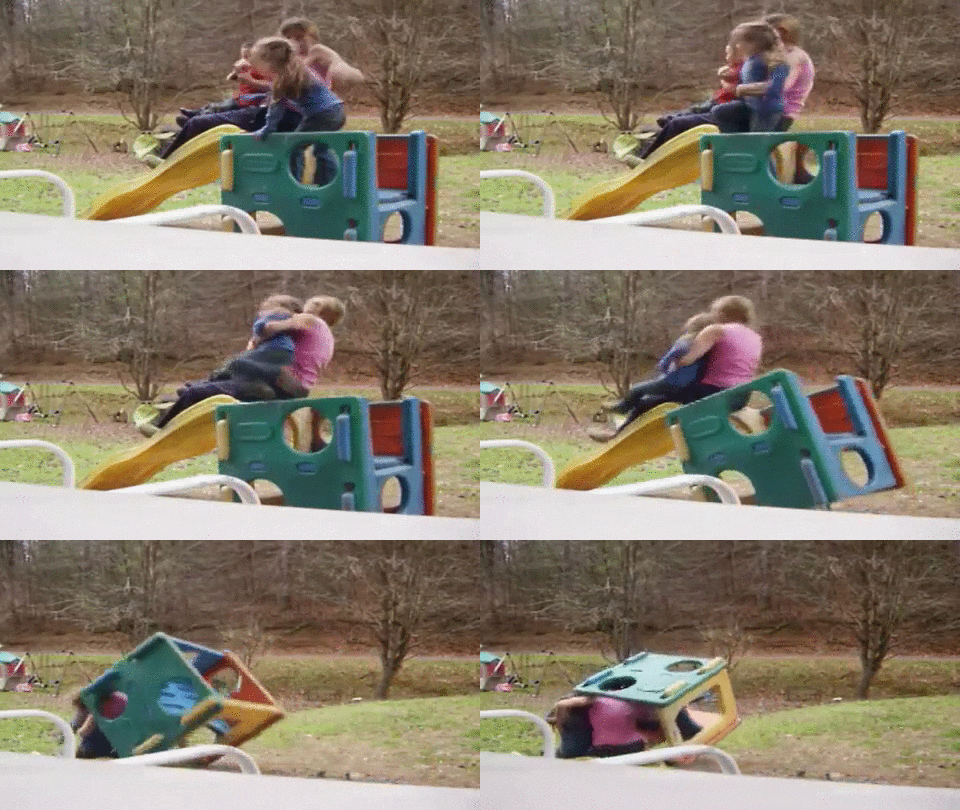
This one, however, does have an expiration date. Take a little time to appreciate the entire travel ball experience one more time.
And when the final out of your final game comes and the cheers die down, win or lose, take a little extra time to soak it all in for as long as you can. Such days as these will rarely come again.
Remember: Those Players You’re Criticizing Are Real People

This year’s (2023 for future readers) Women’s College World Series (WCWS) was another huge score for the sport. The TV coverage overall drew an average of 1.1 million viewers per game, up 6% over last year according to Sports Business Journal, while the championship game peaked with 2.3 million viewers.
What tremendous visibility for our sport! Yet as it grows in popularity there is an unfortunate, unintended consequence that comes with it: an marked in increase in harsh and just downright mean comments about the 18 to 22 year old women who play the game.
You see, with the size of the spectacle comes an increased dissociation of the player we see from the human being she is. When you don’t think of the player as a real person, it’s easy to criticize her based on the observer’s impossibly high expectations of perfection.
In other words, the standards that are often applied to highly paid professional athletes with years of experience are now being used to measure the performance and value of young women who are just beginning to come of age. That doesn’t feel right to me.
Yet it’s not just these high-level college players who are feeling the sting of these harsh and sometimes even troll-level comments, often delivered by people who never picked up a ball and competed themselves. They’re also being directed at lower-level college, high school and even younger players in social media and softball-related forums and websites.
Now consider that according to the National Institute of Mental Health, the human brain doesn’t finish developing until a person is in their mid-to-late 20s. (And for the people I’m talking about in this post it may never fully develop.)

What that means is you have unthinking people lobbing terrible comments at adolescents and young adults whose brains may not be equipped to handle them. It may not feel personal to the stranger making the comment – after all, these are just images on a screen or random players on a field to them – but it can feel VERY personal to those on the receiving end.
Consider the college player who makes an error at a critical time that contributes to a loss that knocks her team out of the WCWS. (It doesn’t cause the loss because in the course of the game there were plenty of opportunities to make that error meaningless, but happening when it does puts it in the spotlight).
She feels bad enough about it already. But then someone she doesn’t know has to go and call her out in a way that is rude and classless to make him/herself look smart or superior.
What the commentor doesn’t know is this young woman may already be suffering from significant self-doubt or even full-on Imposter Syndrome. That comment might be enough to put her over the edge to where it affects more than her ability to play softball.
Because underneath the uniform is a real human being with a real story and real feelings of her own. She didn’t mean to make the error, she worked really hard on her game so she wouldn’t make that error, but sometimes it still occurs.

Some of these rude commentators like to get even more personal about it because it makes them feel big. They’ll go into a public forum and paraphrase a line from the Mighty Ducks 2, saying a player with a larger body size would have caught that pop-up if it was a cheeseburger.
They may think they’re being funny, but to an athlete already dealing with body or other self-image issues, these types of hurtful comments can be devastating.
It’s not that they’re snowflakes, because in the course of their day they are likely dealing with a lot of pressure from all sides and handling it well. But we all have chinks in our armor, and that’s one that can end up ripping a pretty big hole if the player already has a negative self-image.
Look, everyone has a story, and even if you see a profile on ESPN you’re not getting the whole story. Just the part of it everyone wants to highlight. Like a duck on the water it may look calm on top, but underneath there’s a lot of churning going on.
Before you choose to criticize or comment on a player in a harsh way, stop and think. Is this the way I’d want someone talking about me, or my wife, daughter, sister, etc.?
Remember that all those players you’re watching aren’t just images in a video game. They’re real, live human beings with real, live feelings and all their own personal stuff they’re going through.
If you feel the need, criticize the play but not the player. It’s simply the right thing to do.
Internet troll graphic: Simplicius (talk · contribs); derivative work by odder, CC BY-SA 3.0 https://creativecommons.org/licenses/by-sa/3.0, via Wikimedia Commons
The Downside of Being a Multi-Sport Athlete

There are many benefits to being a multi-sport athlete, as has been detailed here as well as in numerous articles and athlete-driven promos across the Internet. The cross-training, the different styles of coaching, the different atmospheres, etc. all contribute to making a well-rounded athlete who can compete more effectively.
The old-school types in particular love to talk about all the great things that come with participating in multiple sports, and how they did it and it made them better all the way around.

But there’s a very definite downside in today’s world, especially if you want to compete at a high level. The downside is the time commitment required and its effect on the athlete’s physical and mental state.
You see, back in the “good old days” of multi-sport athletes each sport had a season. You played volleyball or ran cross country or did whatever in the fall. When that season was over it closed out and the athlete moved on to basketball or swimming or whatever in the winter. Then came softball or track or another sport, which was separated from everything else.
Today, however, every sport seems to be 24 x 7 x 365. A typical day will see an athlete attend a game for a school sport in one season as well as a practice for another sport that is out of season. Throw in lessons, speed and agility sessions, weightlifting classes – not to mention school/homework and possibly work for the older players – and it’s amazing these players can stand upright much less participate in so many activities.
In the summer they don’t have school to contend with, but often they have two or even three full-blown teams in different sports running at once along with the other activities. No rest for the wicked, eh?
What it often means is athletes who are never 100% healthy or energized. Instead, they are doing the best they can each day, but not necessarily the best they’re capable of.
What’s the solution? The ideal situation would be setting up a system where the governing bodies of various sports get together to set priorities.
Each sport would have a full-on season where they take the bulk of the time, while the others step back to a very limited level. For example, in the summer softball would have priority, and sports like basketball and volleyball would hold no tournaments on the weekends and perhaps be limited to a single practice each week. In fall a different sport would have priority and summer sports would be limited in the same way.

Of course, that’s never going to happen. The sports culture here in America is too tied to winning for any sport to take a back seat to others, even if it’s for the benefit of the athletes themselves.
The next best alternative is for parents to keep an eye on their athletes and set the priorities for them. Even if it makes them unhappy.
They and their athletes should figure out which sport is their priority and make that the focus of their efforts. They should then, in my opinion, treat any other sports as fill-ins.
Rather than playing club/travel for every sport, play it for one and then do the others for school or at a rec level.
Club/travel coaches can also help out by voluntarily limiting practices to once a week when out of season, with liberal policies if their players have to miss due to a conflict with the main sport.
This plan may not solve everything, but it’s a start.
The level of commitment required these days is just insane in my opinion. It’s time to change the culture.
We need to make it possible for athletes to receive the benefits of being multi-sport athletes without the detrimental effects. It will be better for them, better for their parents, and ultimately better for their teams too.
Photo by Andrea Piacquadio on Pexels.com
Teach Your Children Well

Over the last couple of weeks I’ve been seeing several posts and discussions about sportsmanship and the lack thereof. I’m not talking about umpire abuse, which I’ve talked about before, or parents getting into screaming matches or even fistfights on the sidelines.
Instead, the issue has to do with all the sing-song cheering that goes on in the dugout.
Now, let me say from the outset that I’m not a huge fan of that type of cheering. I personally find it annoying and a distraction. I’d much rather have my players focused on studying the pitcher and looking for defensive tendencies than worrying about what rhymes they’re going to scream at the tops of their lungs.
That doesn’t make cheering wrong, necessarily, it’s just not my cup of tea. Then again, neither is Metallica, although a lot of other people seem to like them.
Still, if doing the cheers makes it more fun for the girls then I say have it. I’ll deal.
The only caveat is that you should be cheering for your team, not against the other team or insulting them in some way. And that’s where it seems to be going wrong more and more these days.
There has always been an element of that in the sport. I remember hearing cheers about pitchers rolling the ball in or the infamous “siren” when a runner stole a base back in the day. Those are things you have to learn to shake off.
But in today’s world it seems like it’s getting a lot nastier, and a lot more personal.
The problem is you’re not just setting a tone for a team in a game. Coaches who allow or encourage that type of behavior are teaching their players that, well, it’s perfectly fine to be a jerk to others if it gets you what you want.
Is that really the takeaway we want to give our players?
People always talk about how playing sports teaches the concept of sportsmanship and fair play, qualities that are essential to a higher-functioning society.
In these cases, however, that’s not what’s happening. In fact, it’s going the other way.
An entire generation built on making yourself feel better by putting others down or doing whatever you want no matter how it affects others does not lead to a better society. Quite the opposite.
There is simply no reason for this type of behavior. Instead, sports should be teaching our young people that they can support their teammates while respecting those on the other side.
They should also be teaching that punching down on someone who is struggling is just wrong. Yes, that pitcher may be slower than you’re used to, but that doesn’t mean it’s your job to point it out to the entire field and make her feel bad about herself.
Instead, appreciate that she’s doing the best she can in that moment. Instead, have some empathy for her, and think about how you would feel if you were her and others were yelling their nastiness at you in front of the crowd.
The same goes for making fun of a player who made an error or struck out on a bad pitch. Celebrate what your side did without pointing out the flaws of theirs.
Because someday, in some other situation, like a new job, she may very well be you. And you’re going to hope your coworkers will help you instead of simply jeering and telling the rest of the company how badly you suck.
Coaches, if you hear this sort of thing coming out of your players shut it down immediately. I get that you may not even notice what they’re saying, especially if you tend to tune that noise out like I do. But someone on the staff should be able to notice it and address it.
If they don’t, parents don’t hesitate to bring it up to the coach. After all, that’s your daughter and her friends/teammates.
You want them to grow up to be decent human beings, and to think about the world they’re going to leave for Keith Richards and Willie Nelson someday.

They need to learn how to make the world a better place than they found it, and their behavior during games (especially if there is a mismatch in talent) is a great place to start.
I know some will say “The world is a tough place and the little snowflakes need to toughen up.” But it’s only tough if we all collectively allow it to be.
If each person does a little bit every day to make the world a little better the cumulative effect will be immense. For softball players, they can start by cheering FOR their team rather than AGAINST their opponents – either individually or as a team.
Teach your children well. Because the lessons they’re learning on the field today can have a big impact on who they become as adults.

The Essence of Being a Great Teammate

There have been tons of books and articles written instructing players on how to be a great teammate. Many of them talk about things like cheering loudly in the dugout or communicating well or standing up for a teammate if he/she is verbally or even physically attacked.
But one of the best things you can do is to simply step up and do something that needs to be done to help the team – even if it’s outside your normal role. I recently heard a great example involving one of my pitching students, a young lady named Sammie.
Sammie’s high school team was scheduled to play a game that day. They typically have just enough to actually play, so when they discovered that their one and only catcher had gone home sick from school it left a giant hole in the lineup someone had to fill.
I’m sure you can see where this is headed: Sammie said she would volunteer.

Now, as I understand it Sammie has never caught before in her life. Not even in rec ball.
She has always been a pitcher, and she has become an excellent pitcher. But she had pitched the day before while fighting through an injury so her pitching again wasn’t a possibility.
She could have just stood by and looked the other way, but the team needed someone and she said she’d strap on the gear and give it a shot.
That’s remarkable enough. But there’s one other minor factor that makes it even better.
If you look at the photo at the top of this blog post what do you see? Look closer. There you have it.
No, that photo isn’t reversed. Sammie is a lefty.
So basically you have a lefty who has never played the position before stepping up to play one of the toughest and most important positions on the field. And one with some extra risk of getting hurt through foul tips or chasing after pop-ups or plays at the plate or just flat-out missing the ball because you’re not used to catching it while someone is swinging.
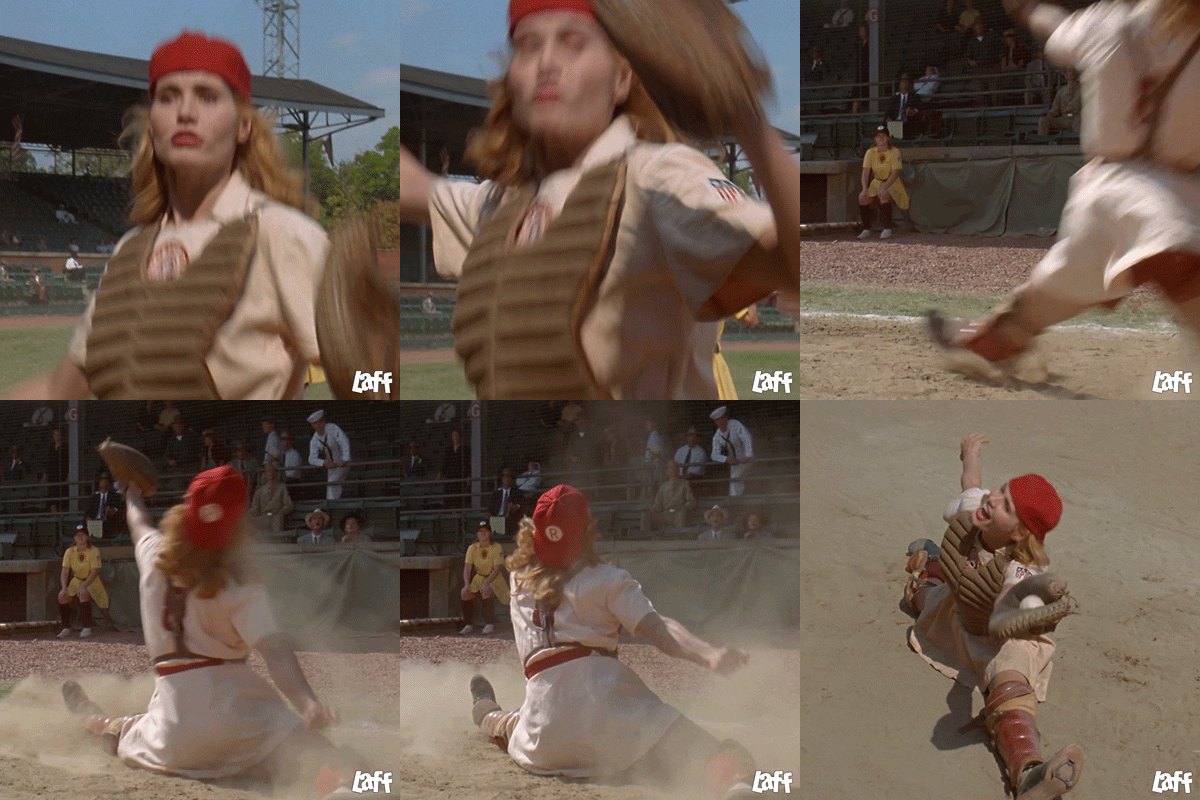
In my world, that’s the essence of being a great teammate. Because if Sammie doesn’t step up (and clearly no one else plans to either) the team doesn’t play.
There are many ways players can contribute to a team. But when you’re willing to look beyond your own needs and worries and do something that’s well outside your comfort zone you separate yourself from the crowd.
Or as Mr. Spock would say:


The Run Rule – and the Golden Rule

Most of us are taught the Golden Rule as children: Do unto others as you would have them do unto you.
So you have to wonder what goes through some coaches’ heads when their team is clearly going to run rule their opponents but they decide to keep their foot on the offensive accelerator anyway. I mean, why would you beat an opponent by 15 runs when you could do it by 30 runs instead? Right?
This topic came up when I was talking to a coach friend of mine who recently saw this type of beating in real time. She wondered why the coach of the superior team felt the need to run up the score when the game was already decided pretty early.
I didn’t have an answer. Maybe the winning coach wasn’t used to being in that situation and didn’t know how to control events on the field.
Maybe she thought that hanging a big number on their opponents would somehow give her team more confidence and they’d start playing better. Maybe she just didn’t know any better.
Maybe the losing team over-reached (or under-researched) when entering that tournament or scheduling that game and put themselves in a bad situation.
Or maybe, just maybe, the winning coach enjoyed the feeling of beating up on a weaker team. There are people like that out there.

Whatever the reason, scores of big numbers to 0 or 1 really shouldn’t happen. Once the direction of the game has been established as being greatly lopsided, the coach of the team on top should do what he/she can to keep it under control rather than humiliating a group of kids who may not have been playing for very long or just don’t have the talent to compete at that particular level.
There are several ways the superior team can help keep the score from getting out of hand:
- One of the first things to do is quit stealing bases. Not just actual steals but even on passed balls or wild pitches, and especially with a runner on third. Just hold the runners where they are to give the fielding team more of an opportunity to make plays without the offensive team racking up runs.
- You can also have baserunners run station-to-station. In other words, even though runners could move up two or three bases at a time, just have them move up to the next base and stop. And no taking an extra base on an overthrow. I can already hear the objections: “But I want to teach my runners to be aggressive and this will hurt that plan.” Stop already with that. First of all, the head coach can (quietly) explain what the team is doing (and why), letting the team know it’s only for this one game. And if pulling up in one game really leads baserunners to be unaggressive in the next game, well, the coach has some more work to do on teaching the game.
- You can have runners slow down a little to give fielders a little extra time to make a play. Not too much – you don’t want to look like you’re trying to show up the other team. But a little bit might help.
- If those steps don’t help, the team on offense can start making outs on purpose. One of the classic strategies is to have baserunners leave the base early so they can be called out by the umpire. In my experience it’s best to let the umpire know quietly you’re planning to do it so they are watching for it.
- Another way is to have hitters line up at one of the edges of the box and then step out as they hit. For example, a hitter who strides can have her front foot at the front of the batter’s box and stride out. A slapper can run out of the box and slap or bunt. Again, it helps to let the umpire know you’re doing it to make it easier for him/her to call.
- On a ground ball, baserunners can gently run into fielders to be called for interference rather than going around. It should be just enough to be seen, but definitely not enough to cause distress or injury.
- And, of course, for teams that have designated starters and subs, put those subs in early. The starters might appreciate the break and the subs will have a chance to play. Just make sure the starters know it’s now their turn to support their teammates on the field and at the plate. The risk here is that the subs will be anxious to show what they can do and might bring a little too much enthusiasm to the opportunity. So make sure everyone on your side understands what’s happening and what they are expected to do.
There are also a couple of ways I wouldn’t go about it, including:
- Telling a hitter to strike out on purpose, or just go for a weak hit. While the intention may be good, you run the risk of having that come back to bite you in a game where you do need a hit.
- Having players bat opposite-handed. Again, while the intention might be good, it could also be viewed as trying to show up the other team. They feel bad enough. No use adding insult to injury.
- Having all your hitters bunt. Most teams spend less time on their bunt defense than their standard ground ball defense. This is especially true of weak teams in my experience. While you may think you’re helping them, you could be making them look even worse.
Coaches should want to keep the score somewhat under control because it’s the right thing to do. Again, the Golden Rule.
You wouldn’t want someone running the score up on your team, so don’t do it to someone else. But there’s another reason too.
You may have also heard the phrase “Karma (or payback) is a b***h.”

Some day that team you’re humiliating today might get better while yours loses a step or two.
Coaches tend to have long memories for these sorts of things, so should that day come what you do today could have a big impact on how you end up looking and feeling then.
No one learns anything when a team runs up the score on a weaker opponent. Except that maybe someone doesn’t have much class.
“Do unto others” and you can never go wrong. The lessons learned there will be worth a lot more than a few extra runs in the “runs for” column.






 Life in the Fastpitch Lane