Category Archives: General Thoughts
Farewell to Ernie Parker
Last week the softball world lost one of its greats – pitching coach Ernie Parker. While he hasn’t been tremendously visible the last few years – which means younger readers may not recognize the name – he was extremely influential in the careers of a lot of pitchers and coaches. Including this one.
Back in the pre-Internet days it was difficult to find quality information on anything softball-related. Which is likely one of the reasons there was such a disparity between teams in Southern California and everywhere else in the country. Ernie’s video series was one of the first to explain the techniques for “California-style” pitching, i.e., explosive speed with dynamic ball movement.
Most of us non-Californians, especially those of us in the Midwest, hadn’t seen anything like it and had no idea how it was done. But through his videos (at that time on VHS) Ernie gave the rest of us some valuable clues on what the techniques should look like and ideas on how to teach them.
Not to say he necessarily got everything right. In those early videos he talked about the importance of “slamming the door,” or bringing the hips around, to finish the pitch. I spoke to him by phone a couple of years ago about that and he said he had long since changed his stance on that, like any good pitching coach would. He also focused a lot on developing the purposeful wrist snap. That aside, though, there was enough great information to help those of us who knew nothing begin to learn.
For me, Ernie was particularly influential in learning to teach the backhand changeup and the curve. His video was the first place I saw a well-disguised changeup, and I still use several of the tips he provided. For the curve, his video was where I learned to use a Frisbee to get a pitcher started. Again, that is something I still do today.
Despite his stature and accomplishments, Ernie always had time for anyone who contacted him, and he would always give you a straight answer. I remember emailing him years ago, lamenting about the lack of effort from a couple of students with good potential and commenting on how nice it must be to be Ernie Parker and have all your students work hard. He responded that he wished it were true, but he had the same issues as everyone else. Some students worked hard and did well, others put in little effort – I supposed counting on his name to make them great.
I have to admit it made me feel a little better about my own efforts, and helped me to understand there’s only so much a coach can do. The player has to want it.
Ernie had a passion for the game, and for helping players become the best versions of themselves they could be. He will be missed by those of us who knew him and/or learned from him. Thanks and farewell, Ernie.
New look – courtesy of a former player
As you may have noticed, Life in the Fastpitch Lane has a new look in the header. Three of them, actually.
The new headers come courtesy of one of my former players – Tina Kliver. I’d seen some of her softball “still lifes” before, so when it came time for a new header I asked her if she could make some up for me. What you see here is the result.
Hope you like it. Thanks to Tina for all her hard work.
Please resubscribe
One more little housekeeping detail. Because of the move to WordPress, I believe you will need to resubscribe to receive notifications of posts in your email. You can do that by going to the sidebar on the right and clicking on Follow Blog by Email. Those of you who were subscribers I will appreciate you doing it again. Those who were not, but would like to be, can do it easily. And now you’ll receive immediately notice when there’s something new posted. I promise I will never sell your email address or use it for any nefarious purpose.
Thanks for hanging in there! Next post will be softball-related. I promise!
Welcome to my new blog site
Surprised? So was I when I found out my former blog supplier (GoDaddy) was shutting down their blog product. I’m sure they supplied plenty of notice but they send so much spam I usually ignore the emails. Luckily I saw it today, the last day to do something about it.
So here we are, now on WordPress. Which is probably for the better because it’s the king of this sort of thing.
While the location has changed, I can promise you’ll still get the same quality fastpitch softball thoughts, musings and ideas. For better or for worse. 🙂
So welcome! I look forward to continuing to serve you.
Softball skills are analog, not digital
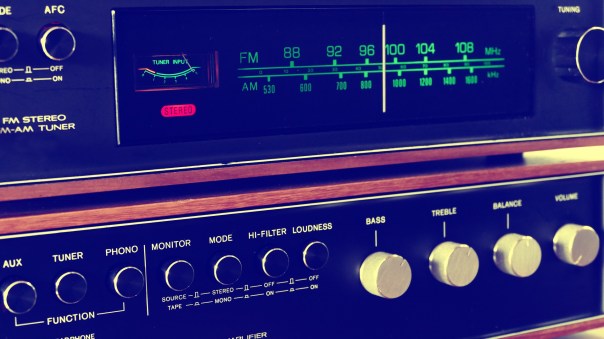
All of the players, and probably most of the parents by now, are too young to remember when radio dials were analog. Getting your favorite station tuned in was an art. You’d move the dial quickly to get it close, then move it very slowly until it sounded just right. Better radios also had a “fine tuning” knob that let you make smaller adjustments.
Where it really compares to softball is that once you had the station tuned in perfectly, there was no guarantee it would stay tuned in. The analog signal could “drift” a bit, at which point you’d have to re-tune it in. As compared to today’s digital radios where you set the correct numbers and they radio does all the work to lock it in and keep it locked in.
That’s why I say softball skills are analog. It would be nice if they were digital – you tune them in and they stay with you automatically. But the reality is your technique can slip just a bit, especially during the long season when there may not be time to practice and hone things as much as you’d like. You get off a bit, you start to worry and guess at corrections, and before you know it you’re further off than before. Soon it’s nothing but static.
That’s where a little in-season correction can help. Whether you do it yourself or go to see your coach for that particular skill, taking a little time to re-tune the skills can make a huge difference.
The value of using a private coach is he/she can take a look from the outside and compare what you’re doing to what you ought to be doing. It’s a little faster and easier than trying to diagnose it yourself. But the key is that comparison.
If you’re trying to do it on your own, don’t think about what you’re doing. Think about what you should be doing, and try to get back to that. Find the sweet spot on the “dial” and tune your skills to that. Before you know it you’ll be back on track.
Again, it would be nice if softball skills were digital. But they’re not. Everyone needs a little fine tuning now and then. Understand that they’re analog and make adjustments accordingly. You’ll have a much happier season.
Softball poem by one of my students
Thought I would share this with everyone here. It’s a poem written by one of my students, who is currently a 14U player who will enter high school in the fall. It does a great job of explaining the “striving” aspect of our sport from a player’s point of view.
Take one extra moment
This is always a bittersweet time in the softball world. On the one hand, you have the excitement of post-school season tournaments, the culmination of a year’s worth of hard work in college and many high schools.
At the same time, you also have the ends of careers. High school seniors who play in the spring and who don’t plan to play in college (or the summer) are looking at their last high school games. College players who aren’t going pro, or playing in a women’s fastpitch league, are also getting ready to hang up their spikes – or more accurately leave them at home plate.
For both groups, it’s been a lot of years of going to practices, playing games, working on skills, rinse and repeat. Those who played travel ball also had endless summer weekends where they spent all day at the ballfield, then went back and crashed at a budget-rate hotel only to get up early and do it again. It all sort of runs together after a while.
But now, it’s coming to an end. That’s probably difficult to fathom – the end. Most probably haven’t processed yet what it really means. Sure, they know no more practices, putting up with angry coaches or the drama that often seems to accompany team sports. But it also means that they will no longer be doing something that once came as naturally as breathing.
Sure, they can join a local summer league and play slow pitch. But it’s not quite the same. The speed and competitiveness that comes with school or travel ball just won’t be there. It’s the difference between looking at a photo of the Mona Lisa and actually standing in front of it.
So to all those who are about to play their final games I have this bit of advice. When the last out is recorded and your fastpitch career is done, don’t just pack up your gear and rush to your cars. Take a moment to drink it all in.
Savor the sights, the sounds, and many of the smells of the field. Look at your well-worn glove, or the nicks and scuffs on your batting helmet. Take a good look at your teammates, and think of all those you played with in the past – especially when you were little and just trying to figure out what to do and where to go.
If there isn’t another game starting right away, walk out on the field once last time as a fastpitch player and look around. Think about all the good times you had, and all that you accomplished throughout your career. Because once you leave the field, you’ll never quite be the same.
And that’s true even if you plan to coach. A coach’s perspective is very different than a player’s. You’re a part of the team, but you’re still separate from it.
As they say in the movie Moneyball, we’re all told someday we can no longer play this game. We just don’t always realize what that means.
Be proud of what you did, and know that it was part of something special. Someday you’ll be glad you took those few extra minutes to realize how special it was.
3 Strikes scripted softball comedy series premiering 3/26
A while back I wrote about a new online scripted comedy series called 3 Strikes that was being developed by a former player named Sarah McLean. I received a notice the other day that it is premiering March 26, 2014. You can watch the first episode here: 3 Strikes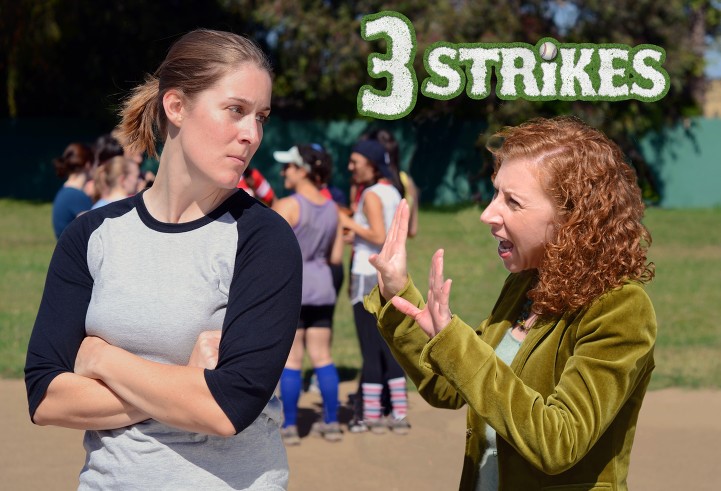
http://www.3strikestheseries.com/episodes/4578067429
And here’s a quick, one-line description from the press release:
They go on to say it’s a little bit A League of Their Own and a little bit Bad News Bears. It also sounds like it has a bit of the first Mighty Ducks to it too.
In any case, it’s great to see someone putting this much effort and love into something connected with softball. Be sure to check it out. I know I plan to! And after you do, be sure to leave a comment to let us know what you think.
New softball tournament resource
A few days ago I received an email with some information I thought I’d pass along. It’s about a new website called mySoftballTournament that allows tournament directors to post information about their tournaments and coaches to search the site for tournaments that match. 
It looks pretty simple. Everything is pretty much run on dropdown menus. You pick your State or Province, fastpitch or slow pitch, gender, age group, etc. and then hit the Search button. The site then returns any tournaments they have that fit your search. (I’m presuming this site is out of Canada, by the way, because the listing asks for Province rather than State.)
It doesn’t look like there is a whole lot out there yet. I searched for tournaments in my home state and received no tournament listings, but hopefully that will change.
I hope this site gets filled with tournaments quickly. Finding the right tournaments for a team is always a challenge, so having a good resource that has decent information is something that’s needed. I know that eTeamz (or whatever they’re called now) has this service, but it’s been a bit spotty the last couple of years. Hopefully an organization with some enthusiasm can make this work and become a great resource for coaches.
If you have a tournament to post give it a try and let us all know how it goes. If you have a team and are looking for tournaments, give it a look as well. Maybe you’ll find something that fits your needs.
Updated 3/9/14 to align with changes to the site.
Solid softball mechanics a key to confidence
We talk a lot about the importance of confidence in softball – particularly for hitters, but in every aspect of the sport. There’s no doubt that it makes a difference.
But when it comes to ensuring our players have confidence, many are at a loss. There are plenty of tricks and techniques you can use to up the mental game. But there’s one that often gets ignored.
It’s good mechanics. The root cause of a lack of confidence is often uncertainty about one’s technique. If you’re not sure of what you’re doing, you’re very likely to become nervous and filled with self-doubt. On the other hand, if you’ve put in the work and believe you have good technique, you’re far more likely to be confident.
This is where quality instruction and quality practice come in. You want to learn good mechanics – the kind you see successful players use – from someone who knows how to teach it. But that’s only half the battle.
The other half is to work at it until you internalize it – in other words until you can do it without thinking about it. Those good mechanics should be as natural as breathing.
If you’ve put in the work, you’re far more likely to be confident. And if you’re confident you’ll perform. And if you perform you’ll be more confident. May the circle remain unbroken!
It doesn’t necessarily work immediately with everyone. But sooner or later it will. For those who have put in the work but are still uncertain (this especially happens with younger players), remind them that they HAVE put in the work and tell them to take that out onto the field with them.
It’s like they say in Remember the Titans – it’s like Novocain. Give it time, it always works.






